
Effects of School Furniture on Students: Health, Focus, and Learning
Explore how ergonomic, comfortable, flexible, and high-quality school furniture influences students' posture, focus, participation, collaboration, and daily learning experience.
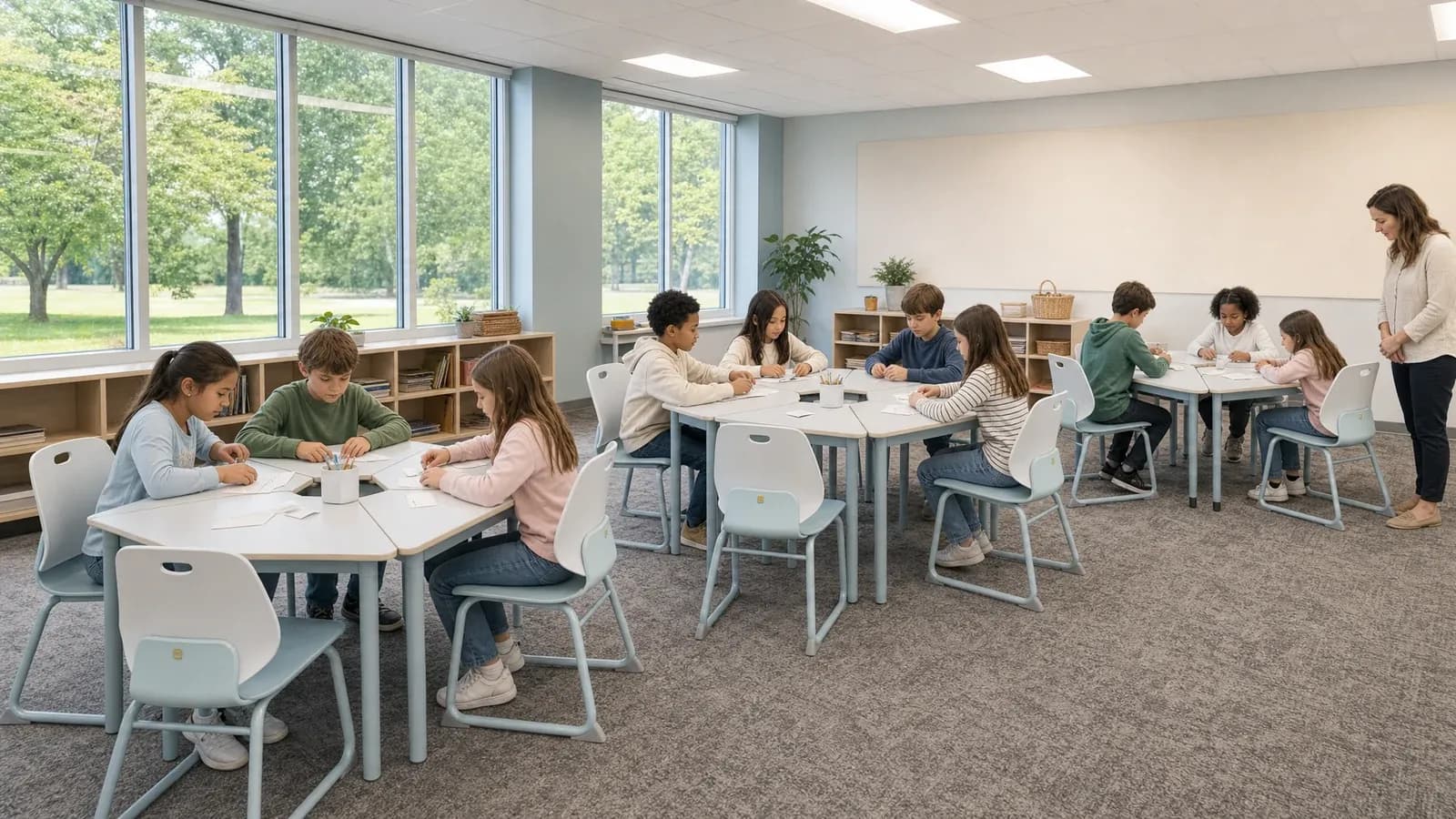
Table of Contents
The effects of school furniture on students appear in everyday classroom experience. Desk and chair fit can influence posture and physical comfort. Stable construction supports reliable daily use. Flexible furniture makes it easier to organize individual work, discussion, and collaboration. Together, these features can shape students' focus, participation, and experience of the learning environment.
How Does School Furniture Affect Students?
Students use classroom furniture while listening, reading, writing, working with devices, sharing materials, and moving between activities. The furniture sets the physical conditions for each task. Its dimensions determine how the body relates to the seat and work surface; its structure affects stability; and its layout influences movement, sightlines, and interaction.
| Furniture feature | Benefits for students |
|---|---|
| Ergonomic design | Better support for posture and physical comfort |
| Appropriate dimensions | More suitable seating and working positions |
| Durable construction | Stable and reliable everyday use |
| Flexible design | Support for different learning activities |
| Attractive appearance | A more inviting classroom environment |
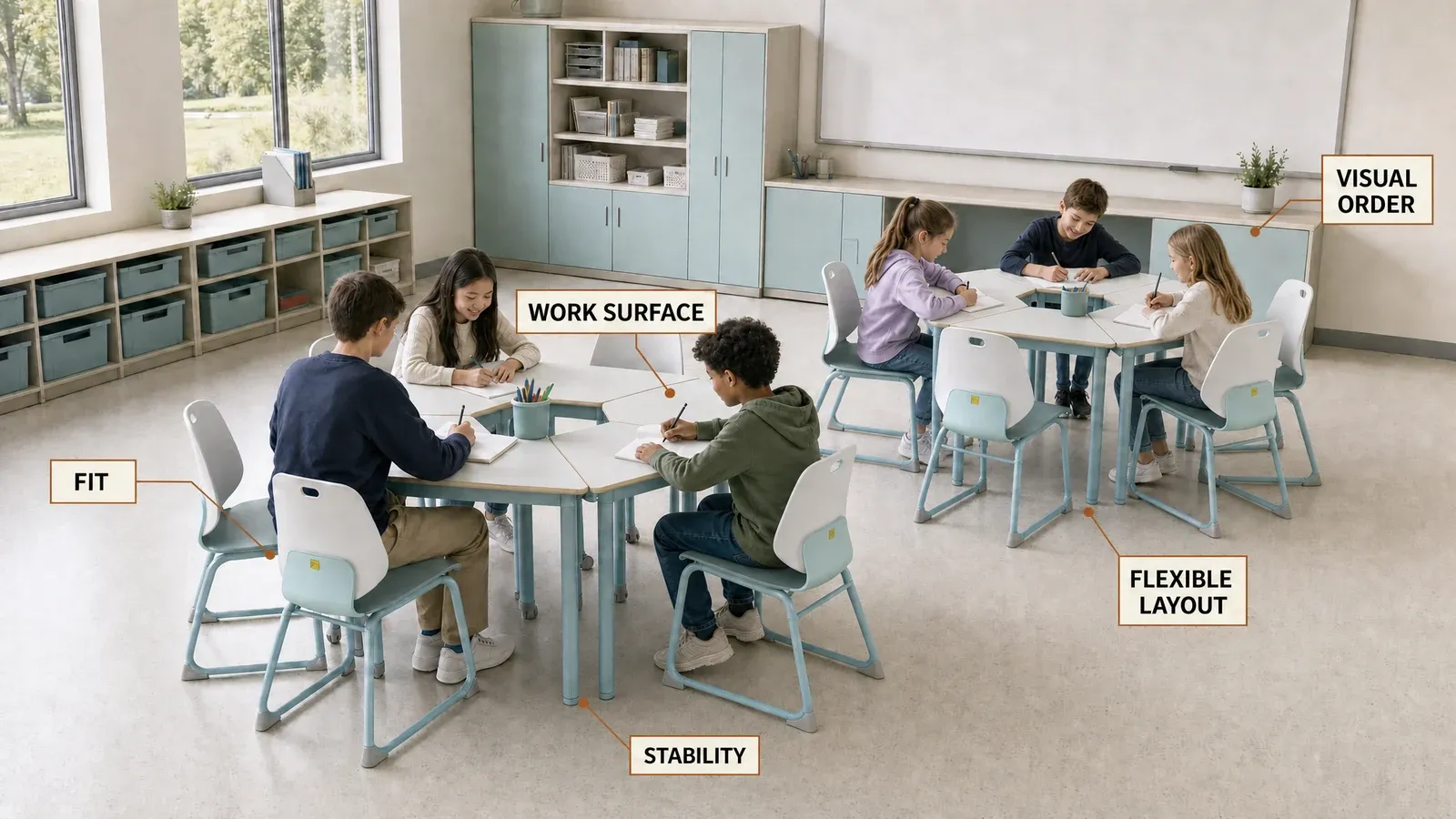
These effects are connected. A suitable desk-chair relationship can reduce avoidable discomfort. A stable surface can make writing and practical work easier. Furniture that moves or combines cleanly allows teachers to change the room around the activity, while a clear and orderly space helps students understand where to sit, move, store materials, and work together.
How Ergonomic School Furniture Supports Student Health and Comfort
Ergonomic school furniture begins with fit. Students in the same class can differ in height, leg length, trunk dimensions, and arm reach. A chair and desk should therefore create a workable relationship between the student's body, the seat, the backrest, and the writing surface.
Seat height affects whether the feet can receive stable support. Seat depth influences whether a student can use the backrest without pressure behind the knees. Desk height changes the position of the arms and shoulders during writing, while under-desk clearance determines whether the legs can move without twisting the body. Backrest shape and position add support during seated tasks.
When these dimensions are poorly matched, students may slide forward, lift their shoulders, lean over the desk, or keep changing position to find a more comfortable setup. Better dimensional fit can support a more suitable seated posture and may reduce avoidable postural load or discomfort associated with poor fit. The detailed relationships are covered in our guide to the benefits of ergonomic school furniture.
Adjustable desks and chairs can serve students with different body dimensions when the documented adjustment range covers the intended users. Schools still need to check the minimum and maximum settings, desk-chair pairing, mechanism stability, and usable legroom. Multi-size furniture offers another approach by providing several fixed dimensions for different user groups.
A systematic review of school furniture research found positive results in 64% of the reviewed studies, negative or no effects in 24%, and unclear effects in 12%. The authors identified compatibility between furniture dimensions and students' anthropometric characteristics as an important factor in some physical responses. High furniture, sit-stand furniture, and tilted tables or seats also showed positive effects in parts of the reviewed literature.
The mixed results are useful for schools. They show why a label such as "ergonomic" is only a starting point. The selected dimensions, adjustment range, user group, classroom task, and actual student experience determine whether a design works in practice.
How Comfortable School Furniture Improves Student Focus and Learning
Comfortable school furniture helps by removing a source of physical interruption. A student who is reaching for the floor, shifting away from a deep seat, raising the shoulders to reach a high desk, or searching for legroom has another demand competing with the lesson.
A better-fitting setup gives the feet, thighs, back, arms, and work materials more suitable support. Students can then spend less time correcting their position and more time reading, writing, listening, or using classroom equipment. This is the clearest path between furniture comfort and student focus.
The work surface also matters. It should provide enough usable space for the task without forcing books, devices, or shared materials into awkward positions. Storage and frequently used resources should be reachable without blocking circulation or requiring repeated disruption. In a well-organized classroom, students can move from instruction to practical work with fewer unnecessary interruptions.
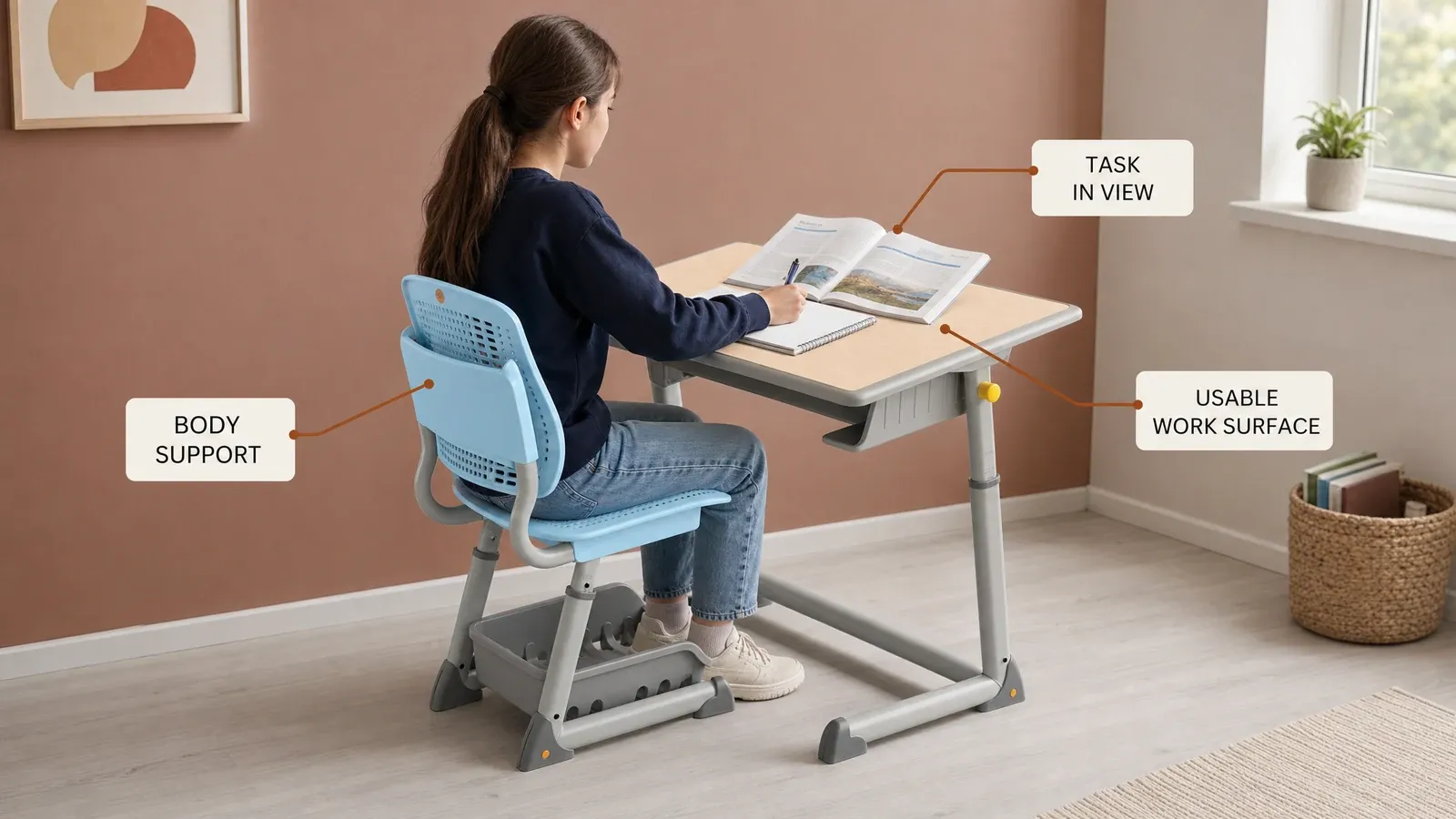
School furniture and student performance are related through these everyday conditions. Comfortable seating, usable work surfaces, clear sightlines, and suitable activity layouts can support attention and participation. Academic results also reflect teaching, curriculum, student needs, lighting, acoustics, and many other parts of the learning environment. Furniture contributes by giving students a more workable physical setting for the task in front of them.
How Modern Classroom Furniture Encourages Participation and Collaboration
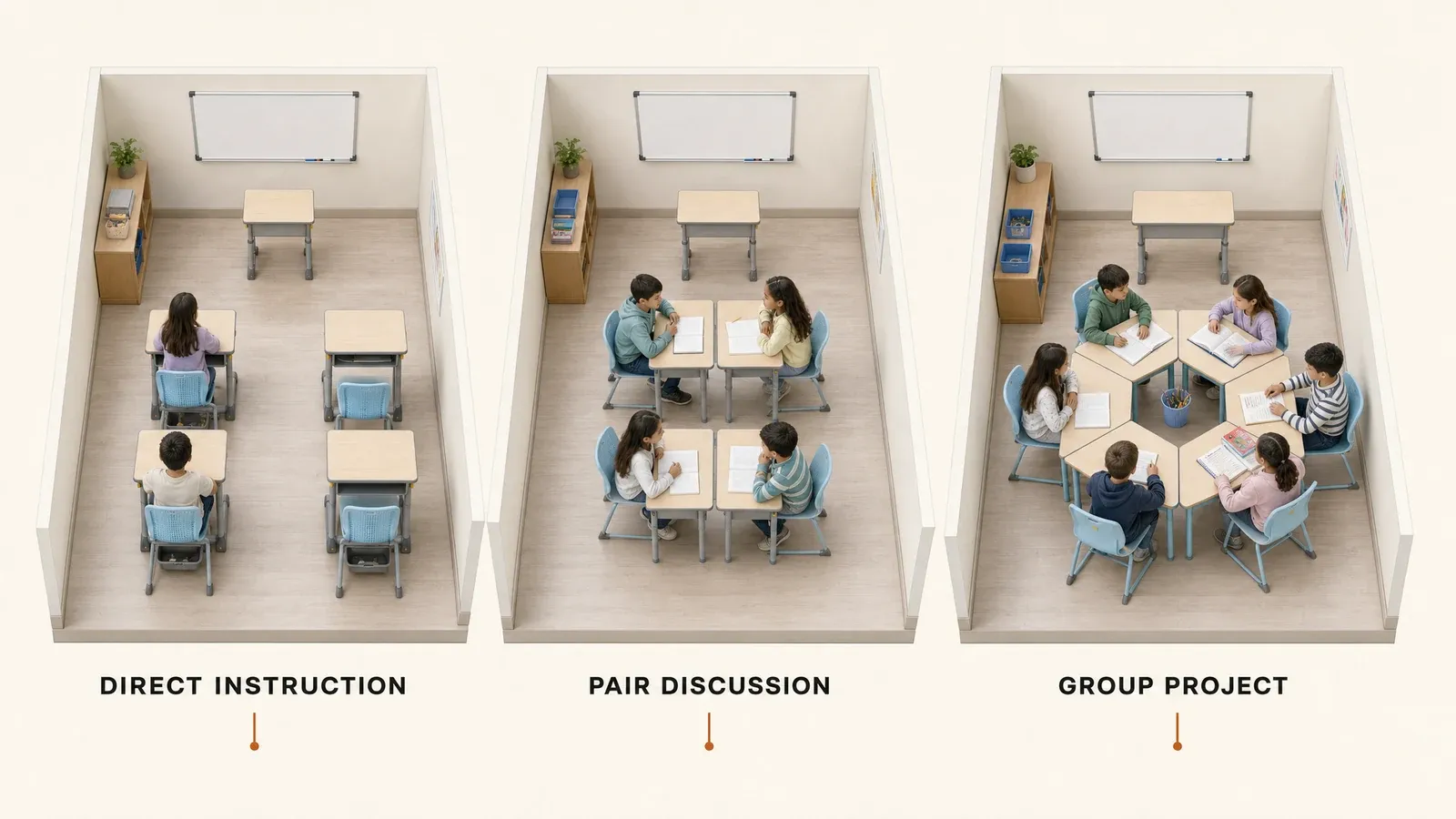
Modern classroom furniture supports several ways of learning within the same room. Rows of individual desks can work well for teacher-led instruction, assessment, and quiet study. Pairs or small clusters make discussion and shared tasks easier. Larger tables provide a common surface for projects, materials, and group problem-solving.
Movable chairs and tables help teachers change the arrangement as the lesson changes. A class can begin with a presentation, move into pairs, form small groups, and return to individual work without treating every layout as permanent. The practical value comes from manageable weight, stable placement, clear movement routes, and furniture shapes that combine predictably.
Shared learning spaces also influence communication. Students need to see one another, hear the discussion, reach shared resources, and retain enough personal workspace to complete their own part of the task. Furniture can support these conditions through orientation and spacing. The teaching activity gives that arrangement its purpose.
For a wider view of student desks, shared work surfaces, teacher furniture, and storage, see our classroom furniture list. That category-level view can help schools connect each space and activity to the furniture it requires.
How High-Quality School Furniture Creates a Safer and Better Learning Environment
Furniture quality becomes visible through repeated daily use. A desk that stays stable provides a dependable surface for writing and equipment. A chair with reliable joints feels secure when students sit, stand, and reposition it. Consistent component fit also reduces unwanted movement and noise during lessons.
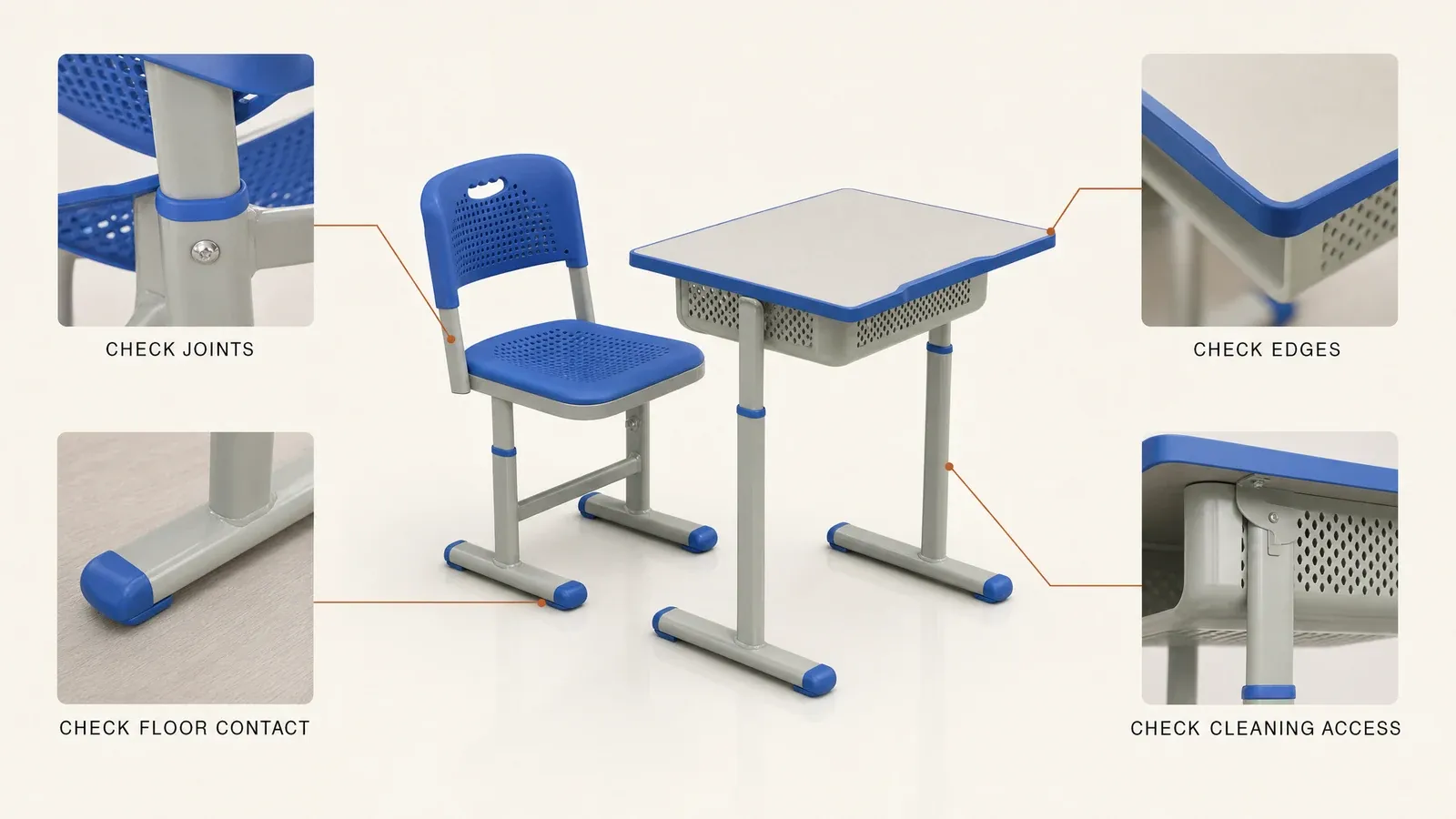
Safety details deserve the same attention as the main structure. Edges and corners should suit the intended users and room conditions. Moving or folding parts need controlled clearances and practical pinch-point protection. Floor-contact components should remain stable, and the layout should preserve circulation around occupied desks and chairs.
Durable materials and reliable workmanship help furniture retain its function through regular use, movement, and cleaning. The relevant choice depends on the expected duty: age group, room type, daily schedule, cleaning method, climate, and whether furniture will be moved frequently. Joints, coatings, edges, hardware, and replaceable parts should be reviewed as part of the complete product rather than as isolated specifications.
Cleanability also shapes the classroom experience. Accessible surfaces, manageable gaps, and materials suited to the school's cleaning routine make everyday maintenance more practical. A room that is clean, orderly, and easy to reset gives students and teachers a more consistent place to work.
Color, form, and visual coordination add another layer. They can make a classroom feel calm, energetic, age-appropriate, or welcoming. The strongest schemes support wayfinding and the character of the space without creating unnecessary visual clutter. Appearance works best when it reinforces comfort, function, and order.
How School Furniture Design Influences Student Motivation and Well-Being
Students experience a classroom as a complete setting. Comfort, cleanliness, movement, color, storage, and the arrangement of people all contribute to whether the room feels ready for learning. Furniture is one of the most visible and frequently used parts of that setting.
A comfortable, attractive classroom can feel more inviting. Students have clear places for individual work, discussion, materials, and personal belongings. When the arrangement matches the activity, participation requires less physical negotiation: chairs face the right direction, shared surfaces are available, and materials are within reach.
Innovative and multifunctional furniture can give teachers more options for organizing lessons. A mobile table may shift from individual work to group use. A shared surface can support drawing, making, reading, or discussion. A suitable adjustable desk can be reassigned within its documented user range. These options help the room accommodate different activities without asking one fixed layout to do everything.
Interactive furniture and collaborative layouts can also support students' social development by creating practical opportunities to exchange ideas, share resources, and complete joint tasks. The furniture establishes the setting; teachers, students, and the quality of the activity shape the resulting motivation, relationships, and learning.
Why Choosing the Right School Furniture Matters
The right school furniture brings ergonomic fit, dependable construction, and useful classroom functions together. Each part contributes something different. Appropriate dimensions support students' bodies. Quality materials and stable structures support daily use. Flexible configurations help the classroom adapt to teaching activities.
Schools should begin with the students who will use the furniture. Record their age groups and relevant body-size range, then identify the room type, task, lesson format, equipment, storage, and circulation needs. A general classroom, laboratory, library, art room, cafeteria, and collaborative learning area place different demands on furniture.
Samples and room trials turn those requirements into observable decisions. Students and staff can check whether the feet and back receive suitable support, whether the work surface fits the task, whether the room changes layout smoothly, and whether routes remain clear. The project team can also inspect stability, adjustment, edges, hardware, cleaning access, labels, and maintenance needs.
This approach helps schools choose furniture around actual users and activities. It also produces clearer specifications for comparing products, approving samples, and managing long-term use.
Frequently Asked Questions
How does school furniture affect student learning?
School furniture influences learning through physical comfort, body support, access to the work surface and materials, and the way the room supports different activities. A suitable setup can remove avoidable physical distractions and make it easier for students to participate in individual and group tasks.
Can school chairs cause back pain?
A chair that is poorly matched to a student's body dimensions can increase awkward positioning and physical discomfort. Seat height, seat depth, backrest support, desk height, and legroom should be assessed together. Persistent pain requires appropriate professional evaluation rather than a furniture-only conclusion.
What are the benefits of ergonomic school furniture?
Ergonomic school furniture can provide more suitable seat and desk dimensions, back support, legroom, and adjustment for the intended users. When the dimensions match the students, the furniture can support a more natural seated position and reduce avoidable discomfort associated with poor fit.
Why is high-quality school furniture important?
High-quality school furniture provides stable construction, reliable joints, suitable materials, practical safety details, and surfaces that can be maintained for daily school use. These features support consistent use, classroom order, and longer service when the furniture is selected for the expected duty and maintained properly.
Research references: systematic review of school furniture performance and physical responses, Effects of School Furniture on Students, and How School Furniture Affects Posture and Learning.
Planning furniture for a new school or classroom upgrade? Contact Yuzhen Furniture with the product categories, quantities, target market, budget, schedule, and logistics background for your project.