
From Usable to Easy to Use: How Can School Dormitory Beds Improve Student Satisfaction?
A practical look at how access, comfort, storage, privacy, lighting, charging, noise, and maintenance shape the everyday use of school dormitory beds.
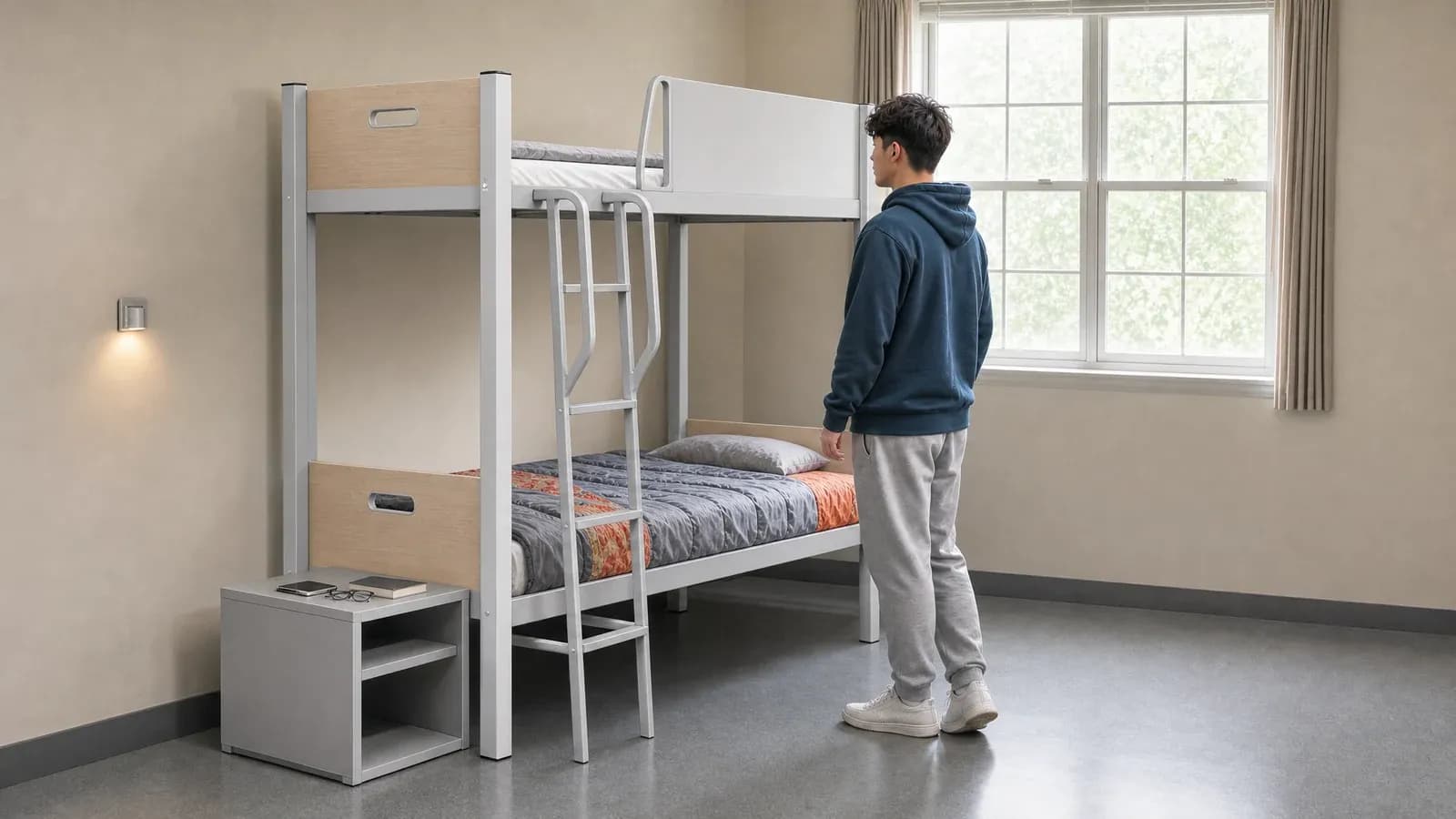
Table of Contents
A school dormitory bed is more than a place to sleep. Students use it throughout the day: climbing up and down, arranging bedding, storing personal belongings, reading, charging devices, and getting up at night. When these everyday activities involve unnecessary difficulty, even a bed that meets basic functional requirements may not provide a comfortable living experience.
Moving from "usable" to "easy to use" means paying attention to the details behind these routines. Ladder design, bed dimensions, bedside storage, privacy, lighting, charging, and structural stability all influence how students interact with their beds. By considering these elements together, schools can create dormitory spaces that are more convenient for students and easier for staff to maintain.
What Makes a School Dormitory Bed Easy to Use?
Students interact with a dormitory bed many times during the day. They climb up or step down, sit at the edge, arrange bedding, put away personal items, read, charge a phone, and get up during the night. Each action is simple on its own, yet small obstacles become noticeable when they recur every day.
An easy-to-use bed supports these routines in a clear sequence. The access route should be easy to approach, the sleeping area should suit the intended users, and frequently used items should have a convenient place. Lighting and charging should support evening routines without creating unnecessary inconvenience for roommates. The bed should also remain stable during regular use and allow staff to inspect and maintain its components.
These details are closely connected. A well-designed ladder is less useful if a storage cabinet blocks the approach. A comfortable mattress still needs a suitable support structure and enough space around the bed. Similarly, bedside accessories should make everyday items easier to reach without interfering with guardrails or circulation.
Student satisfaction covers more than the bed itself. Room conditions, housing services, roommate relationships, cleanliness, and shared facilities also matter. Bed usability gives schools a practical part of the experience that can be observed, discussed, and improved.
How Can Ladder and Guardrail Design Improve Everyday Safety?
The route to an upper sleeping surface begins before a student touches the ladder. There must be enough room to approach it, place a foot securely, use an available handhold, and move through the guardrail opening without colliding with a desk, cabinet, or another bed.
Traditional vertical metal ladders can take up relatively little floor space, but narrow rungs may feel uncomfortable underfoot, especially when students climb barefoot or use them at night. A step-style ladder or storage-stair arrangement offers a different climbing experience. A more gradual incline and wider treads can provide a larger contact area for each step, while the space beneath storage stairs can hold drawers or storage compartments.
Other details can improve everyday access. A suitable non-slip tread or cover can provide additional foot grip. An appropriate night-time marker can help students identify the climbing route in low-light conditions. Handholds can give students another point of contact as they move between the ladder and the upper bed. Each feature should be evaluated as part of the complete bed and room configuration.
Guardrails belong to the same system. Their effective height changes with mattress thickness, so schools should check how much of the guardrail remains above the finished sleeping surface. The guardrail opening and the transition from ladder to bed also need enough room for the intended user to move without losing a secure handhold.
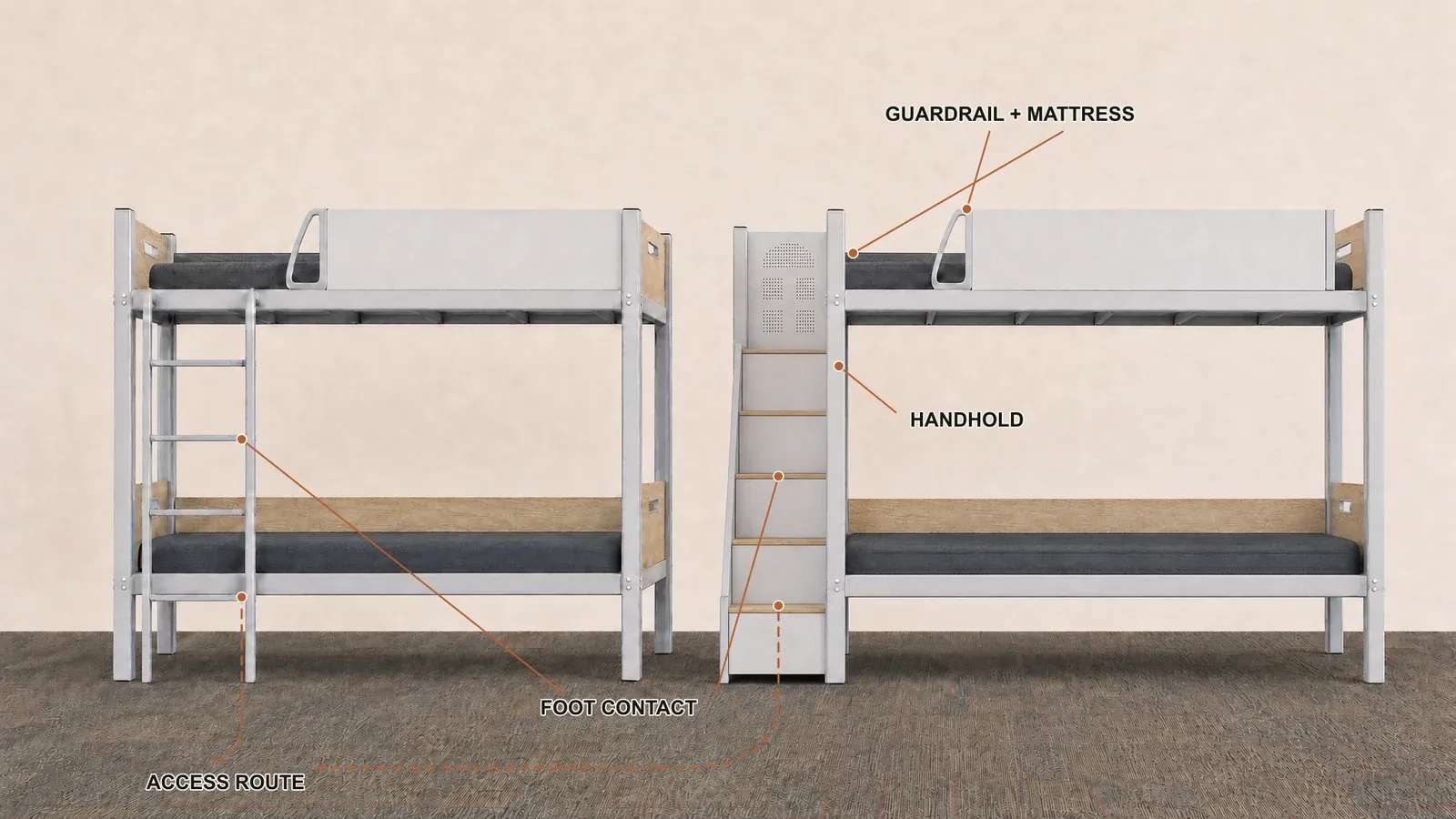
Night-time use makes this sequence especially important. A student may be sleepy, the room may be dim, and a chair or personal item may have shifted near the ladder. Clear circulation, visible steps, suitable handholds, and a consistent place for loose belongings all help make access easier to manage. Applicable dimensions and safety requirements should be confirmed for the target market and the actual bed-and-mattress configuration.
How Do Bed Size and Sleep-Zone Details Affect Comfort?
The sleeping area should give the intended user enough room to lie down, turn, sit up, and enter or leave the bed comfortably. Student height and body size vary, so schools planning a new residence hall or renovation can reassess whether existing bed dimensions suit the intended users. The available room space and mattress specification complete that decision.
Mattress fit is part of the experience. A mattress should correspond with the bed frame and its intended support system. The combination also affects the relationship between the sleeping surface and the guardrail. Bedding, wall clearance, and nearby shelves can influence how easily students make the bed or retrieve an item that falls beside it.
The support surface below the mattress affects everyday use as well. Slatted supports or perforated boards may be considered in different bed designs to address support and airflow. Their suitability comes from the material, spacing, construction, installation, load requirements, and supporting test information. The material name alone does not establish comfort, quietness, moisture performance, or load capacity.
Privacy provisions can also be considered at this stage. If students are expected to use curtains around their sleeping areas, the bed frame can be designed with suitable curtain tracks or hanging points from the beginning. Planning these details early can reduce the need for students to attach incompatible accessories after installation.
Space around the bed contributes to comfort in another way. Students need room to sit up without meeting an overhead obstruction and enough clearance to enter the sleeping area without awkward movement. In a lower bed, nearby desks or cabinets should still allow bedding to be changed and the floor to be cleaned. In an upper bed, the approach from the ladder should remain clear.
How Can Bedside Storage Support Dormitory Space Optimization?
Students often keep a phone, glasses, water bottle, book, tissues, or other small items near the bed. When these items have no clear place, they may occupy the sleeping surface, collect on a study desk, or end up near the access route.
Bedside storage supports Dormitory Space Optimization by giving these high-frequency belongings a small, reachable area. A compact shelf or recessed compartment near the head of the bed can provide a convenient place for everyday essentials. Hanging baskets, hooks, or compatible perforated panels can provide flexible positions for additional small items.
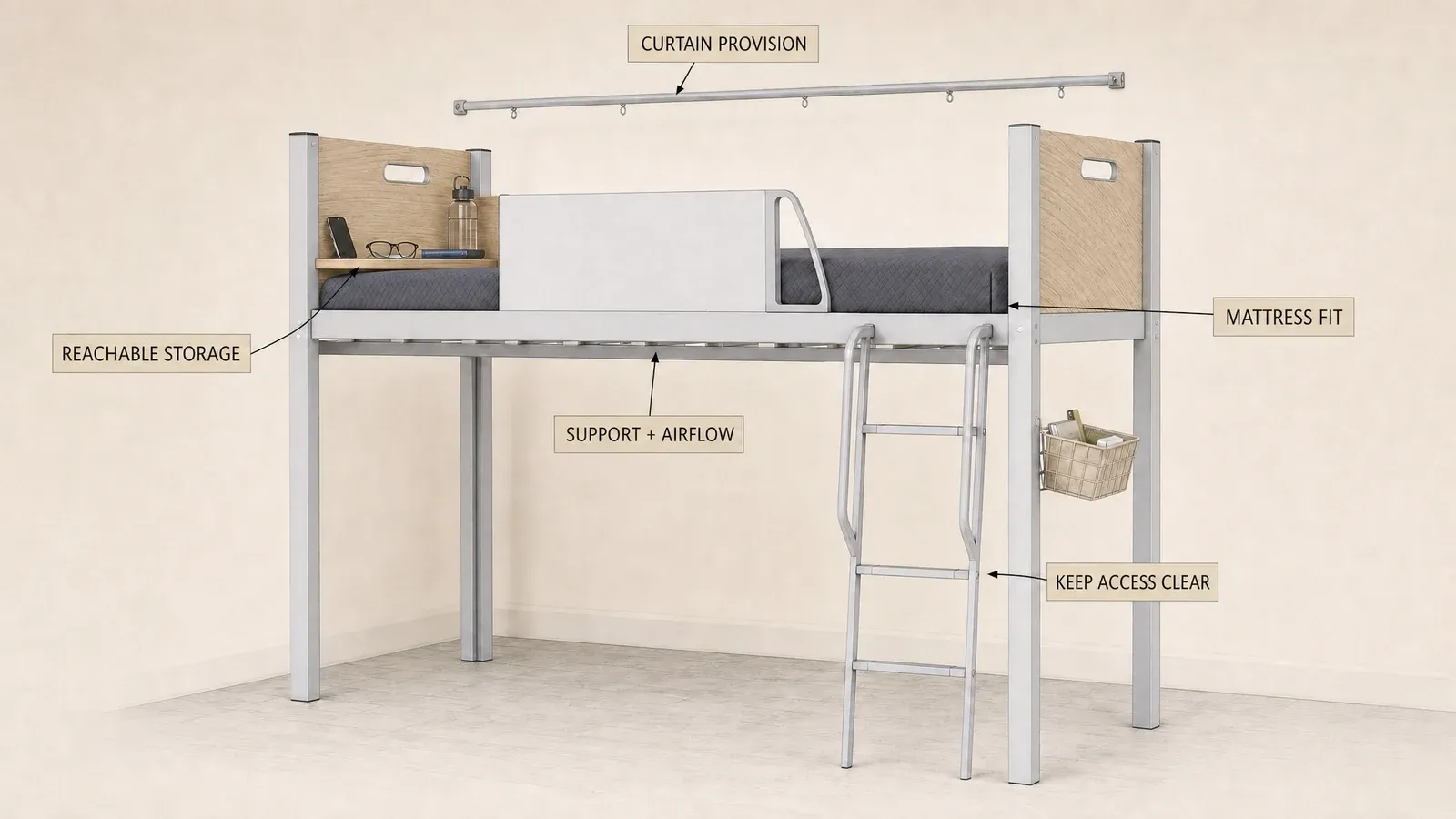
The value of bedside storage comes from convenient, secure access to the items students use every day. A useful position allows a student to place and retrieve an item without leaning beyond a guardrail or blocking the ladder opening. Edges, recesses, or other item-retention details can also help prevent small objects from sliding onto a person, desk, or walkway below.
Standard attachment points can make compatible accessories easier to organize, while clear limits help prevent unsuitable loads or changes to safety-related parts. Storage should not obstruct guardrails, interfere with bedding, trap hard-to-reach debris, or prevent staff from inspecting the frame.
This approach keeps the space discussion close to the bed and the way students actually use it. Broader room planning can then coordinate wardrobes, desks, shared storage, and circulation around that personal zone.
How Should Privacy, Lighting and Charging Be Planned Around the Bed?
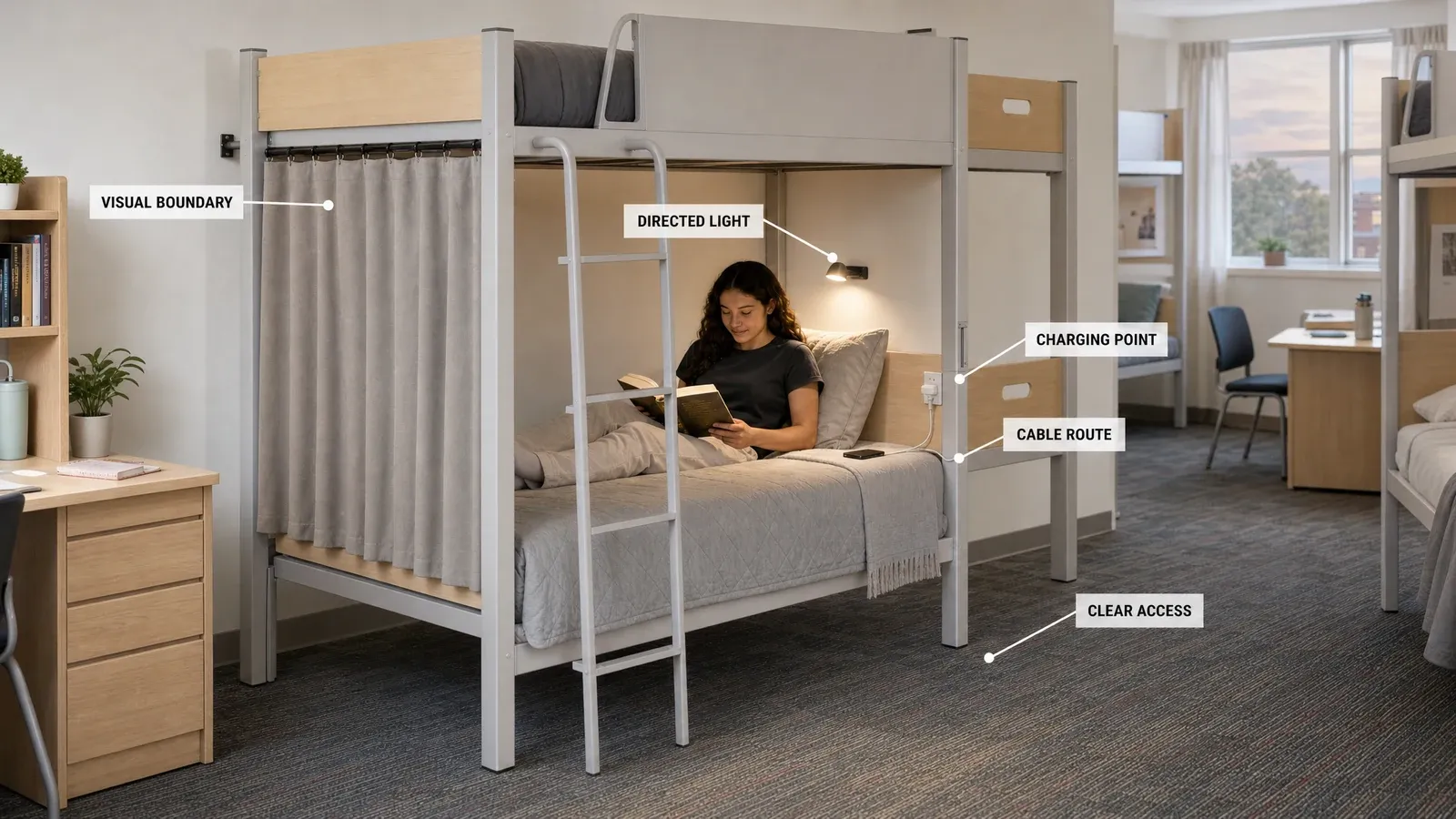
Shared rooms place sleeping, studying, social activity, and personal routines close together. A clearer boundary around each bed can give students a more defined personal area and reduce direct views and light interference around the sleeping space. Curtain provisions or partial screens may support this visual boundary when they are compatible with the bed and the residence hall's requirements.
Privacy features still need to preserve ventilation, access, inspection, and safe movement. They should not cover warning labels, block a ladder, interfere with guardrails, or create a maintenance problem. Fire and material requirements also need review before a school approves curtains, tracks, panels, or student-added accessories.
Lighting comes next in the evening routine. A local reading light with an adjustable direction can make it easier to read or find an item without illuminating the entire room. A suitable glare-control design can help direct light toward the intended area. Its position, controls, heat, wiring, and replacement access should suit the bed arrangement. Light performance still needs evaluation in the actual room.
Room-lighting controls can improve convenience too. A control point near the entrance and another within an approved bedside area may allow students to operate the main light without repeating unnecessary trips across the room. The arrangement should follow the room's electrical layout and the needs of its occupants.
Charging creates a similar planning task. A reachable outlet or approved USB charging point can make evening routines more convenient and reduce long cables crossing a desk or access path. Electrical design, outlet type, placement, cable management, protection, and installation belong within the school's facilities and electrical review. The location also needs to work with storage, curtain provisions, and room circulation.
How Can Schools Reduce Noise and Make Dormitory Beds Easier to Maintain?
Dormitory beds experience repeated movement. Students climb, turn over, sit down, open storage, and use nearby desks throughout the day. Over time, a loose connection, contact between components, worn hardware, or an installation issue may appear as movement or noise.
The structure and connection details therefore deserve attention during product selection. Depending on the design, beds may use welded joints, bolts, hooks, locking connections, braces, or combinations of these methods. Suitable nylon pads or other contact materials may also be used at selected points to reduce direct contact between components.
No single connection method automatically guarantees a quiet or stable bed. Welds, bolts, hooks, braces, sleeves, and pads each perform different jobs in different designs. Their suitability comes from the complete structure, manufacturing quality, installation, testing, and maintenance requirements. Drawings, installation instructions, applicable test information, and the condition of the assembled bed provide a better basis for review.
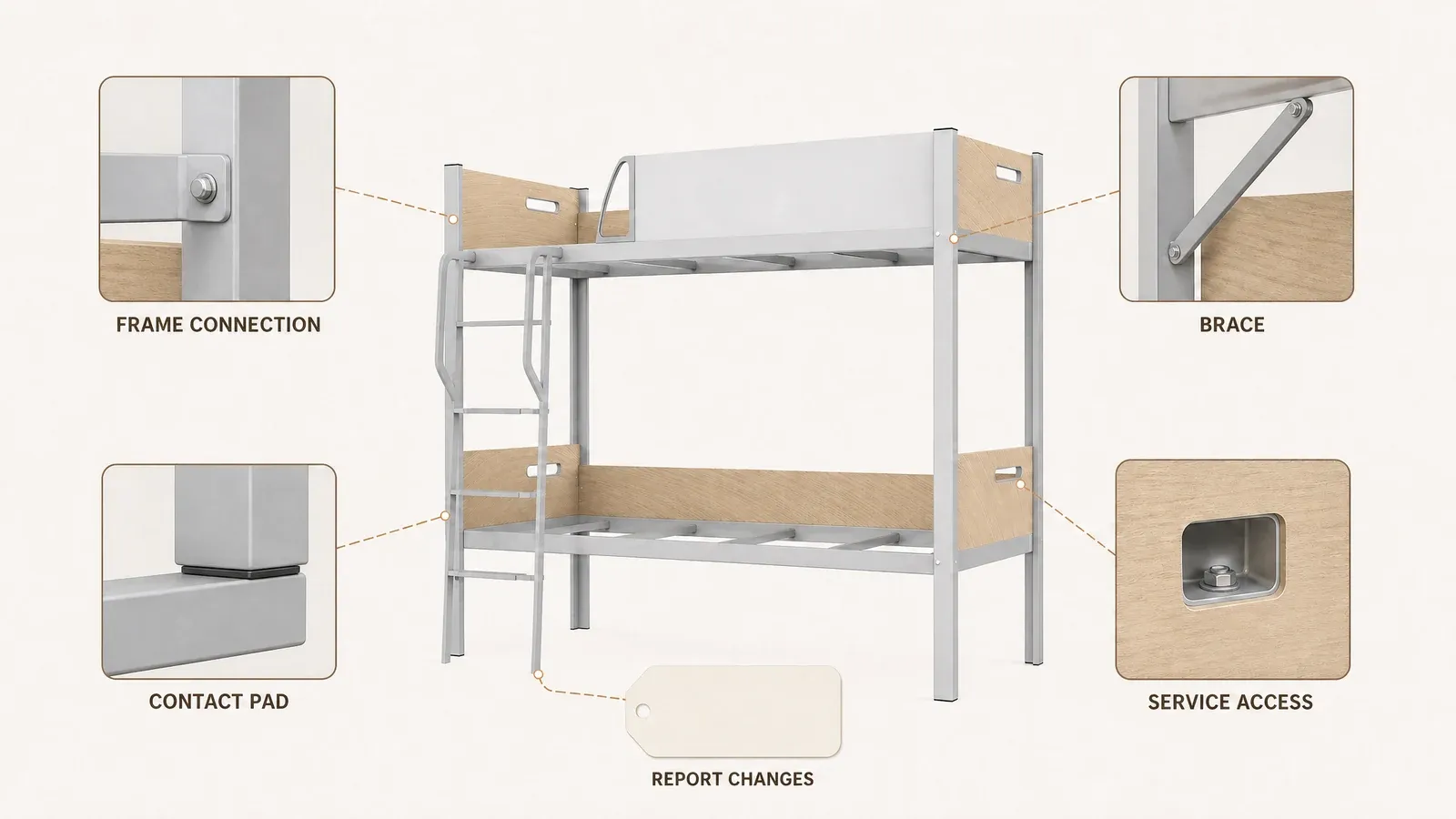
Maintenance begins with access to the relevant parts. Staff should be able to inspect connections, tighten approved fasteners, identify damaged components, and replace parts according to the manufacturer's instructions. A clear parts list and assembly guide make this work more consistent across many rooms.
Routine inspections can follow the way a bed is used. Staff can check the ladder and handholds, guardrails and openings, mattress supports, frame connections, floor contact, integrated desks or storage, and any approved electrical accessories. Student reports of new movement or noise can help maintenance teams find issues before they become more disruptive.
A bed that is easy to maintain has a structure, connections, and accessories that can be inspected and serviced through a clear process over its service life.
How Can Schools Use Student Feedback to Improve Dormitory Beds?
Students can describe details that a catalogue or installation drawing may not reveal. They know whether a ladder is awkward to approach, where small items tend to fall, whether a reading light reaches the right area, and which noises recur at night. A short, focused feedback process can turn these observations into useful facility information.
Questions can follow the same daily routines covered in this article:
- Is it easy to approach and use the ladder?
- Is there enough room to enter, turn, sit up, and arrange bedding?
- Can frequently used personal items be stored within comfortable reach?
- Do privacy features, lighting, and charging work without obstructing access?
- Has the bed developed movement, noise, damaged parts, or recurring maintenance needs?
Feedback becomes more useful when schools group it by residence hall, room type, bed configuration, or installation period. Maintenance records and on-site observations can then show whether a comment reflects an isolated issue or a recurring pattern. Room plans, mattress specifications, and furniture dimensions add the physical context needed to interpret the response.
Post-occupancy evaluation is one established way to organize this process. A study of student housing facilities in Malaysia used student surveys to examine a broad range of physical and social conditions. Its results belong to that institution and time, but its method reinforces a useful principle: housing satisfaction should be reviewed across several aspects of the living environment rather than attributed to one furniture feature.
Schools can use this evidence to set priorities for maintenance, room updates, and future furniture specifications. Improvements to access, comfort, storage, privacy, lighting, or maintenance can then be checked against later feedback. This creates a practical path from a bed that is simply available to one that is easier for students and staff to use.
School Dormitory Bed Usability: Frequently Asked Questions
What makes a school dormitory bed easy to use?
A school dormitory bed is easier to use when students can climb, settle in, store personal items, reach everyday essentials, and move around the bed without unnecessary difficulty. Access, bed and mattress fit, bedside organization, privacy features, lighting, charging, noise, and maintenance all contribute to the experience.
Which ladder and guardrail details should schools review?
Schools should review the complete route to the sleeping surface, including ladder position, footholds, handholds, guardrail openings, mattress compatibility, nearby furniture, and room circulation. The applicable requirements and dimensions should be confirmed for the target market and the specific bed-and-mattress configuration.
How can bedside storage improve dormitory space optimization?
Bedside storage can give frequently used items a clear, reachable place and reduce the need to leave them on the sleeping surface, desk, or circulation path. Shelves, trays, and hanging storage should be checked for reach, item retention, cleaning access, and compatibility with the bed and guardrails.
Can privacy, lighting and charging features improve the student experience?
Privacy screens or curtain provisions can create a clearer visual boundary, while a suitable reading light and reachable charging point can make evening routines more convenient. Schools should also consider roommates, circulation, fire requirements, electrical rules, and maintenance access when planning these features.
How should schools measure student satisfaction with dormitory beds?
Schools can collect feedback by residence hall, room type, or bed configuration and compare it with maintenance records and on-site observations. Questions can cover access, comfort, storage, privacy, lighting, charging, noise, and repair needs. This helps identify recurring problems without treating any single feature as a guaranteed satisfaction result.
Research references: University of Illinois Residence Hall Furniture Dimensions and Measuring Satisfaction with Student Housing Facilities.
For related planning context, see the guides to student dormitory bed types and loft beds with desks.