
Powder Coating Process for Metal School Furniture: From Pretreatment to Inspection
A process-focused guide to how pretreatment, electrostatic application, curing, cooling, and inspection create a finished powder-coated surface on metal school furniture.
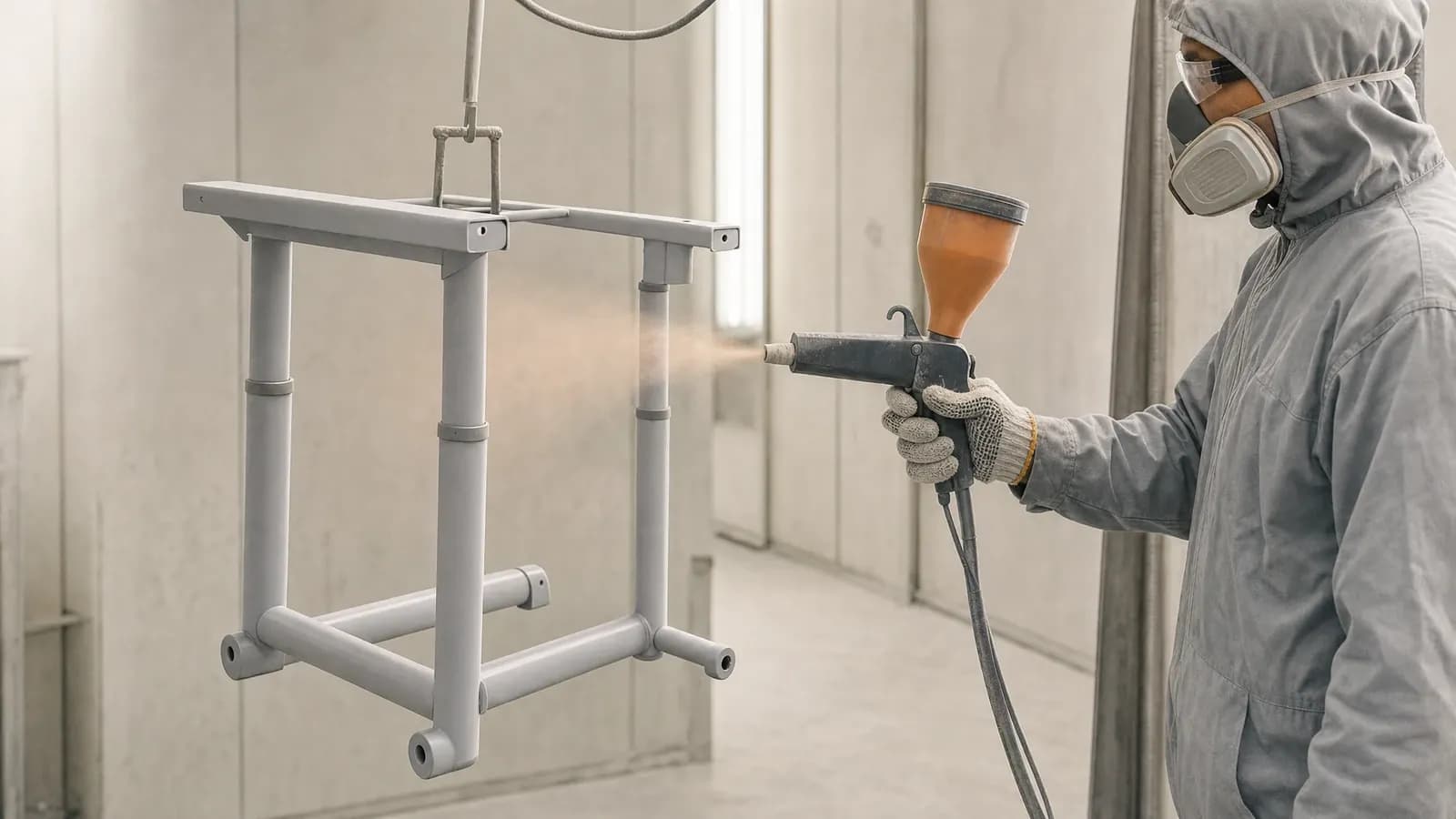
Table of Contents
Powder coating gives steel desk and chair frames, metal cabinets, brackets, and other school furniture components a protective and decorative finish. This guide follows a metal part through the powder coating process, from surface preparation and electrostatic application to curing, cooling, and final inspection.
What Is Powder Coating and Why Is It Used for Metal School Furniture?
Powder coating is a dry metal-finishing process. Finely ground coating powder is applied to a metal surface by electrostatic spray and then heated to form a continuous film. The finished layer covers the substrate without the liquid carrier used in conventional wet paint.
This finish suits many of the metal parts found in schools: tubular student desk and chair frames, table legs, welded supports, locker panels, cabinet doors, and metal connectors. These components are moved, touched, cleaned, and occasionally knocked during daily use. A properly prepared and cured powder coating adds a hard surface that resists impact, wear, and corrosion while protecting the metal beneath. Color, gloss, matte, and textured finishes also allow the same process to support different classroom and storage designs.
Powder application can also use coating material efficiently. Overspray can be collected and reused in a suitable recovery system, and the dry process reduces reliance on solvents and the VOC emissions associated with them. Yuzhen Furniture's documented process records powder recovery, material utilization above 95%, and solvent-free powder with no VOC emissions for the covered coating. Actual finish performance develops from the selected powder, metal substrate, pretreatment, film thickness, and cure.
Overview of the Powder Coating Process
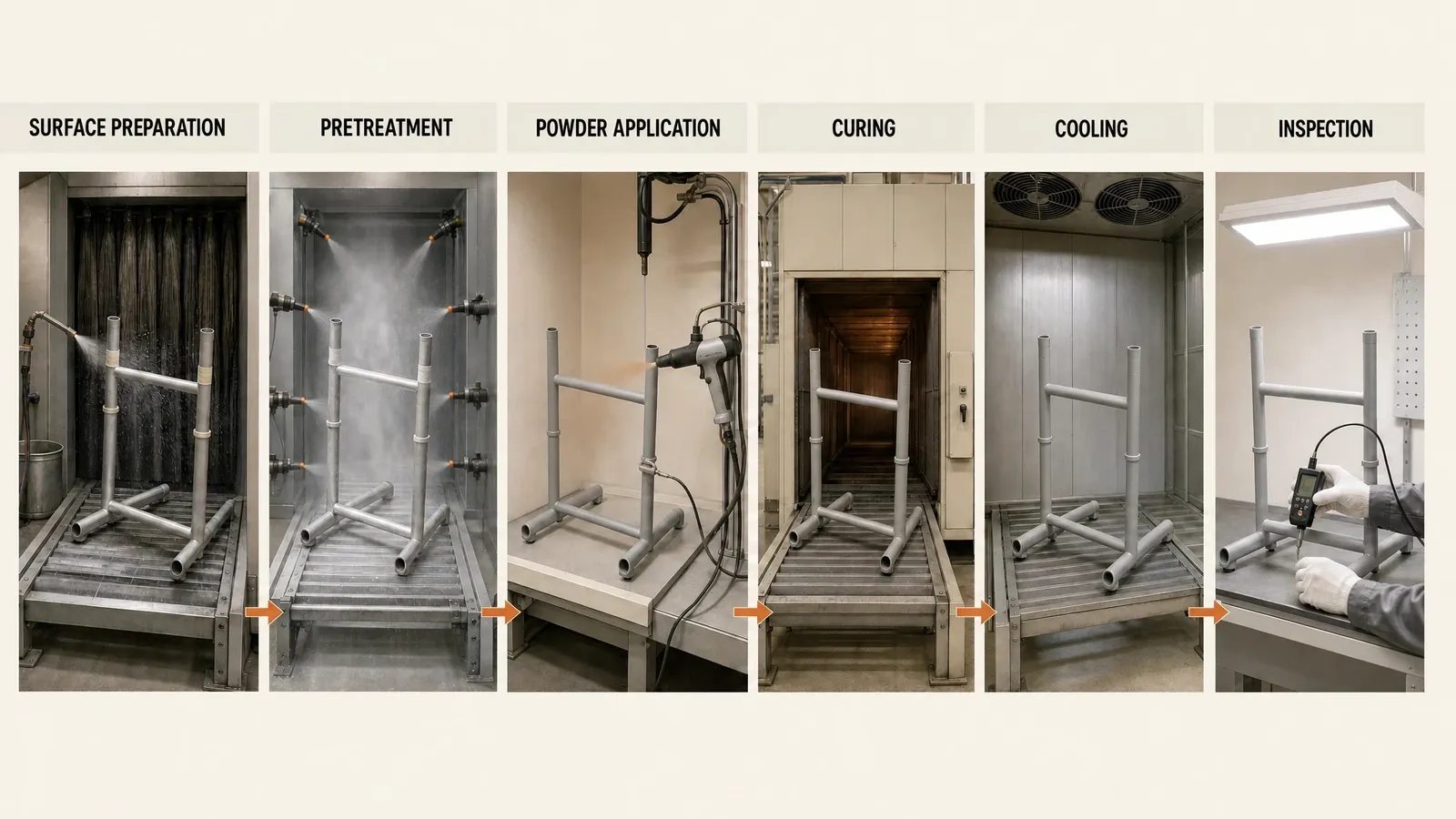
The main powder coating process steps follow one continuous route:
- Surface preparation: remove oil, rust, scale, dust, and production residue.
- Pretreatment: clean and convert the metal surface, then rinse, dry, and mask specified areas.
- Electrostatic application: spray charged powder onto the grounded workpiece.
- Curing: heat the deposited powder until it flows and forms the finished coating.
- Cooling: allow the coated part to cool before handling and further work.
- Inspection: check appearance, coverage, film thickness, cure, and adhesion.
Each stage prepares the part for the next. The following sections explain what happens at each point and how it changes the finished surface.
Metal Pretreatment: Preparing the Surface for Coating
The pretreatment process for powder coating creates the surface that will receive the film. Oil, rust, mill scale, dust, and fabrication residue interrupt coating contact and can later appear as weak adhesion, blistering, or corrosion beneath the film. Pretreatment removes these contaminants and leaves a clean, bondable metal surface.
Cleaning and Removing Surface Contaminants
The cleaning method follows the condition of the part. Degreasing removes oil and processing residue. Rust and loose oxide can be removed chemically or by mechanical methods such as blasting. Heavier scale or persistent deposits may need more intensive mechanical cleaning. A formed steel panel, welded tube frame, and previously exposed component can therefore require different preparation.
Yuzhen Furniture's documented pretreatment route uses degreasing and rust removal on the covered metal parts. Local surface correction, sanding, or filling may be added where the part condition requires it; these are supporting treatments rather than fixed steps for every component.
Phosphating, Rinsing, and Drying
After contaminants have been removed, phosphating can create a conversion layer that supports coating adhesion and corrosion protection. Rinsing carries loosened soil and treatment residue away from the surface, while complete drying prevents moisture from remaining under the powder layer. Yuzhen Furniture's documented route combines degreasing, rust removal, and phosphating for the applicable parts.
Masking protects threads, mating surfaces, electrical contact points, holes, and other locations that need to remain free of coating. Some parts may also receive sanding, filling, or preheating when their surface condition or coating requirement calls for it. The main pretreatment sequence remains clear: remove contamination, prepare the metal surface, rinse and dry it, then protect the areas that should not be coated.
Electrostatic Powder Application
How Electrostatic Powder Application Works
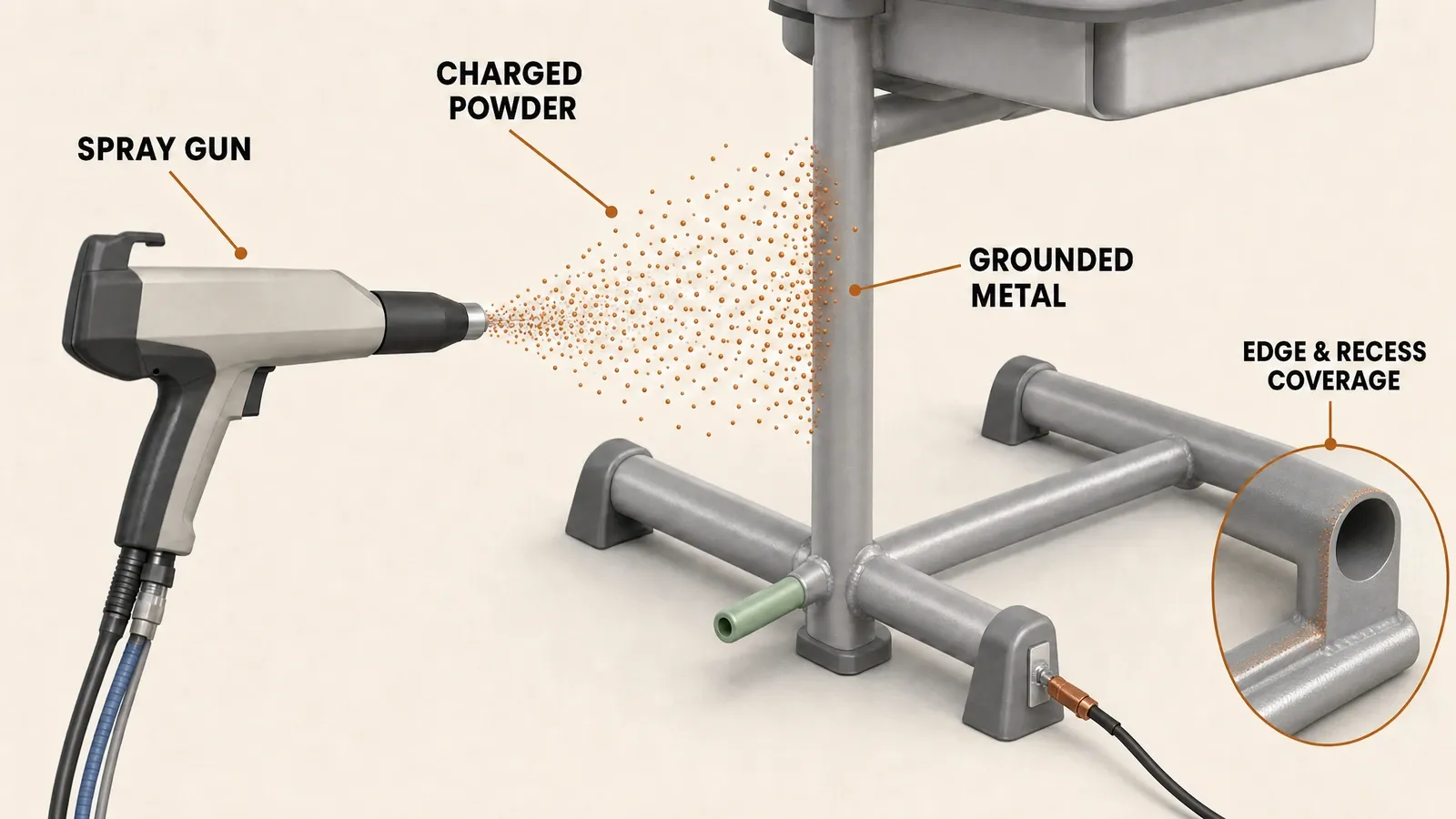
In the electrostatic powder coating process, compressed air carries powder through the spray gun, where the particles receive an electrical charge. The workpiece hangs from a grounded conveyor or fixture. The electric field and the moving air carry the charged particles toward the metal, and electrostatic attraction holds them on the surface as an uncured powder layer.
Reliable grounding gives the charge a path through the workpiece and allows the powder to build on the intended surface. Powder flow, spray distance, gun movement, part position, and conveyor speed then shape how evenly the layer develops. At this stage the coating is still loose powder; the oven will later turn it into a solid film.
Achieving Coverage on Edges, Corners, and Recessed Areas
Metal school furniture includes more than open flat surfaces. Steel tube frames have welded junctions, folded cabinet panels create internal corners, and brackets can include narrow gaps or recessed faces. Powder usually reaches open faces more easily than deep corners and channels.
Recessed geometries can create a Faraday cage effect, where the electric field concentrates near the opening and less powder reaches the deepest area. Gun angle, spray distance, air movement, electrical settings, workpiece orientation, and grounding can be adjusted to improve access and coverage. These controls help the powder follow the actual shape of a desk frame or cabinet instead of building heavily on the easiest surfaces and lightly in the recesses.
Curing: Turning Powder into a Protective Coating
Melting, Flow, and Curing
Heat changes the deposited powder into the finished coating. The particles melt, join together, and flow across the surface to form a continuous film. With thermosetting powder, heat also drives a cross-linking reaction that establishes the final solid coating. Thermoplastic powder softens and flows under heat without the same chemical cross-linking mechanism.
As the film develops, its color, gloss, texture, hardness, adhesion, and protective performance take shape. A complete cure produces a continuous surface; an incomplete or excessive cure can alter appearance and performance. The powder supplier's technical data therefore provides the cure schedule for the selected material.
Controlling Metal Temperature and Curing Time
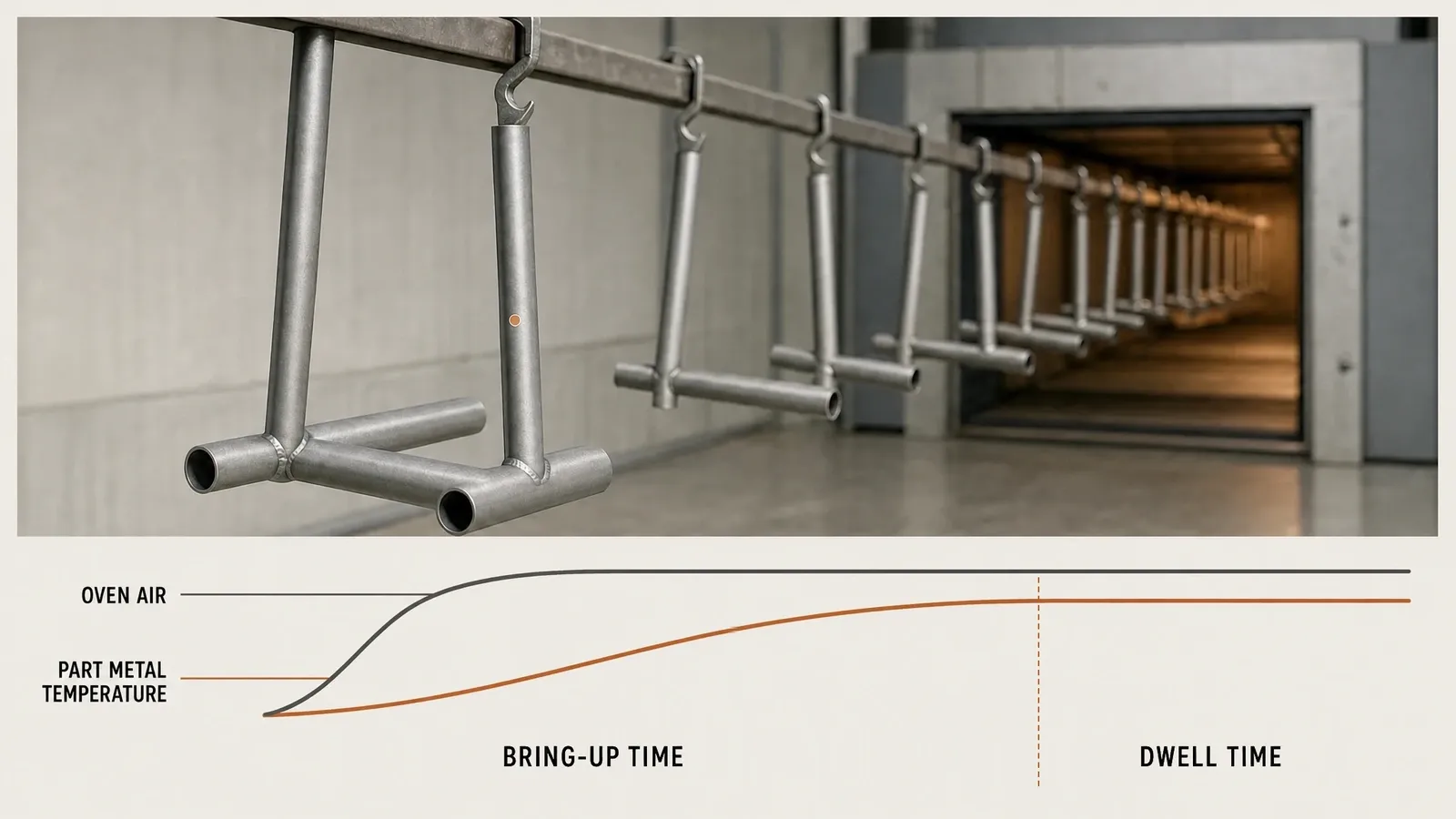
Oven air temperature and part metal temperature describe different conditions. The air can reach its set point before a steel tube, welded frame, or thick bracket reaches the temperature required by the powder. Bring-up time covers this heating period. Dwell time begins after the metal reaches the specified temperature and remains there for the required duration.
Part thickness, mass, geometry, loading pattern, and airflow all influence the heating curve. An oven profile shows how the actual workpiece warms and helps confirm that its metal temperature follows the powder's cure schedule.
Yuzhen Furniture's documented process uses an oven setting of 180–200°C and a recorded heating time of 15–20 minutes for the covered workpieces. These are company process records for the applicable coating route. The selected powder data and the actual part metal temperature show how the settings apply to a particular component.
Cooling and Quality Inspection
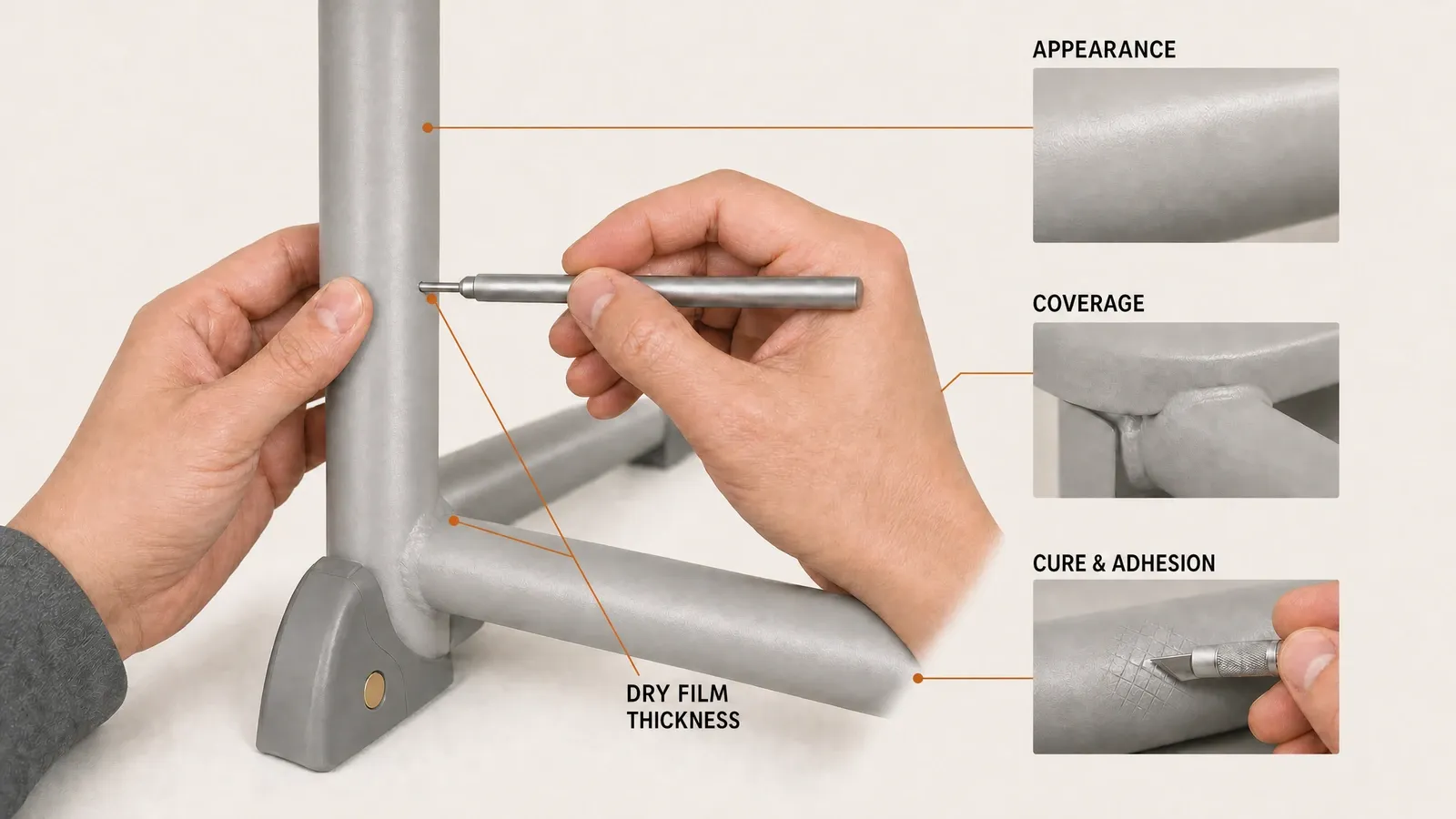
The coated part needs to cool before routine handling, assembly, or packing. Once cool, the surface can be inspected in the same order a reviewer encounters it: visible finish and coverage first, followed by film thickness, cure, and adhesion.
Visual Appearance and Surface Coverage
Visual inspection checks whether the finish is even and whether all specified surfaces are covered. Color, gloss, and texture should match the approved finish. The reviewer also looks for missed areas, particles, pinholes, craters, bubbles, scratches, handling marks, and thin coverage around edges, corners, welds, or recessed areas.
The location and pattern of a defect help identify its likely source. Surface contamination can disturb the film locally; uneven application can leave light or heavy areas; curing conditions can affect flow, gloss, or hardness; and handling can mark a coating after it leaves the oven. Findings can then be corrected and the affected area checked again.
Dry Film Thickness and Coating Performance
Dry film thickness, or DFT, measures the cured coating on the metal. The result is read against the applicable product or order specification and the stated measurement method. Yuzhen Furniture's documented finished-film range is 50–100 µm for the covered powder-coating process.
Film thickness answers one part of the quality question. Cure confirmation checks whether the metal reached the required temperature for the required time, while adhesion testing checks how the film bonds to the prepared substrate. Together with the visual review, these checks show whether the coating has the intended appearance, coverage, film build, cure, and bond.
What to Check in Powder-Coated School Furniture
The production process gives buyers and quality reviewers a practical way to examine finished furniture. The most useful checks stay close to the surface and the metal component itself:
| Check | What to look for | Why it matters |
|---|---|---|
| Overall finish | Consistent color, gloss, or texture across matching parts | Confirms the specified visual result |
| Surface coverage | Continuous coating on faces, edges, corners, welds, and recesses | Reveals missed or thinly coated areas |
| Visible defects | No unintended particles, pinholes, craters, bubbles, scratches, or handling damage | Identifies application, curing, or handling findings |
| Dry film thickness | Measurements within the applicable product or order range | Confirms the intended film build on the metal |
| Cure and adhesion | Results that meet the selected coating and inspection requirements | Confirms that the film has cured and bonded to the prepared surface |
A sample review can also compare the finish on the actual furniture geometry. A flat reference panel cannot show every welded joint, tube intersection, folded edge, or cabinet recess found on the finished product. Checking those locations connects the coating requirement to the component that students and staff will use.
Powder-coating quality also sits within the wider furniture production path. Fabrication affects welds and edges before coating; assembly and handling can affect the finish afterward. The furniture manufacturing quality-control guide explains how coating inspection fits alongside materials, fabrication, assembly, final inspection, and packaging. Yuzhen Furniture can review the metal component, finish, color, target market, quantity, and project requirements through its factory overview and project inquiry pages.
Powder Coating Process: Frequently Asked Questions
How does powder coating work on metal school furniture?
Powder coating uses a spray gun to charge dry powder and apply it to a grounded metal part. Electrostatic attraction holds the uncured powder on the surface. Heat then melts and flows the particles into a continuous film; thermosetting powder also cross-links as it cures. Surface preparation, application coverage, curing, and final inspection shape the finished result.
Why is pretreatment important before powder coating?
Pretreatment removes oil, rust, scale, dust, and processing residue that can interfere with coating contact. Cleaning and an appropriate conversion treatment create a more bondable metal surface, while rinsing and drying remove residue and moisture before application. The actual sequence follows the substrate, its condition, and the required finish.
How are powder coating curing temperature and time determined?
Start with the powder supplier's cure schedule, which specifies the required part metal temperature and time. The metal first needs to reach that temperature, and the specified dwell time follows. Part thickness, mass, geometry, oven loading, and airflow influence the heating curve, so an oven profile can confirm the actual part condition. Yuzhen Furniture's documented 180–200°C oven setting and 15–20 minute heating time apply only to the covered process.
How thick is powder coating on metal school furniture?
Powder-coating thickness is measured after curing as dry film thickness and should be read against the applicable product or order specification. Yuzhen Furniture's approved process record uses a 50–100 µm finished-film range for the covered coating. Other powders and components use the thickness specified for their own application.
What powder coating defects should buyers check on metal school furniture?
Check for missed or thin coverage, unintended particles, pinholes, craters, bubbles, scratches, handling marks, and inconsistent color, gloss, or texture. Edges, welds, internal corners, and recesses deserve close attention because their geometry can affect coverage. Dry film thickness, cure, and adhesion checks add information that visual inspection alone cannot provide.
Method references: Powder Coating Institute: What is Powder Coating?, Powder Coating Institute: Frequently Asked Questions, APCS: Powder Coating 101, TIGER: The Powder Coating Process Explained, TIGER: Powder Coating Pretreatment, Seattle Powder Coat: Powder Coating Process, PPG: Advantages of Powder Coatings, and Thermaset: Powder Coating Powder FAQs.