
Furniture Manufacturing Quality Control: A Practical Guide for School Furniture Orders
Learn how to plan school furniture quality control across approved requirements, production checks, inspection records, packing, and order decisions.
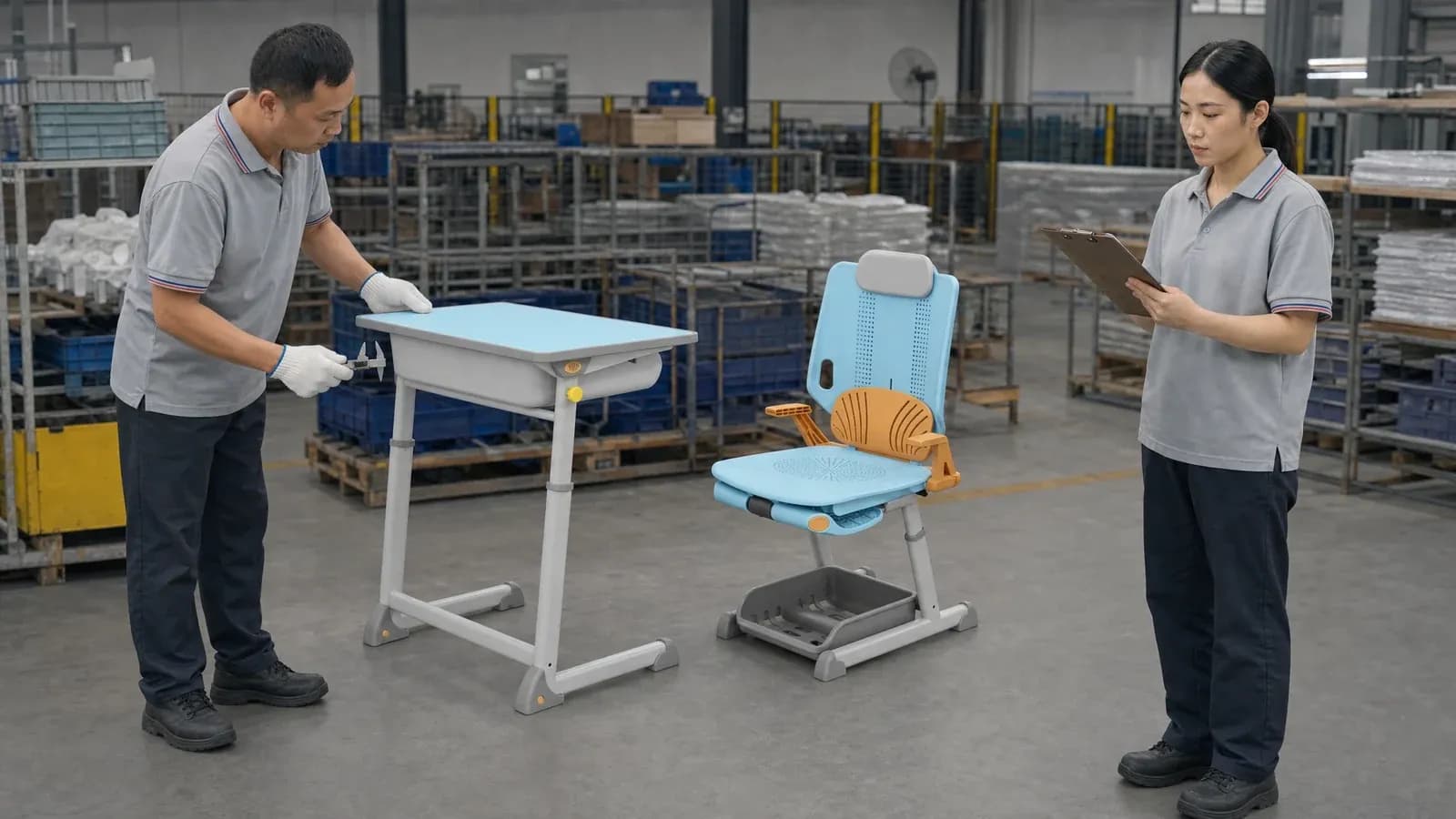
Table of Contents
Furniture orders often reach final assembly with small inconsistencies already built in: misaligned frames, finish variations, missing fasteners, or dimensions that no longer match the approved drawing. Quality control in furniture manufacturing keeps these issues visible throughout the order. Clear criteria, well-timed checks, and traceable findings give teams time to correct problems and make confident approval, reinspection, and shipment decisions. This guide shows how to apply that approach to school furniture.
Key takeaways
- Start with the approved specification, drawing, sample, configuration, and order record.
- Place checks where a finding can still support correction or approval.
- Build the checklist around the product's real risks and intended use.
- Keep each finding, supporting record, scope, and action status together.
How Inspection Timing Improves Furniture Manufacturing Quality Control
Final inspection shows the condition of finished and packed goods. Earlier checks add another advantage: they reveal issues while materials, components, assembly work, or finishes can still be reviewed and adjusted.
For example, a dimension found during early production can be compared with the approved drawing before more units follow the same setup. A finish concern can be reviewed while the relevant batch is still identifiable. A missing component becomes easier to trace before cartons are closed and loading begins.
The Inspection Company's furniture quality-control guide uses this practical timing logic across the order. A practical takeaway is to place each check where its result can support an action. The project then defines the actual stages, frequency, responsible parties, and approval route.
Set Priorities Around the Furniture and Its Use
Different types of school furniture bring different inspection priorities. A desk or chair may focus attention on dimensions, connection points, stability, edges, glides, and surface condition. Storage furniture brings doors, drawers, locks, shelves, labels, and anchoring requirements into view when they apply. Dormitory furniture can add assembly fit, access, guard components, ladders, and packing completeness to the plan.
The intended users and room routine help set the order of attention. Furniture that students move often creates a different check plan from a fixed storage unit. Flat-packed products also need clear hardware, assembly, and carton controls. These observations guide the checklist while the approved project documents supply the acceptance details.
Use Each Check to Support a Decision
A useful check answers three questions: What approved requirement applies? What condition did the inspector observe? What action follows from the result?
Those answers turn an inspection from a collection of photos into a decision record. The record can support correction during production, approval of finished goods, a hold for review, rework, reinspection, or shipment when the project requirements are met.
How to Plan Quality Checks Across a School Furniture Order
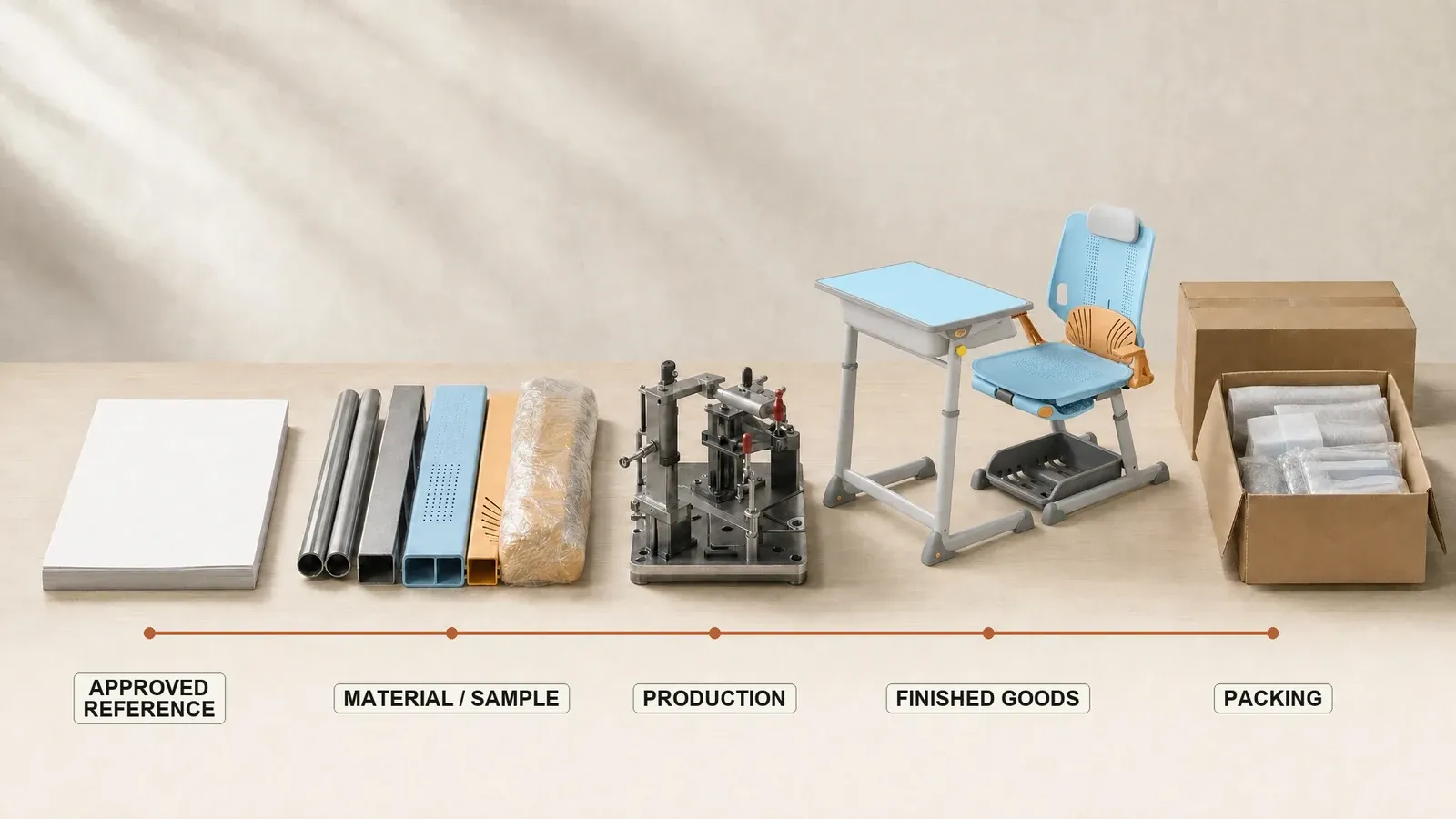
A practical order plan connects five areas: approved requirements, materials and samples, production output, finished goods, and packing. This sequence gives buyers a consistent way to organize checks while leaving the exact control points to the product, factory arrangement, contract, and order risk.
UNICEF's School Furniture Design and Procurement Guidelines connect specification, design, production, delivery, and maintenance as parts of one school furniture program. The same continuity helps inspection records stay connected to the original requirement.
1. Lock the Approved References
Begin with the current specification, drawing, configuration or bill of materials, approved sample, finish decision, label requirement, packing instruction, and order record that apply to the product. Record the revision or date where one exists.
This step gives later checks a common comparison point. It also prevents an old drawing, an unapproved sample, or a sales image from quietly becoming the production reference.
2. Confirm Relevant Materials and Samples
Identify the materials, components, finishes, and samples that matter to the selected product. Compare their names, visible characteristics, dimensions, or accompanying records with the approved references at a stage where changes remain practical.
The record identifies what was reviewed and which product, component, batch, or sample it covered. That link keeps a material or sample observation attached to its actual scope.
3. Review Production Output While Action Is Practical
Use early or in-process output to check the features most likely to repeat across the order. For the selected furniture, relevant checks may include dimensions, alignment, joints, component fit, edge condition, finish consistency, moving parts, or assembly steps.
Record the observed condition and the relevant reference. When a finding needs attention, add its current action status so the next review can follow the same issue without starting again.
4. Verify Finished Goods Against the Same Reference
Finished-goods inspection brings the completed product back to the approved requirement. Check the applicable dimensions, construction, workmanship, surface condition, assembly, function, labels, accessories, and quantity or sample context.
Labelled photos help show the inspected condition. The label can identify the product, model, batch, carton, or inspection stage. Separate test reports and compliance documents stay connected to their own sample, method, result, date, and scope.
5. Align Packing With the Order Decision
Packing checks connect product condition with the planned route to the project site. Review product identity, quantities, accessories, assembly information, protective packing, carton markings, and order-specific labels where they apply.
The final record brings open findings and their current status together. That information gives the authorized project team a clear basis for release, hold, rework, or reinspection.
How to Build a Furniture Inspection Checklist That Works
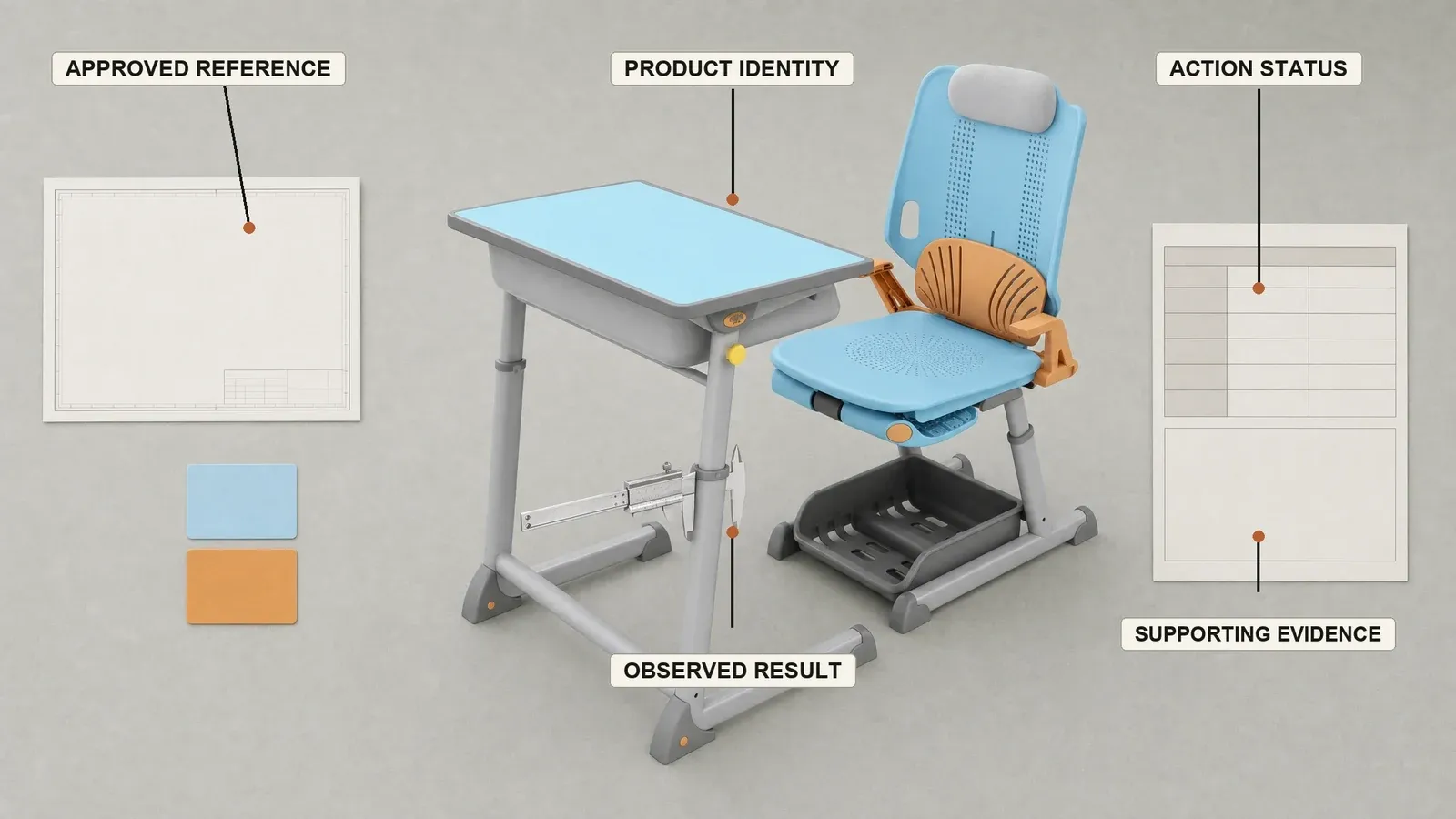
A furniture inspection checklist becomes useful when every field connects an approved requirement to an observed result and a next action. A furniture quality control checklist can stay compact while preserving the context needed to understand each finding.
| Checklist field | What to record | Why it matters |
|---|---|---|
| Approved reference | Document, drawing, sample, configuration, order, revision, or date | Establishes the comparison point |
| Product identity | Product, model, configuration, order, batch, or carton | Shows what the result covers |
| Inspection context | Stage, location, inspected quantity, lot, or sample | Defines the observed scope |
| Check item | Applicable material, dimension, construction, finish, function, label, or packing criterion | Keeps the check relevant to the product |
| Observed result | Measurement, condition, function, count, or clear observation | Records what the inspector found |
| Supporting evidence | Labelled photo, record, report, or document | Makes the finding easier to review |
| Action status | Accepted, open for review, rework, reinspection, hold, or other project-defined status | Connects the finding to the next decision |
Pro QC's furniture inspection guide and TradeAider's inspection checklist show how product identity, construction, dimensions, workmanship, function, labels, and packing can be organized into practical groups. The working checklist includes only the groups relevant to the selected product and order.
Adjust the Checklist by Furniture Type
Start with product identity, then add the groups that reflect the furniture's construction and use.
- Desks and tables: dimensions, frame alignment, work-surface condition, edges, connections, glides, adjustment or folding features, and packing.
- Chairs and stools: dimensions, frame or shell condition, joints, fasteners, stability, contact edges, glides, moving parts, and finish.
- Storage furniture: dimensions, cabinet alignment, doors, drawers, locks, shelves, handles, anchoring provisions when specified, labels, and packing.
- Dormitory furniture: frame dimensions, connections, assembly fit, access components, guard components where specified, included hardware, instructions, and packing.
These groups identify useful observation areas. The current specification, intended use, destination requirements, and approved configuration provide the actual criteria.
Keep Sampling Rules With the Lot Decision
Sampling gives the project information about the inspected sample and the defined lot. A readable sampling record keeps the lot, sample, inspection criteria, observed results, and decision together.
ISO 2859-1:2026 describes acceptance sampling plans indexed by acceptance quality limit, or AQL, for lot-by-lot inspection by attributes. When a project adopts this method, the inspection plan records the lot, inspection level, AQL, sample, and acceptance plan used. These project choices make the sampling result clear and reusable.
How Inspection Evidence Supports an Order Decision
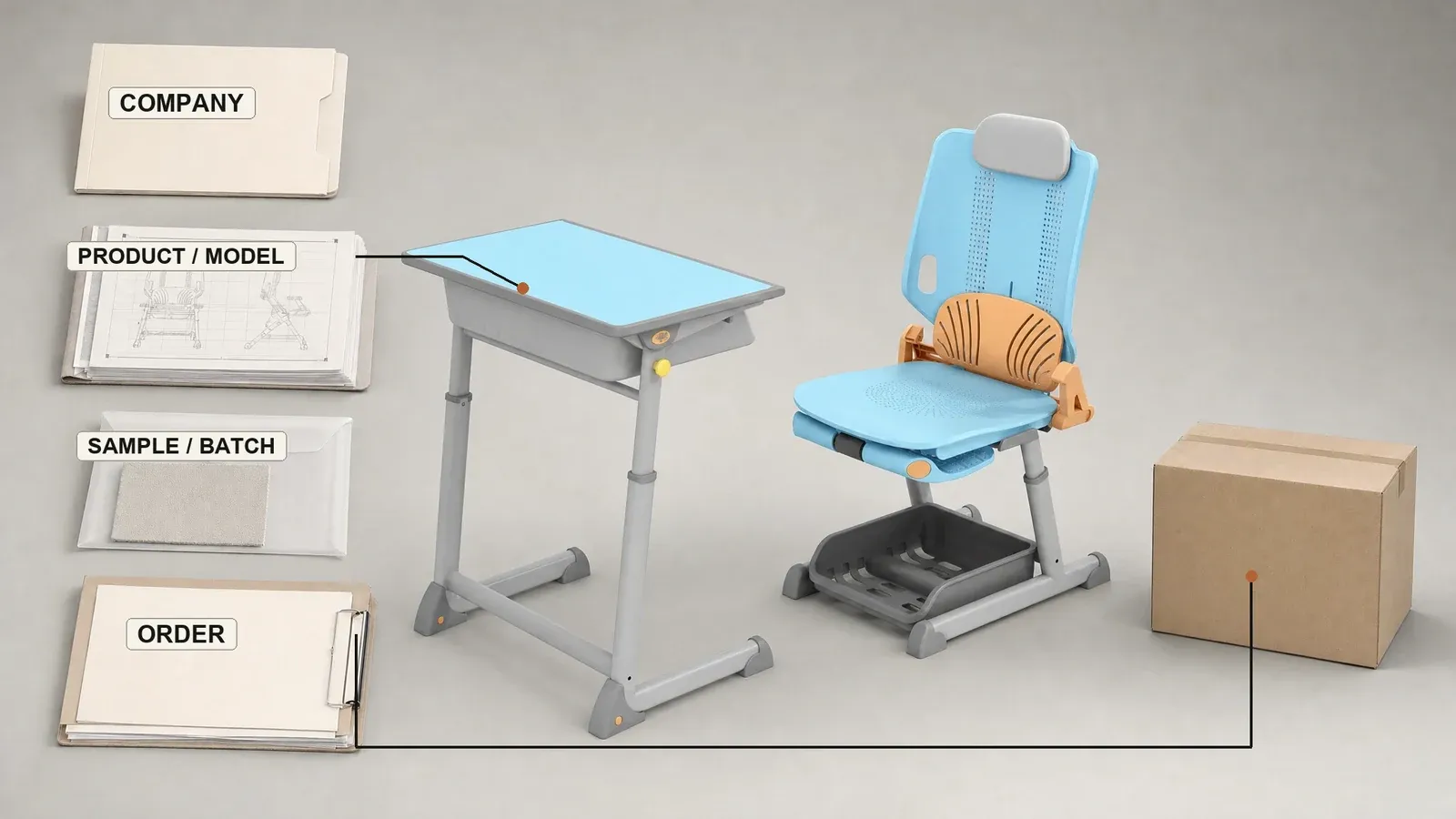
Inspection evidence becomes useful when the reader can see who recorded it, what it covers, which criterion applies, what the result says, and what action remains open. Different records answer different questions, so keeping their evidence level visible improves the order decision.
| Evidence level | Typical record | Question it can answer |
|---|---|---|
| Company | Management-system certificate | Which organization and activities fall within the certificate scope? |
| Product or model | Product certificate, specification, or test report | Which product, model, configuration, sample, method, and result are covered? |
| Sample or batch | Sample approval or inspection record | What was reviewed, and which sample or batch does the result represent? |
| Order | Order inspection, packing, or release record | What was observed for this order, and what is its current action status? |
ISO's quality management overview explains ISO 9001 as a quality management system standard for organizations. Yuzhen Furniture operates under an ISO 9001-certified quality management system. This provides company-level evidence within the certificate scope. Product, model, sample, and order records then answer the corresponding furniture and inspection questions; the Yuzhen Furniture quality page provides the relevant evidence entry point.
Read Findings as an Action Trail
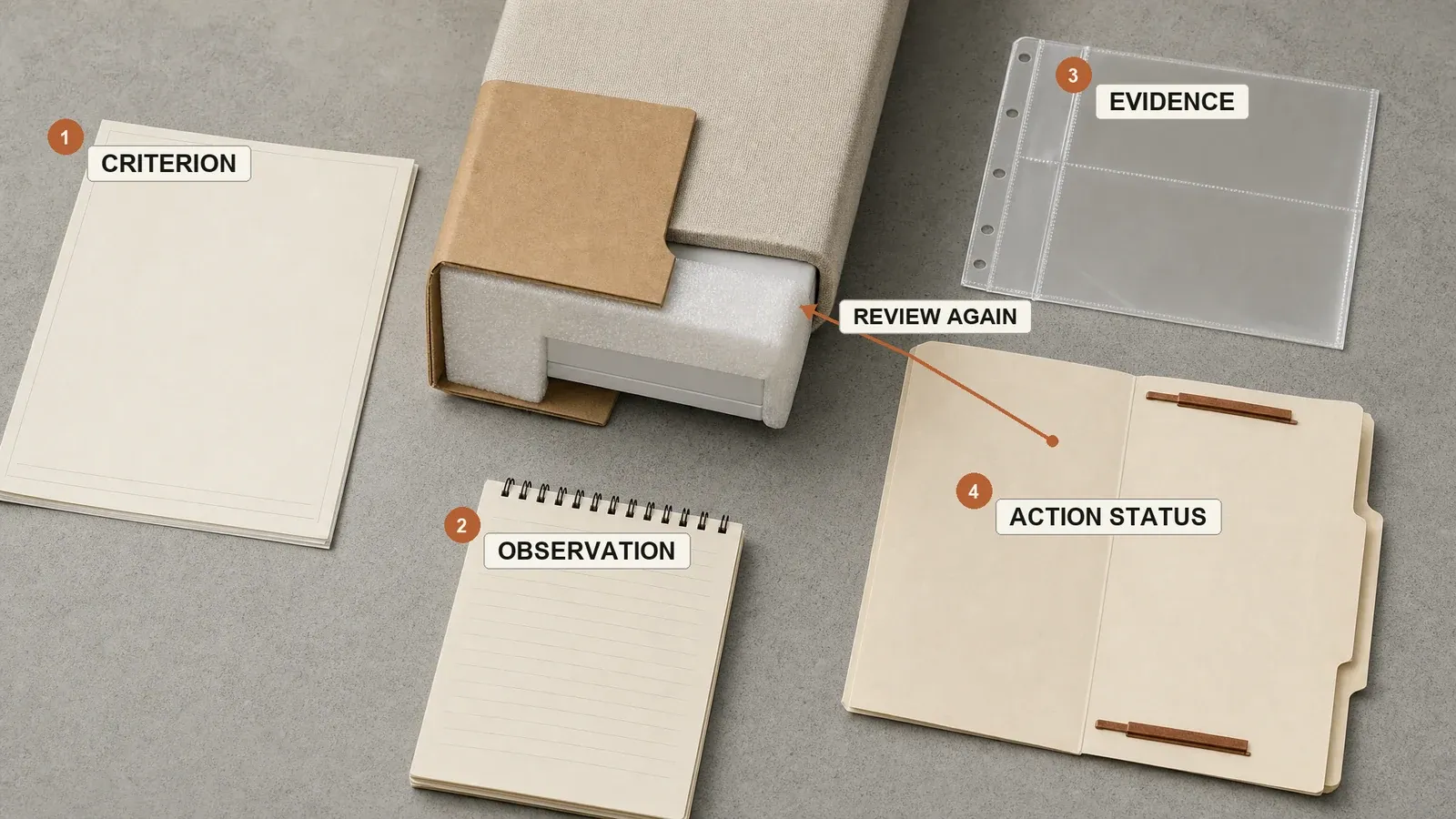
A clear finding begins with the approved criterion and observed condition. It then adds a labelled photo or record, the affected product or batch, and the current action status.
The status may support release, hold, rework, or reinspection under the project's agreed authority. Keeping the earlier finding and later response together shows whether the same issue was reviewed again and what decision followed.
Match Every Record to Its Scope
A record is useful when it matches the question. A company certificate explains the covered management system. A product document explains the named product or category. A model test report stays with the tested sample, configuration, method, result, and date. An order record explains what happened in that order.
This simple hierarchy helps teams use each source confidently. It also shows which additional document can increase certainty before approval.
Prepare the Inspection Plan for a School Furniture Order
A focused inspection discussion starts with a clear project package. Prepare the information that defines the product, the users, the order, and the evidence needed for the next decision:
- product category, product reference, model, or current configuration;
- quantity and the intended users or room activities;
- destination market and any project-specified requirements;
- current specification, drawing, configuration or bill of materials, and approved sample;
- finish, label, accessory, assembly, and packing requirements;
- proposed inspection stages and the risk addressed at each stage;
- sampling, acceptance, rework, and reinspection rules selected for the project; and
- certificates, reports, photos, or order records needed for review.
The Yuzhen Furniture factory page gives context on manufacturing and factory capabilities. The quality page organizes certificate and test-evidence entry points. Together, those pages help a project team prepare focused questions for the selected furniture and order.
Share the product, quantity, intended users, destination, configuration, schedule, logistics context, approved references, and evidence needs through the Yuzhen Furniture project inquiry form. A complete starting package keeps the next discussion focused on relevant products, records, and inspection decisions.
Frequently Asked Questions
How should quality control in furniture manufacturing be planned for a school furniture order?
Start with the approved specification, drawing, sample, configuration, and order references. Place checks where findings can still guide correction or approval, then record the product or batch, criterion, observed result, supporting evidence, and action status for each decision.
What should a furniture inspection checklist record?
Record the approved reference, product or order identity, inspected quantity or sample, applicable criterion, observed condition, supporting photo or document, finding, and current action status. Group checks around the risks that apply to the selected furniture and configuration.
How do inspection records support a furniture order decision?
A useful record identifies the approved criterion, product or batch, inspected quantity or sample, observed condition, supporting photo or document, and current action status. Keeping the finding with its correction, reinspection, hold, or release decision shows what was reviewed and what remains open.