School Furniture OEM and ODM Services: Choosing the Right Project Path
Compare catalog, ODM, and OEM school-furniture routes, evaluate manufacturing partners, control samples and changes, and prepare a clear project inquiry.
Table of Contents
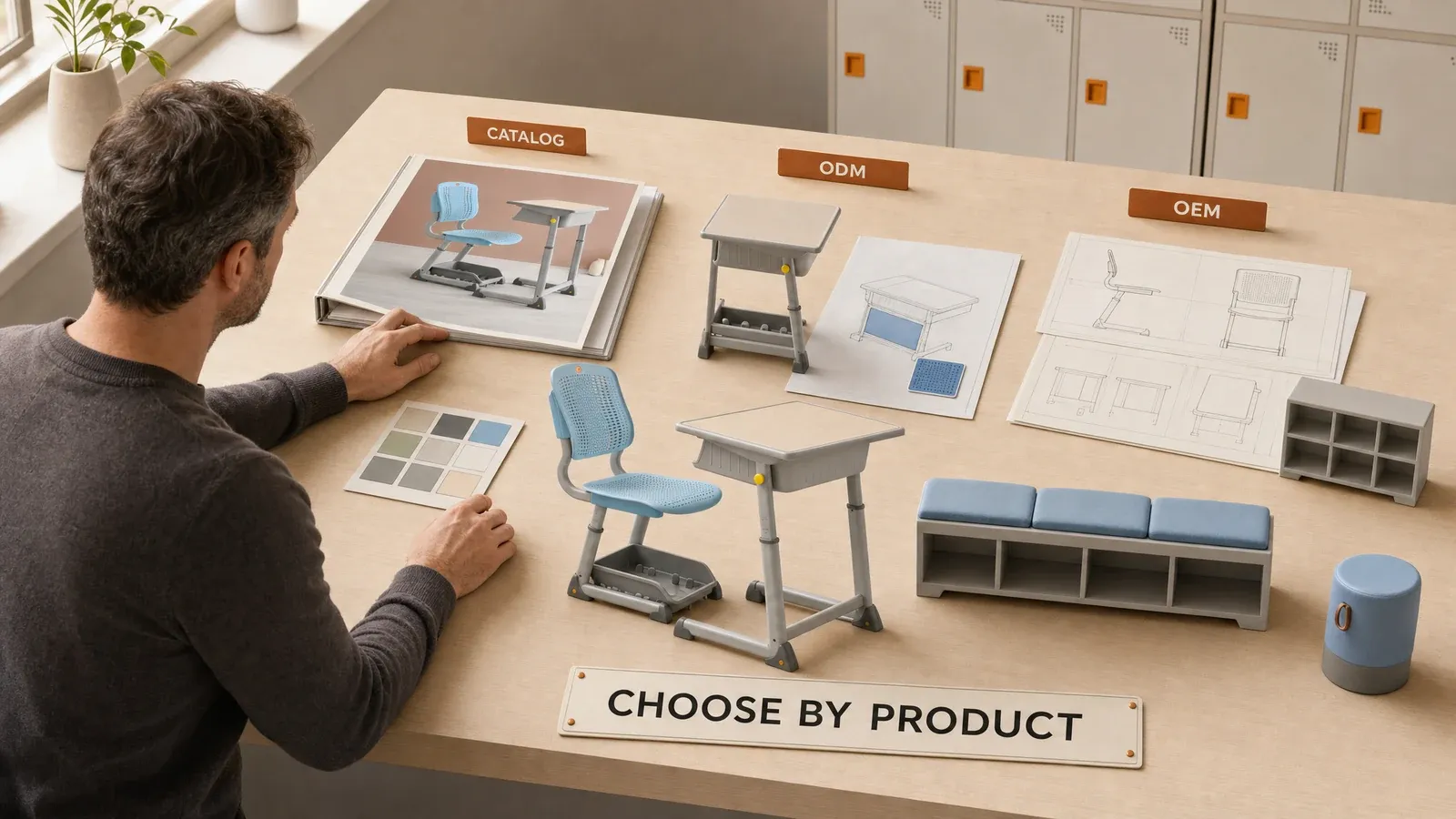
School furniture OEM and ODM services offer different ways to move from a product idea to a finished order. OEM starts with buyer-supplied drawings, specifications, or a reference sample. ODM adapts a manufacturer-developed design, while a catalog route keeps changes within the options already available. Many school projects use more than one route, matching each product to the design work, approvals, and commercial control it needs.
The label alone says little about the work included. Two OEM quotations can cover very different levels of engineering, tooling, sampling, testing, packaging, and design rights. A useful comparison follows the product from its starting design through drawings, samples, revisions, production checks, and order terms. That approach gives project teams a clearer way to compare offers and prevents important differences from surfacing late in the order.
How OEM, ODM, and Catalog School Furniture Differ
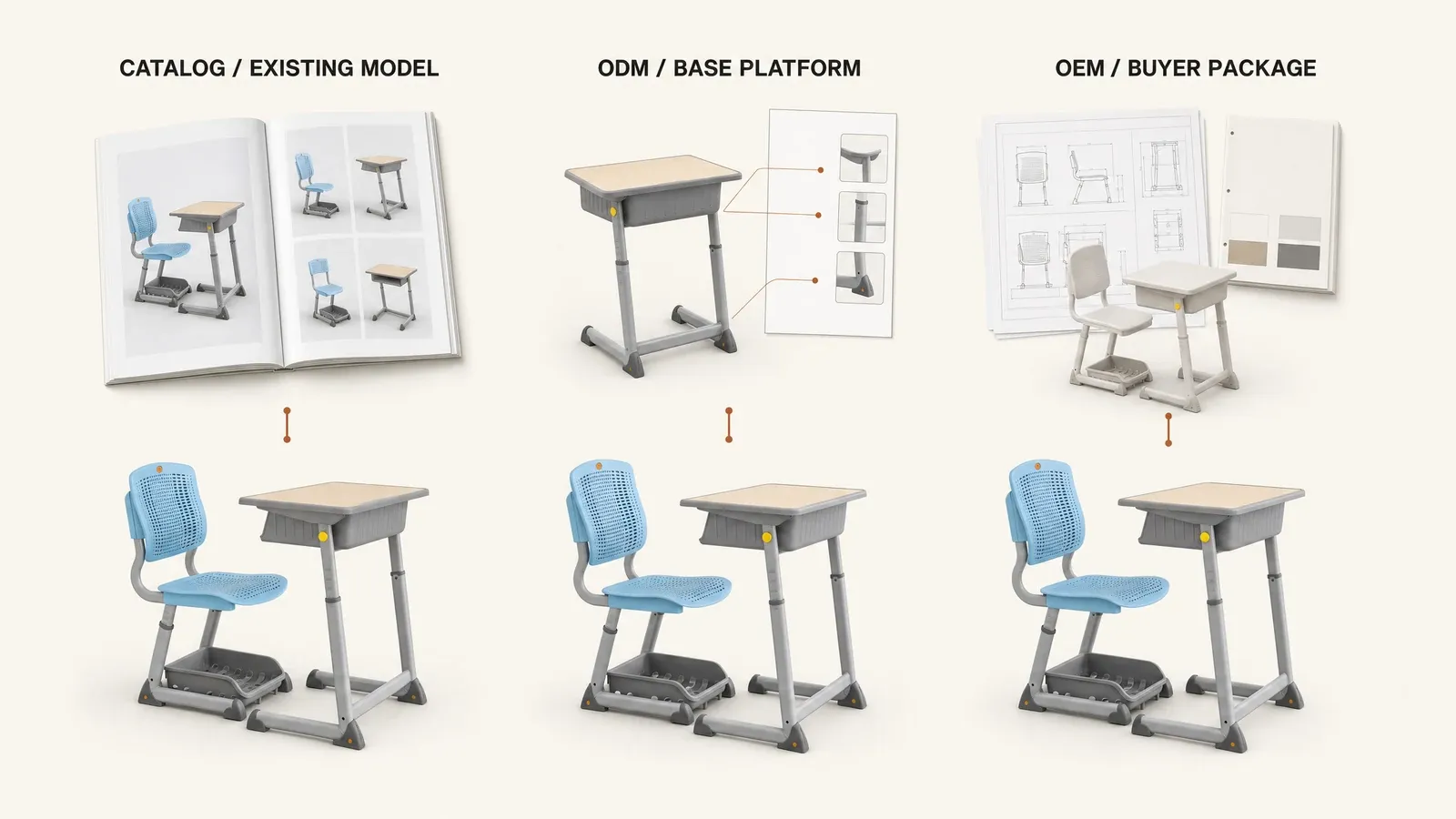
Furniture sourcing uses OEM and ODM to describe the starting point for product development. OEM begins with a buyer's design package. ODM begins with a product or platform developed by the manufacturer. Catalog sourcing begins with an existing model and its confirmed options. The practical scope comes from the specification, quotation, sample, and agreement attached to the project.
OEM develops a buyer-defined product
An OEM brief may include CAD drawings, dimensions and tolerances, material and construction requirements, finish references, a physical sample, packaging instructions, and acceptance criteria. The manufacturer reviews whether the product can be made as specified, identifies open engineering questions, and prepares the working drawings or bill of materials (BOM) used for sampling and approval.
This route suits a distributor creating a recognizable classroom range, a contractor working from an architect's package, or a school group repeating a defined room concept. The buyer remains closely involved in decisions about dimensions, materials, hardware, finishes, labels, packaging, testing, and acceptance. Complete, well-organized inputs give costing, engineering, sampling, and approval one product definition to follow.
ODM adapts a manufacturer-developed design
An ODM project starts with a base product the manufacturer has already developed. The buyer selects that platform and identifies the changes required for the users, room, market, and brand. The change list may cover a finish, selected components, labels, packaging, or another product-specific option confirmed during review.
This route can extend a product range from a developed starting point. The project team focuses its development work on matching the base product to the brief. A change to dimensions, structure, materials, or hardware can affect the sample, supporting evidence, price, and production reference, so each approved change belongs in the current drawing, configuration, or BOM.
Catalog products cover established requirements
A catalog route works well when an existing model already fits the intended use. The project confirms the model, configuration, finish, components, quantity, packaging, and applicable product evidence. Any color or accessory option remains tied to the specific product and order in which it was approved.
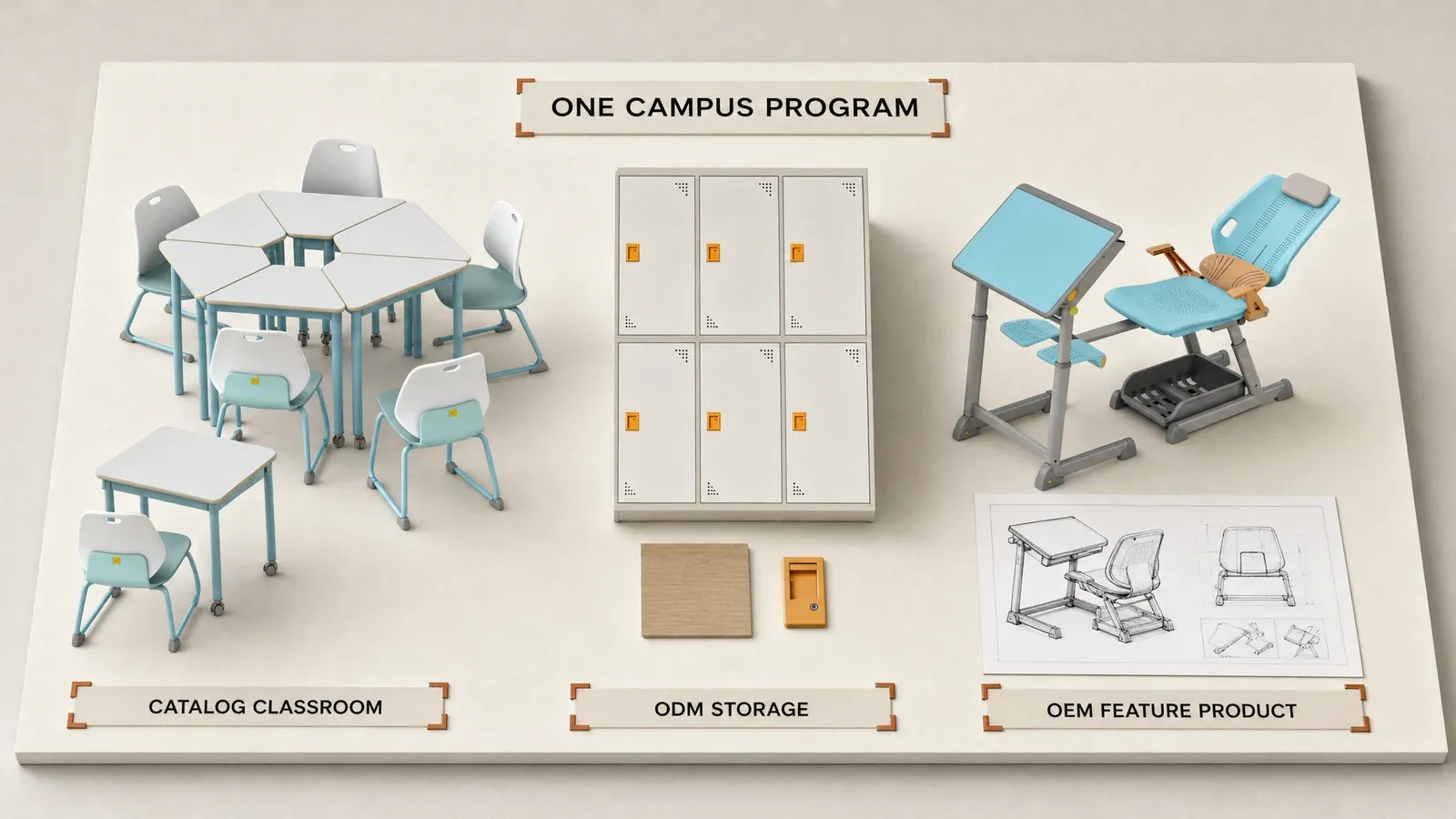
These three routes can sit in the same campus program. A standard classroom desk may use a catalog configuration, a storage unit may adapt an existing platform, and a signature lecture-room product may justify buyer-led OEM development. This mixed approach concentrates development work on the products that need it while keeping established items on a simpler confirmation path.
Choosing the Right Route for Each School Furniture Product
Compare the routes against the same project brief. Keep the intended users, classroom activities, room conditions, quantities, target market, evidence requirements, schedule, and logistics visible in every proposal. The differences then appear in the design starting point, depth of change, approval workload, rights questions, and production records.
| Decision field | Catalog product | ODM adaptation | OEM development |
|---|---|---|---|
| Starting point | Existing model and confirmed options | Manufacturer-developed design or platform | Buyer drawings, specification, or reference sample |
| Main task | Confirm product and order fit | Define and approve a focused change list | Turn the buyer's design into an approved production definition |
| Working records | Model, configuration, quotation, and order line | Base reference, marked drawing or BOM, sample, and revisions | Design package, feasibility review, drawings or BOM, sample, and revisions |
| Main rights questions | Branding, images, options, and order terms | Background design, modifications, permitted use, and exclusivity | Buyer inputs, resulting files, tooling, and permitted production |
| Signal to reconsider the route | Requested changes exceed confirmed options | Changes reshape the base product or require deeper development | A suitable existing platform already covers the design need |
Choose OEM when the product identity comes from the buyer
OEM gives the buyer greater control over function, dimensions, construction, appearance, packaging, and market positioning. It fits products whose value comes from a distinct design or a specification that suppliers need to quote on the same basis.
That control brings a larger development and approval workload. Feasibility comments, drawing revisions, material and hardware decisions, samples, tooling where relevant, testing responsibilities, and the final production reference all need clear owners. Quotations are easier to compare when quantity, packaging, destination, inspections, and approval assumptions are also aligned.
Choose ODM when a proven starting design fits the brief
ODM gives the project an existing product structure and focuses development on the changes that matter. The team reviews user fit, finish, selected components, branding, packaging, and evidence against a real base product, concentrating its work on the parts that need adaptation.
The approved change list sets the working scope. A modified component or dimension may lead to another sample, evidence review, or price revision. The quotation and agreement also need to identify the base design, approved modifications, permitted uses, and any relevant tooling or exclusivity terms.
Use a mixed route across a varied campus range
A mixed route assigns the development effort product by product. Existing models serve mature requirements, ODM handles focused adaptation, and OEM supports products that rely on buyer-led design. This is often more practical than forcing desks, seating, storage, nap furniture, and modular products into one sourcing model.
The route can change when new information appears. A catalog review may reveal a structural change that needs development, while an OEM concept may find a suitable manufacturer platform. Updating the route also updates the scope for drawings, samples, evidence, pricing, rights, and approval.
How to Evaluate a School Furniture Manufacturing Partner
A useful supplier review follows how the manufacturer handles the actual product. The terms OEM and ODM gain meaning through relevant category experience, practical engineering feedback, controlled sample revisions, product-level evidence, production checks, and a complete commercial response. These give the project team material it can compare.
Review product development against the starting package
For OEM, ask which drawing formats, specifications, tolerances, samples, material schedules, and performance requirements the engineering team can review. A strong response identifies feasibility questions and shows how approved answers move into the drawing, BOM, quotation, and sample.
For ODM, inspect the base product and request a marked change list. Finish codes, components, labels, packaging, dimensions, and structural changes should be separated into approved items and open decisions. For a catalog order, the model code, configuration, finish, accessories, and quantity should match across the quotation and order documents.
The school context adds another layer. Describe the students or other users, classroom activity, room type, layout, movement, storage, cleaning, maintenance, and installation conditions. These details turn a general product request into information the manufacturer can use during drawing and sample review.
Yuzhen Furniture focuses on classroom, nap, dormitory, storage, seating, and modular campus-furniture categories. This range can help a project team organize its product list and identify possible starting categories. Color and selected accessory options can then be reviewed for the specific model and order.
Check workmanship and evidence on the actual product
Inspect the parts students and staff will use every day: frames and joints, worktops, edges, fasteners, glides or casters, finishes, moving parts, labels, and packaging. On a sample, operate adjustable or folding parts, move and lock casters, check alignment, and review assembly. These observations give words such as durable, safe, ergonomic, easy to clean, and high quality a product-specific basis.
Match supporting documents to the claim under review. Record the document holder, issuer, method, product or sample, model, configuration, date, and stated scope. A company management-system certificate, a category certificate, and a model test report answer different questions. Public product claims therefore remain connected to the exact model, configuration, and applicable BOM or drawing.
School-furniture buying guides from Leadcom and ONMUSE organize supplier questions into practical groups. They cover use conditions, workmanship, product documentation, inspection, logistics, installation, and service. A project team can use these headings to compare responses to the same brief.
Compare samples and quotations on the same assumptions
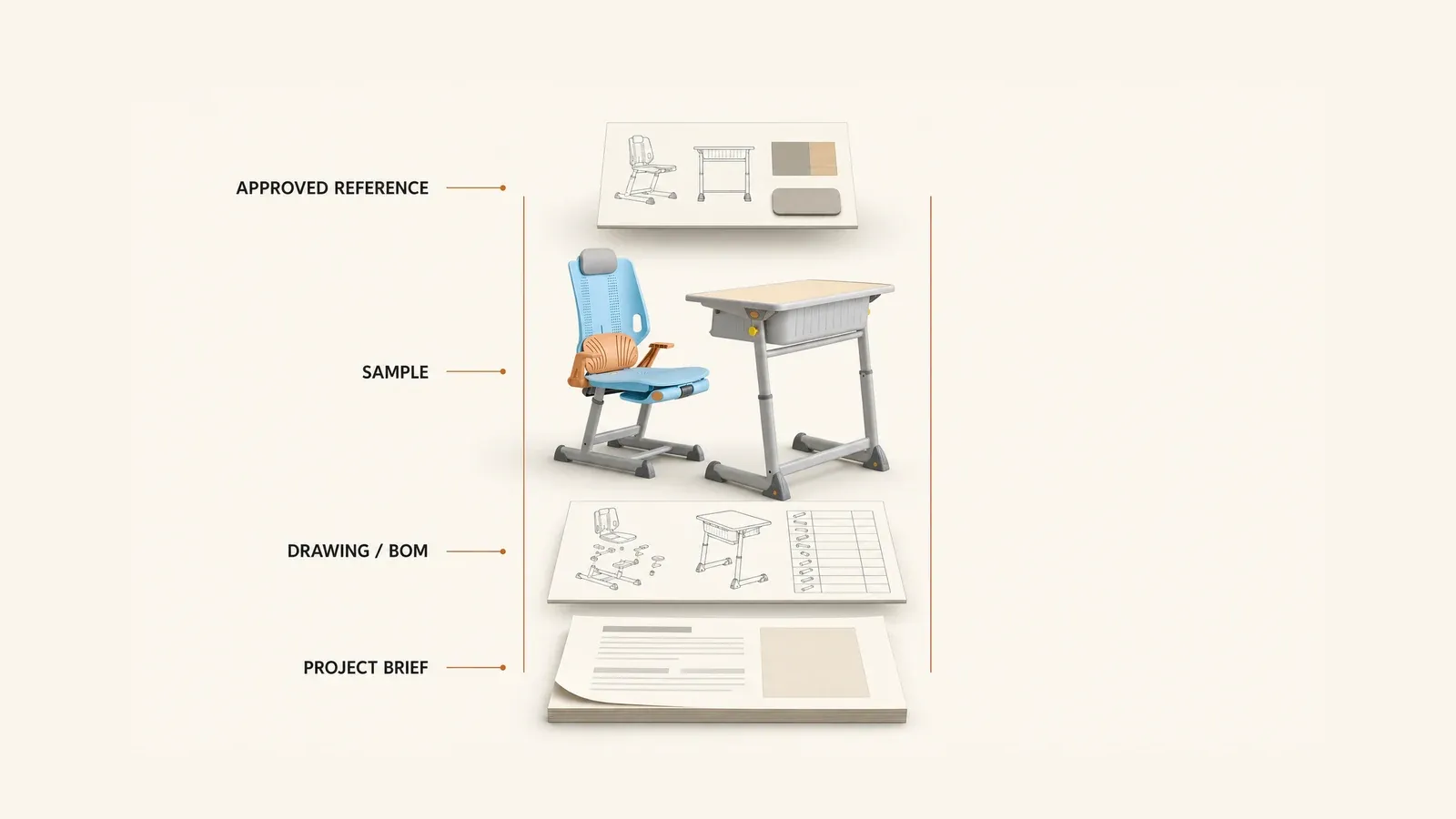
A sample needs a clear identity: model or project code, drawing or BOM revision, finish and component selections, sample report, and approval date. Comments and required changes can then be recorded against the exact item that was reviewed.
Give shortlisted manufacturers the same product brief and compare what each quotation includes. Note the design or configuration covered, evidence and inspections included, packaging, destination, logistics, tooling, sample rounds, approval dates, and unresolved questions. This reveals commercial differences and shows which proposals cover equivalent work.
Controlling Samples, Changes, and Production Approval
Loose fasteners, uneven edge finishing, missing hardware, incorrect labels, or weak cartons are far harder to resolve when they first appear after final assembly. Furniture manufacturing quality control works best when checks follow the product through stages where the cause can still be found and the work can still be corrected. The practical control chain runs from the approved requirement to the sample, production reference, inspection record, and shipment decision.
Give every record the same product identity
Assign each product a stable name, model, or project code. Use it on the specification, selected configuration, drawing or BOM, sample label, evidence list, quotation, packaging instruction, and order. Where several sizes or finishes share a family name, a configuration code or order line identifies the exact item under review.
This makes ordinary checks more reliable. The team can confirm that the sample uses the specified top, frame, hardware, finish, label, and packaging, and that a report covers the same model or sample. Any mismatch becomes a visible open item for correction.
Turn sample comments into controlled revisions
A sample report records the item reviewed, accepted details, required changes, next action, owner, and applicable date or revision. Marked photographs and drawings can locate a weld, edge, fastener, color, component, label, or carton issue more clearly than a general message.
Each approved change then reaches every affected record. A component change may update the BOM, drawing, sample, evidence review, price, and order line. A packaging change may update carton marks, parts lists, assembly instructions, dimensions, and logistics information. The revision log shows which version replaced the earlier one.
Carry the approved reference into production and packing
The production reference may combine an approved sample, drawing, BOM, configuration, and finish board. Inspection points can then follow the product's actual construction and use: incoming materials, frames and joints, surfaces, moving parts, labels, quantities, packing, and assembly information.
The furniture manufacturing quality-control guide from The Inspection Company follows a practical sequence. It starts with agreed requirements, then reviews materials and samples, monitors production, inspects finished goods, and verifies packing. Its most useful lesson for a school-furniture order is timing. A finding can support correction, rework, replacement, a temporary hold, or another inspection while the relevant stage is still accessible.
Recording Design, Tooling, and Commercial Rights
OEM and ODM identify a development route. The agreement records what each party may make, use, modify, sell, disclose, or reuse. A focused rights review separates the buyer's background materials, the manufacturer's existing design, project modifications, tooling, files, branding, and later improvements.
Map the design contributions
List the drawings, reference samples, specifications, visual concepts, existing products, components, and third-party materials brought into the project. Record who supplied each item and what new work will be created. This contribution map gives the commercial and legal review a factual starting point.
The WIPO Industrial Designs FAQ explains that industrial-design protection is territorial and may involve registration, licensing, and transfer. Target markets, existing registrations, and applicable jurisdictions therefore belong in the project review.
Write permitted uses into the project documents
The agreement or order can address ownership, licensing, manufacture, sale, display, modification, and reuse. It can also define exclusivity by product, market, customer, channel, or period, together with ownership of tooling and fixtures. Separate terms can cover access to CAD files, drawings, and BOMs, as well as confidentiality, permitted disclosure, and later improvements or replacement components.
These details often differ even when two suppliers use the same OEM or ODM label. Written terms allow the project team to compare access to tooling, files, modifications, markets, and future production on a common basis.
Keep files and approvals on the current revision
Drawings, specifications, change lists, sample reports, CAD files, BOMs, and packaging artwork need a revision number or date. Approval records identify the exact version authorized for costing, sampling, production, testing, or packing.
When a new revision is approved, distribute it to the teams that use it and close the superseded version. This reduces the chance that an old drawing, incomplete option list, or unapproved sample guides production.
School Furniture OEM and ODM Project Checklist
A clear inquiry package gives every manufacturer the same starting information and makes technical and commercial responses easier to compare. Build it around the product, project, and decision records that will continue into sampling and production.
Define the users, rooms, and product list
- List the furniture categories and quantities by room or space type.
- Describe the intended users, activities, layouts, movement, storage, cleaning, maintenance, and installation conditions.
- Record the target market, destination, budget context, schedule, and logistics background.
- Identify the starting point for each product: catalog model, manufacturer-developed platform, or buyer drawings, specification, or reference sample.
- Mark the required changes, evidence, packaging, approval, and design-rights questions.
Build a comparable RFQ and approval package
- Give shortlisted manufacturers the same brief and ask them to state assumptions, exclusions, open questions, and buyer decisions.
- Connect each proposed product to its model or project code, configuration, drawing or BOM, sample, evidence list, quotation, and order terms.
- Name the people responsible for design, sample, evidence, commercial, packaging, and rights approvals.
- Define how drawings, BOMs, samples, finishes, components, labels, packaging, prices, and order records will be revised.
- Record the production reference, inspection points, finding-and-action log, packing information, and delivery documents relevant to the product.
Prepare a focused inquiry for Yuzhen Furniture
The classroom desks and chairs and nap desks and chairs pages provide useful category and product references for a Yuzhen Furniture inquiry. Add the buyer role, project or tender status, product categories, quantities, budget, target market, schedule, and logistics context. Include the provisional sourcing route, available design inputs, requested product options, evidence needs, and open questions so the project inquiry begins with a clear scope.
Frequently Asked Questions
Should one school-furniture program choose only OEM or only ODM?
Yes. A program can use catalog products for established requirements, ODM for focused changes to a manufacturer-developed product, and OEM for buyer-defined products. Assigning the route product by product keeps development effort and approval work aligned with the value of each item.
What information helps select an OEM, ODM, or catalog route?
Provide the intended users and activities, product list, room types, quantities, target market, design starting point, required changes, evidence needs, budget context, schedule, destination, and logistics. Existing drawings, specifications, reference samples, or product links help the manufacturer see how much development and confirmation work is involved.
Does the OEM or ODM label determine design ownership?
The label describes the development starting point. Ownership and permitted use follow the actual design contributions, registrations, applicable jurisdiction, and written agreements. Record the background design, project modifications, licensing, exclusivity, tooling, files, confidentiality, and later improvements for project review.