
School Furniture Selection Guide: How to Choose the Right Classroom Furniture
Inspect school furniture construction, match useful functions to classroom activities, test practical layouts, and verify the records behind the final choice.
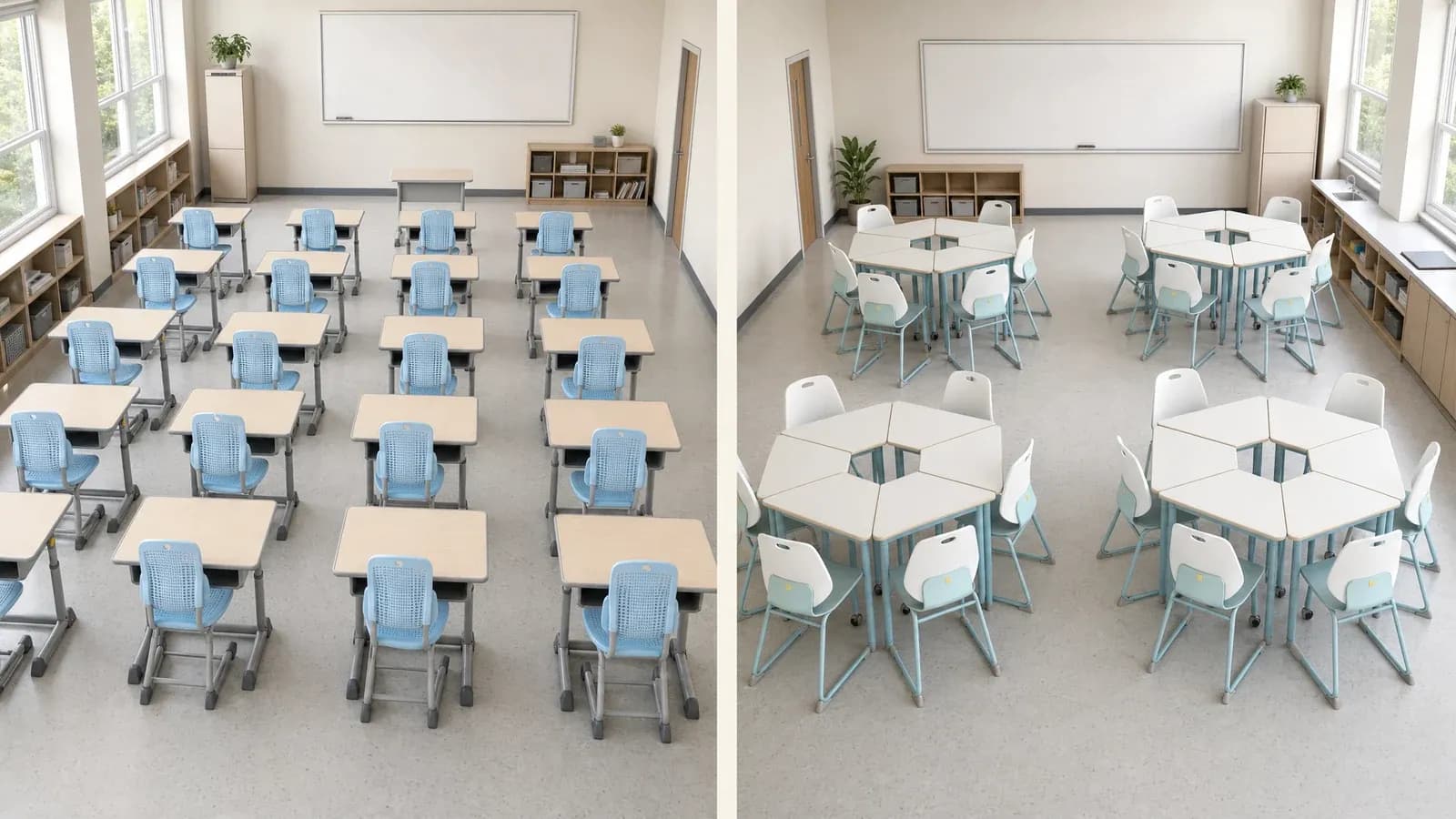
Table of Contents
Loose joints, worn edges, awkward room changes, and storage that blocks a walkway can turn a promising furniture choice into a daily problem. This school furniture selection guide shows how to inspect build quality and long-term value, connect useful functions to classroom activities, test layouts around students and teachers, and verify the exact product and records behind the final decision.
How to Judge Quality, Durability, and Overall Value
School furniture shows wear in predictable places. Desks loosen where frames and tops meet. Chair legs rock when joints or floor-contact points lose alignment. Edges lift, coatings chip, casters stop rolling cleanly, and locking parts become harder to operate. A useful quality review starts with those parts because students and teachers touch, move, clean, and reset them every day.
Inspect the frame and connection points
Place the sample on a level floor. Sit down, stand up, move it as it would move in the room, and apply ordinary hand pressure at the work surface and backrest. The purpose is to locate movement and trace it to a part: frame alignment, a welded joint, a bolt, another fastener, a glide, or a caster.
Look closely at welds and mechanical connections. Continuous welds, seated fasteners, complete hardware, and smooth transitions around contact points give the reviewer something specific to record. Cracks, loose hardware, missing parts, sharp projections, or repeated noise identify the next question for the product record or sample review. Envoplan's guide to school furniture quality likewise directs attention to joints, welding, edges, surfaces, and material information.
Check edges, surfaces, and moving parts
Run a hand along accessible desk and seat edges. Edge banding should sit flush with the panel, with no lifted section, open corner, chip, or exposed sharp edge. Review laminate surfaces or coatings under ordinary room light for scratches, peeling, uneven areas, or places that may trap dirt during routine cleaning.
Move furniture fitted with casters across the intended floor and operate every brake. Stack, fold, or adjust any part designed for those actions. A catalogue can list these features; a sample shows how the handles, clearances, locks, and contact points behave during an ordinary room change. WB Manufacturing's classroom furniture buying guide makes the same practical case for hands-on review: it reveals movement, stability, and comfort questions that images leave open.
Match the records to the item in front of you
A construction description becomes more useful when it names the parts being reviewed: work surface, frame, edge treatment, glides or casters, fasteners, finish, and moving mechanism. The corresponding specification, drawing, or report can then be checked against the product name, model, configuration, sample, and issue date.
This scope check keeps different records in their proper roles. A material description identifies what is specified. A test report covers the product and sample named in that report. A care guide explains the cleaning or inspection routine for its stated finish and construction. Together, they give the reviewer a traceable picture of the chosen item.
Compare the ownership path as well as the purchase price
Overall value includes the work that follows delivery. Add cleaning instructions, routine fastener checks, replaceable glides or casters, service contacts, and applicable warranty terms to the same comparison sheet as the initial price. Then record the repair, parts, and replacement route expected for the intended use.
Artcobell's classroom furniture guide frames durability and price as parts of an overall-value decision, while UNICEF's school furniture guidance connects intended use, material quality, production, transport, delivery, and maintenance. That wider view gives each cost a practical context without relying on a universal service-life or savings figure.
How Flexibility and Functionality Support Classroom Activities
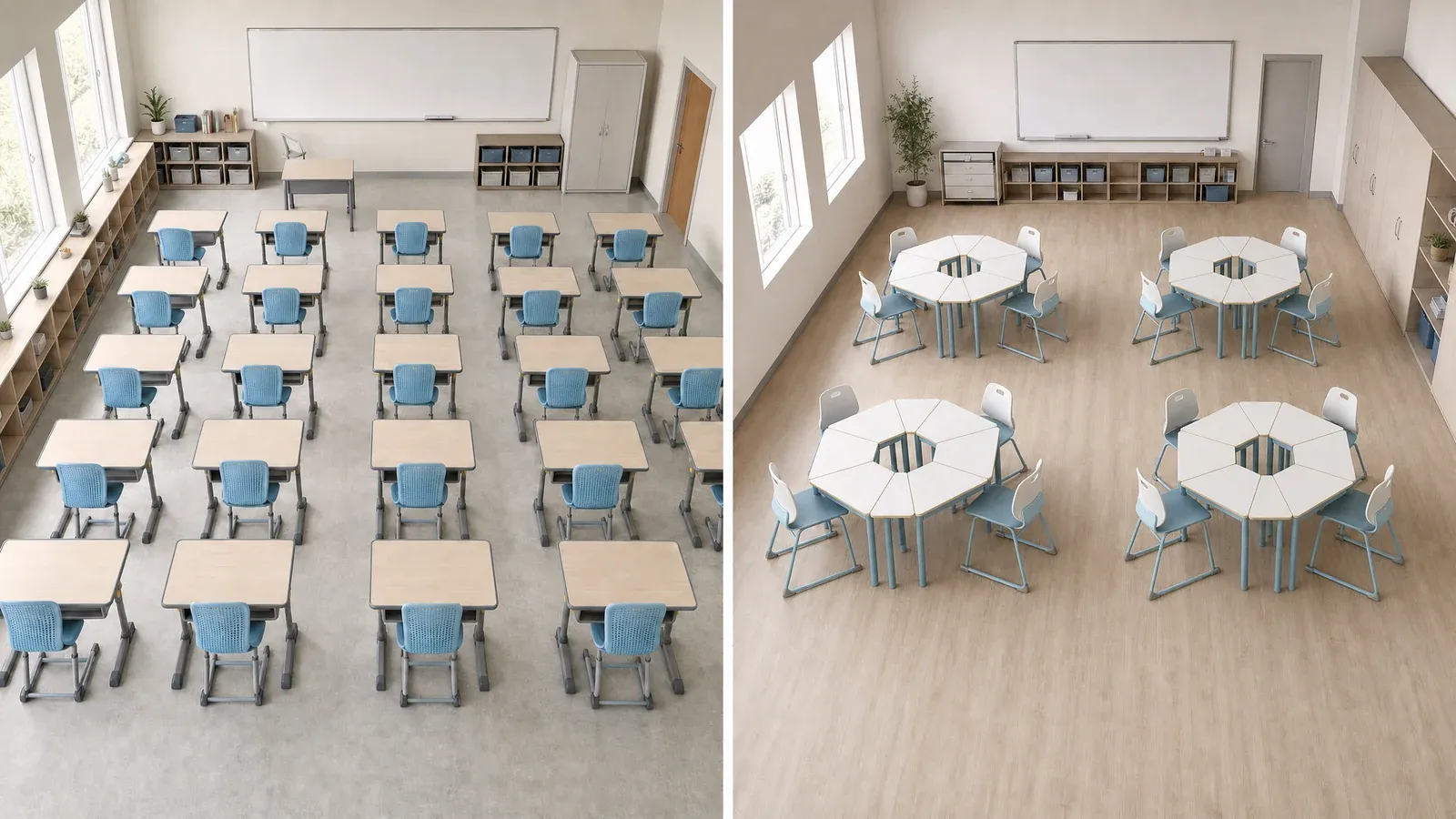
Furniture functions become useful when they serve a recurring activity. A mobile table earns its place when the room changes often and people can move, lock, store, and reset it. A stable table earns its place when the layout stays consistent and straightforward cleaning and maintenance matter more than frequent reconfiguration.
| Classroom activity | Useful furniture functions | What to observe in the room |
|---|---|---|
| Individual work or teacher-led instruction | Stable seating, a clear orientation, and adequate work surfaces | Student sightlines, teacher approach routes, personal materials, and clear circulation |
| Group discussion or collaborative work | Table shapes that join cleanly, seats that turn or move, and casters with brakes where mobility is needed | Gaps between work surfaces, brake operation, movement noise, walking routes, and the steps required to restore the layout |
| Projects, equipment, or shared materials | Continuous work surfaces, nearby or mobile storage, writable surfaces, and planned equipment or cable positions | Material access, usable surface area, open cabinet doors or drawers, cleaning access, power points, and return-to-storage routines |
| Several room changes in one day | Mobile, stackable, adjustable, or modular desks and seating | Who moves each item, how locks are used, where stacked or idle furniture goes, and how the final arrangement regains stability |
| A consistent long-term activity | Simple, stable, easy-to-clean furniture with a clear maintenance path | Daily cleaning, circulation, access to materials, and which added features remain unused |
Edutopia's early-grades furniture article shows how work surfaces, storage, and room reconfiguration can serve learning centers, group work, and projects. Widseth's review of flexible learning environments adds activity zones, technology, storage, and teacher work to the same planning conversation. These examples help name the functions to examine; the actual room routine identifies which ones are valuable.
Product categories become easier to review after the activity is clear. School desks and chairs can support individual and shared work surfaces, school chairs shape movement and seating routines, and school lockers affect material access and circulation. Each category still needs a selected model and configuration that fits the documented room.
How to Plan Classroom Layouts Around Students and Teachers
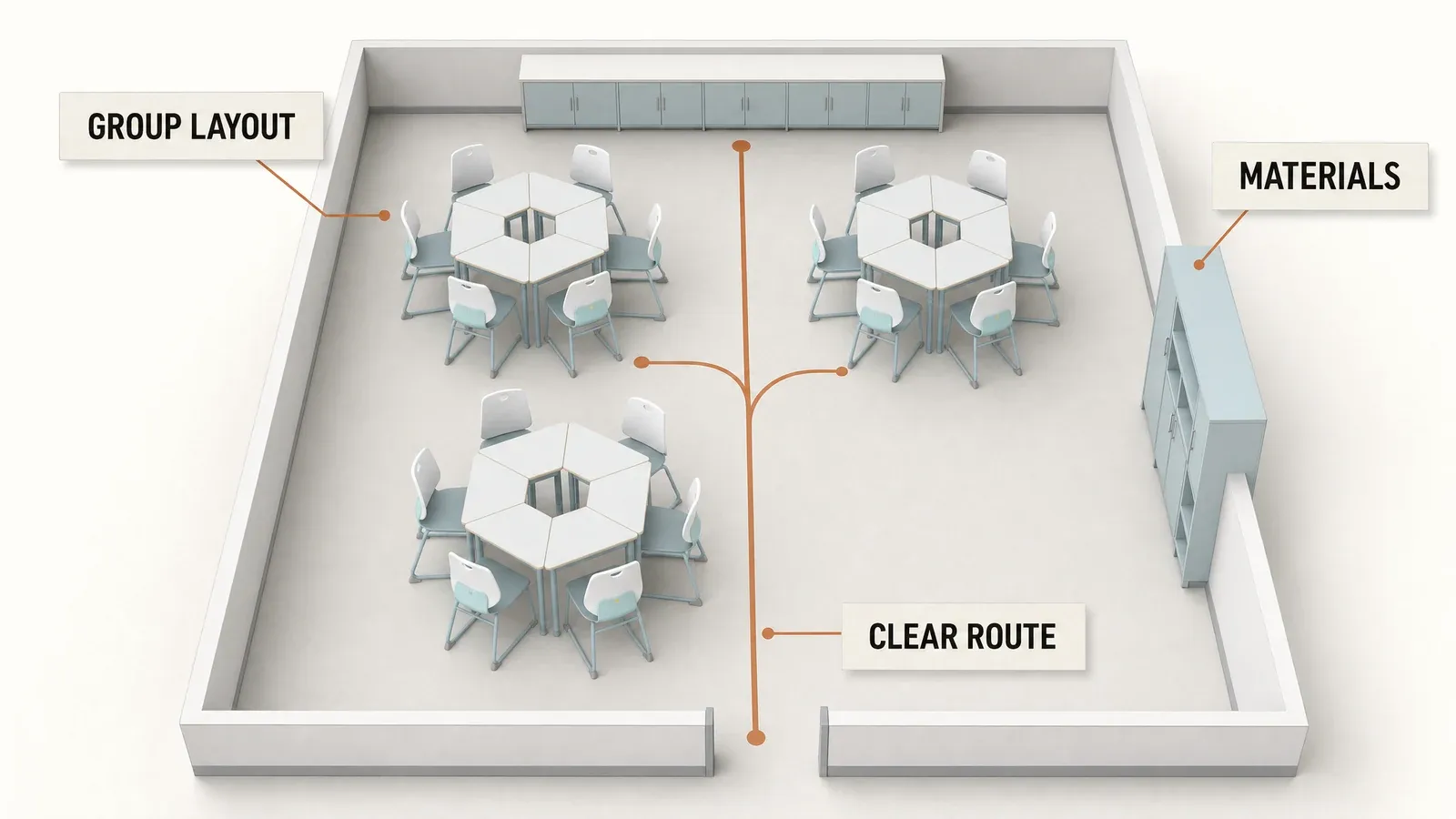
A classroom layout becomes practical when people can complete the whole activity, including the transitions around it. A plan for group work covers more than the table arrangement. Students need a route to their places and materials; teachers need sightlines and a way to approach each group; cabinet doors, chair backs, bags, and unused furniture need somewhere to go.
Mark the fixed room elements
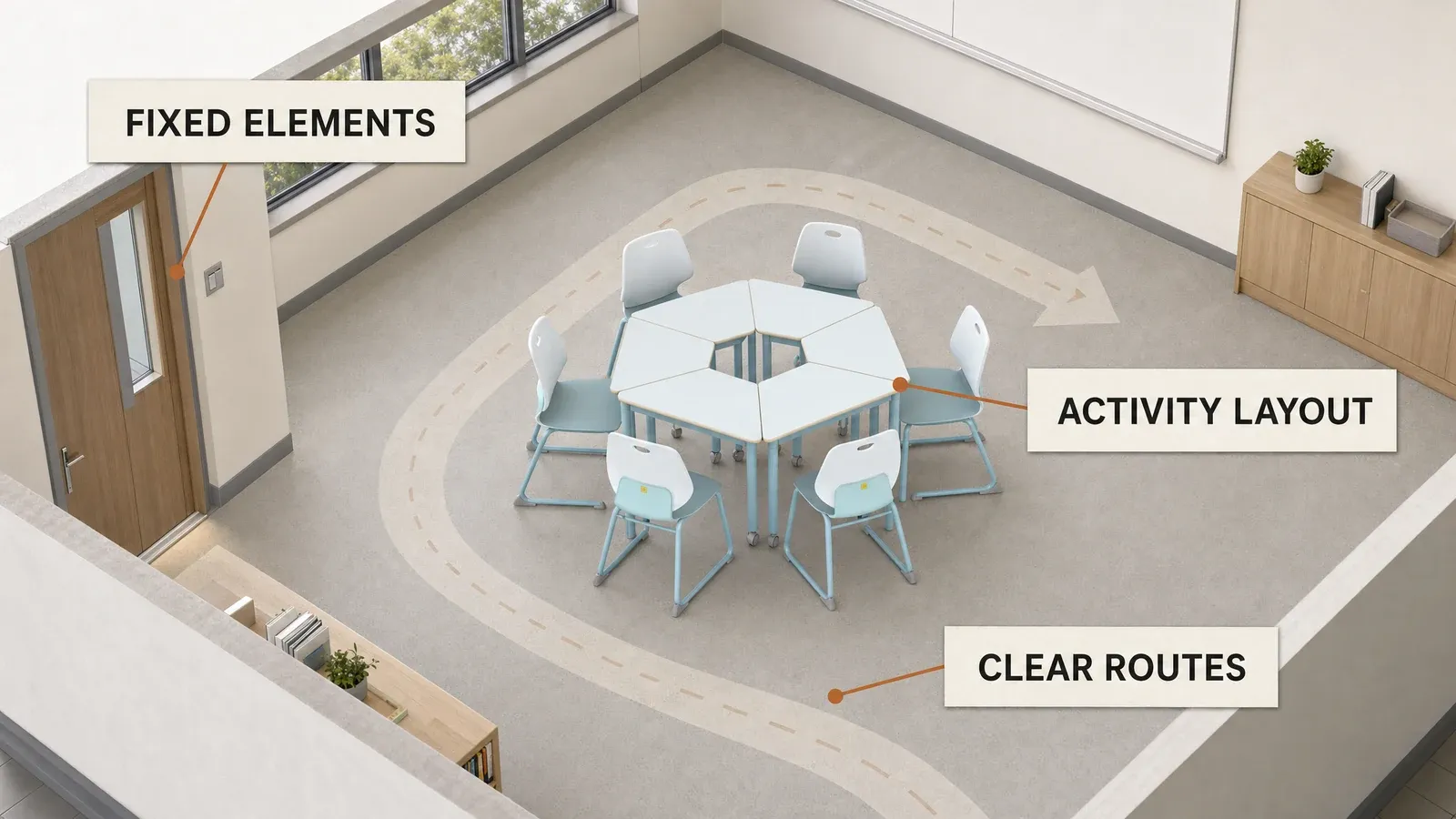
Start with a simple floor plan. Mark doors, windows, teaching or display surfaces, fixed equipment, columns, power points, built-in storage, and areas that need to remain available. Add the places where mobile storage, cleaning equipment, or unused furniture can park during an activity.
This drawing gives furniture a real boundary. It also makes conflicts visible while they are still easy to change on paper.
Draw one arrangement for each recurring activity
Use a small set of named layouts as working examples:
- Rows or a grid give individual work and teacher-led instruction a clear shared orientation.
- Clusters bring several students around a common work surface for discussion or project work.
- A horseshoe keeps an open center for discussion, demonstration, or movement while students retain a shared focal area.
- Learning zones separate individual work, group work, shared materials, or equipment into activity areas.
Edutopia's student desk layout guide connects rows, clusters, horseshoes, L-shapes, and learning zones to different classroom tasks. The useful lesson is the activity behind each arrangement. Three activity-matched layouts reviewed in the actual room are usually more informative than a page of layout names.
Walk the student and teacher routes
Trace the route a student uses to enter, pull out a chair, sit, collect materials, join a group, and leave. Trace the teacher's route to the display surface, storage, equipment, and each working group. Mark where chair backs, bags, open cabinet doors, or equipment reduce usable circulation.
Then check the view from student seats and the teacher's main working positions. Artcobell's article on classroom flow uses grid, free-flow, and angular plans to make movement visible. The Early Learning Ventures classroom layout guide adds activity areas, material access, sightlines, supervision, and digital floor planning. Its examples focus on early learning, while the planning actions transfer to a wider room review.
Rehearse a common layout change
Choose one frequent transition, such as rows to clusters or clusters to a presentation layout. Use a paper plan, floor tape, or sample furniture to run through it. Count the items that move, identify the casters or brakes that operate, decide where unused pieces wait, and confirm that the restored arrangement leaves the main routes open.
The rehearsal turns flexibility into an observable routine. It also exposes a useful adjustment early: fewer pieces, a different table shape, a clearer storage position, or a stable layout for activities that rarely change. Project-specific clearance, accessibility, fire, and installation requirements can then be applied to the selected plan for its destination.
What to Check Before You Choose a Product or Supplier
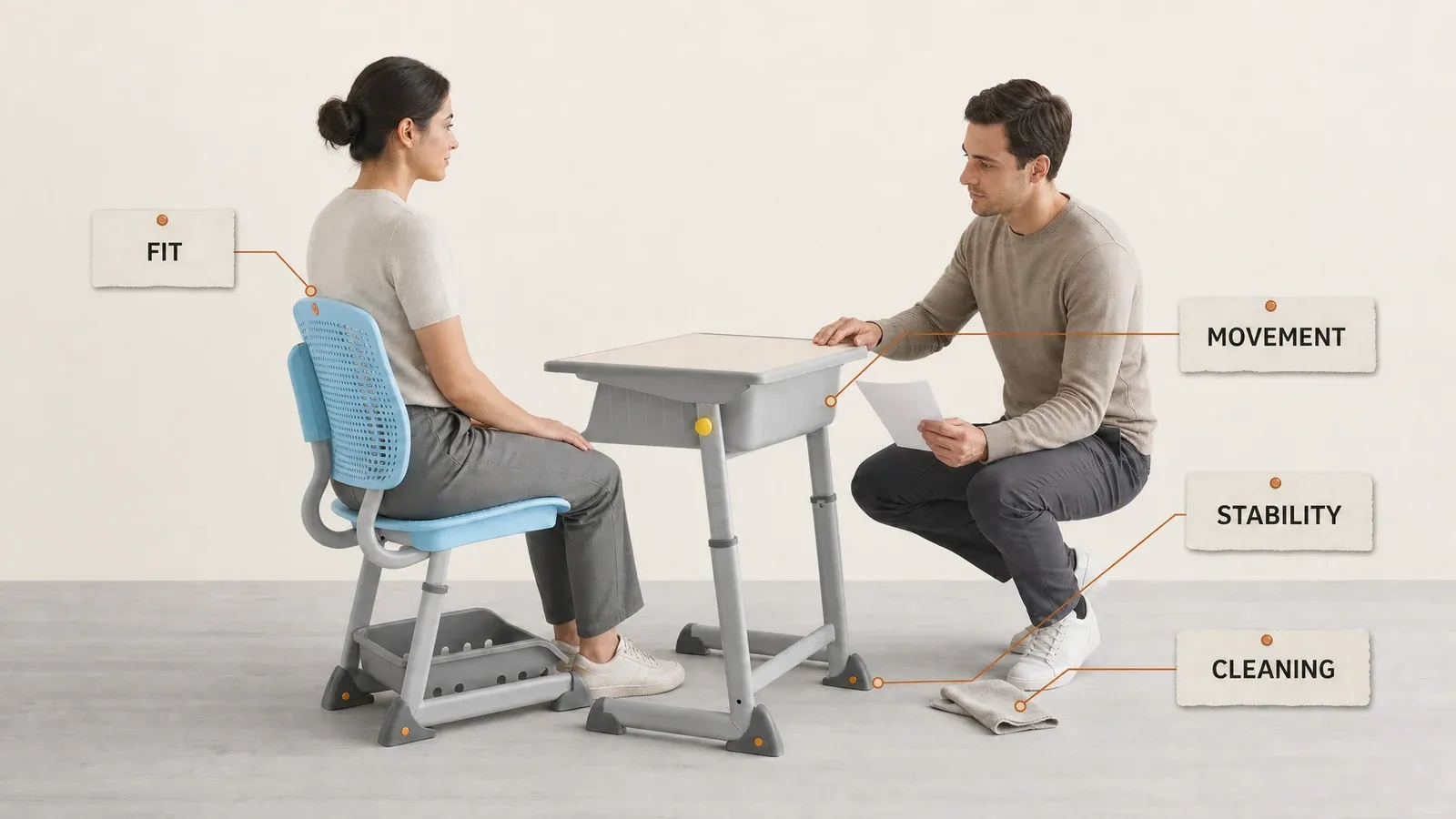
The final review brings the room plan, sample, product identity, evidence, and delivery records into one place. Use the following checklist to keep each question attached to a named item or project input.
| Review area | Details to confirm |
|---|---|
| Users and activities | Intended users, room occupancy, recurring activities, transition frequency, and any project-specific fit or access needs |
| Room and quantity | Floor plan, fixed equipment, storage, circulation, installation location, and quantity for each space |
| Product identity | Product category, model, configuration, dimension definitions, work surface, frame, edge treatment, glides or casters, fasteners, and laminate or coating code |
| Sample observations | Sitting and reach, frame movement, caster travel and braking, stacking, folding or adjustment, surface cleaning, storage opening, and a common layout transition |
| Evidence scope | Named organization, product, model, configuration, sample number, issue date, test or specification scope, and relevant destination requirement |
| Maintenance and parts | Cleaning products and method, fastener checks, common replacement glides or casters, repair contact, and applicable warranty terms |
| Production, packaging, and delivery | Confirmed quantity and revision, approved sample, inspection points, package marks, carton numbers, parts list, assembly instructions, and project schedule |
| Supplier records | Comparable and verifiable project scope, response to specifications and documents, drawing/sample/order change records, inspection coordination, and service contact path |
Leadcom's school furniture purchase checklist groups questions around use, construction, function, documentation, logistics, installation, and support. ONMUSE's procurement checklist adds RFQ scope, room quantities, product information, inspection, delivery, and files. UNICEF connects those fields across design, material sourcing, production, transport, delivery, and maintenance. Used together, they provide a practical order of review while each product and destination supplies its own values.
Yuzhen Furniture focuses on campus furniture for classroom, nap, dormitory, storage, seating, and modular classroom use. A focused project inquiry can identify the buyer role, project or tender status, product category, quantity, budget, target market, schedule, and logistics context. Those inputs make it easier to discuss the relevant school furniture solutions and the product, sample, and evidence needed for the next review.
Frequently Asked Questions
How can you judge school furniture quality and durability?
Inspect the frame, joints, welds, fasteners, edges, finish, glides or casters, and any locking, stacking, folding, or adjustment mechanism on a representative sample. Match material, construction, test, care, and parts records to the same product, model, configuration, sample, and date.
How should furniture functions match classroom activities?
Start with individual work, group discussion, presentations, project work, shared materials, and room transitions. Connect table shapes, mobility and locking, stackability, adjustment, work surfaces, storage, and equipment positions to the activities that actually occur in the room.
How can a classroom furniture layout be tested?
Mark fixed room elements, draw activity-specific layouts, and walk the routes students and teachers use to enter, sit, collect materials, approach groups, and leave. Check sightlines, storage openings, circulation, cleaning access, and one common layout change with a floor plan, tape, or sample furniture.
What should be checked before selecting a school furniture product or supplier?
Confirm the users and room, product identity, sample observations, evidence scope, cleaning and replacement parts, approved sample and inspection points, packaging and assembly records, delivery plan, change control, relevant project experience, and service contact path.