
Classroom Furniture List: Essential Categories and Their Uses
A practical classroom furniture list covering student desks and chairs, teacher furniture, shared work surfaces, storage, classroom activities, and project planning.
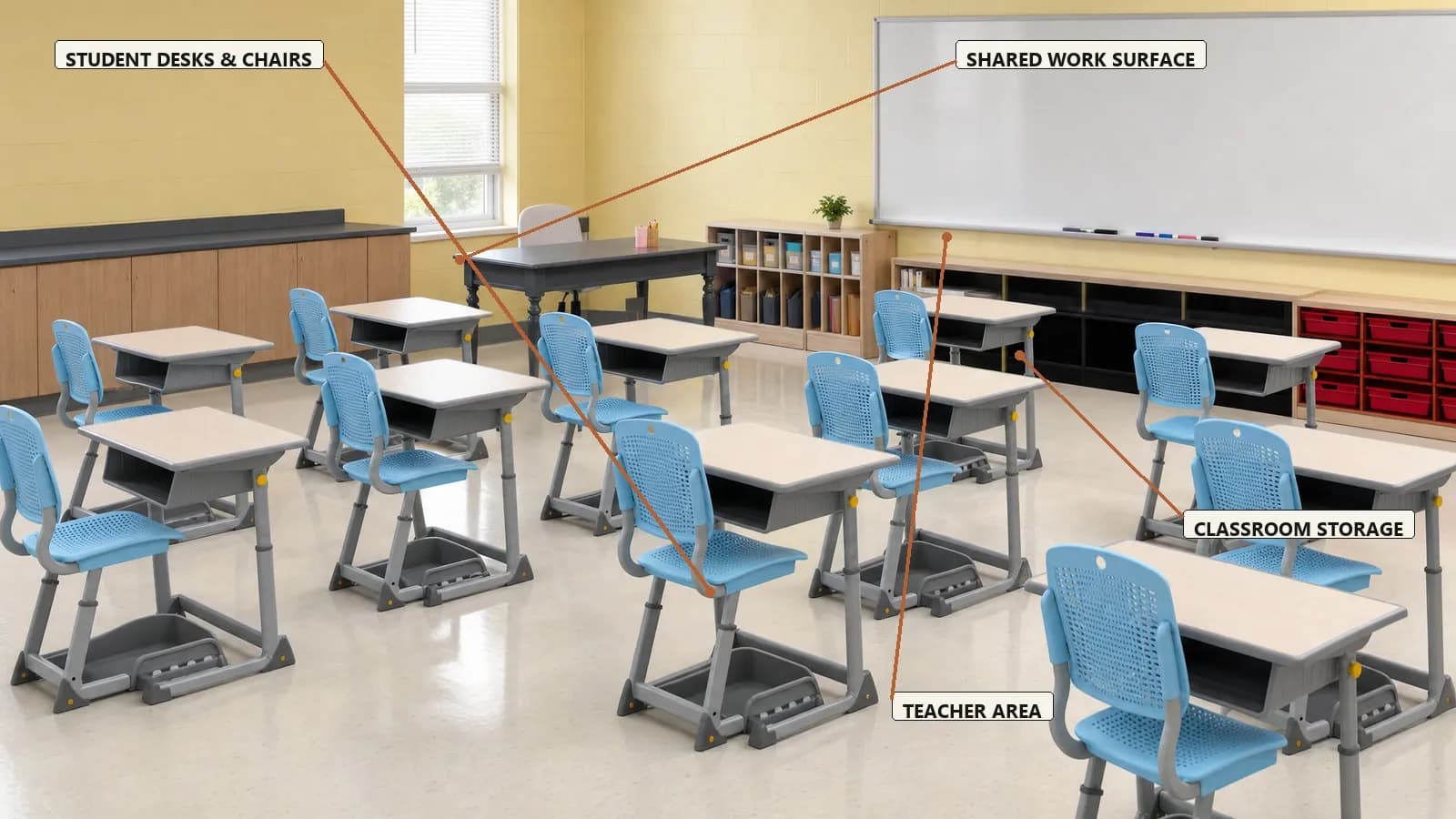
Table of Contents
A classroom furniture list brings together the furniture needed for individual learning, group activities, teaching, and material organization. In a typical classroom, this includes student desks and chairs, teacher furniture, shared tables, and storage units. The selection changes with student age, classroom activities, available space, and whether the room supports general teaching or a specialized purpose.
What Furniture Does a Classroom Need?
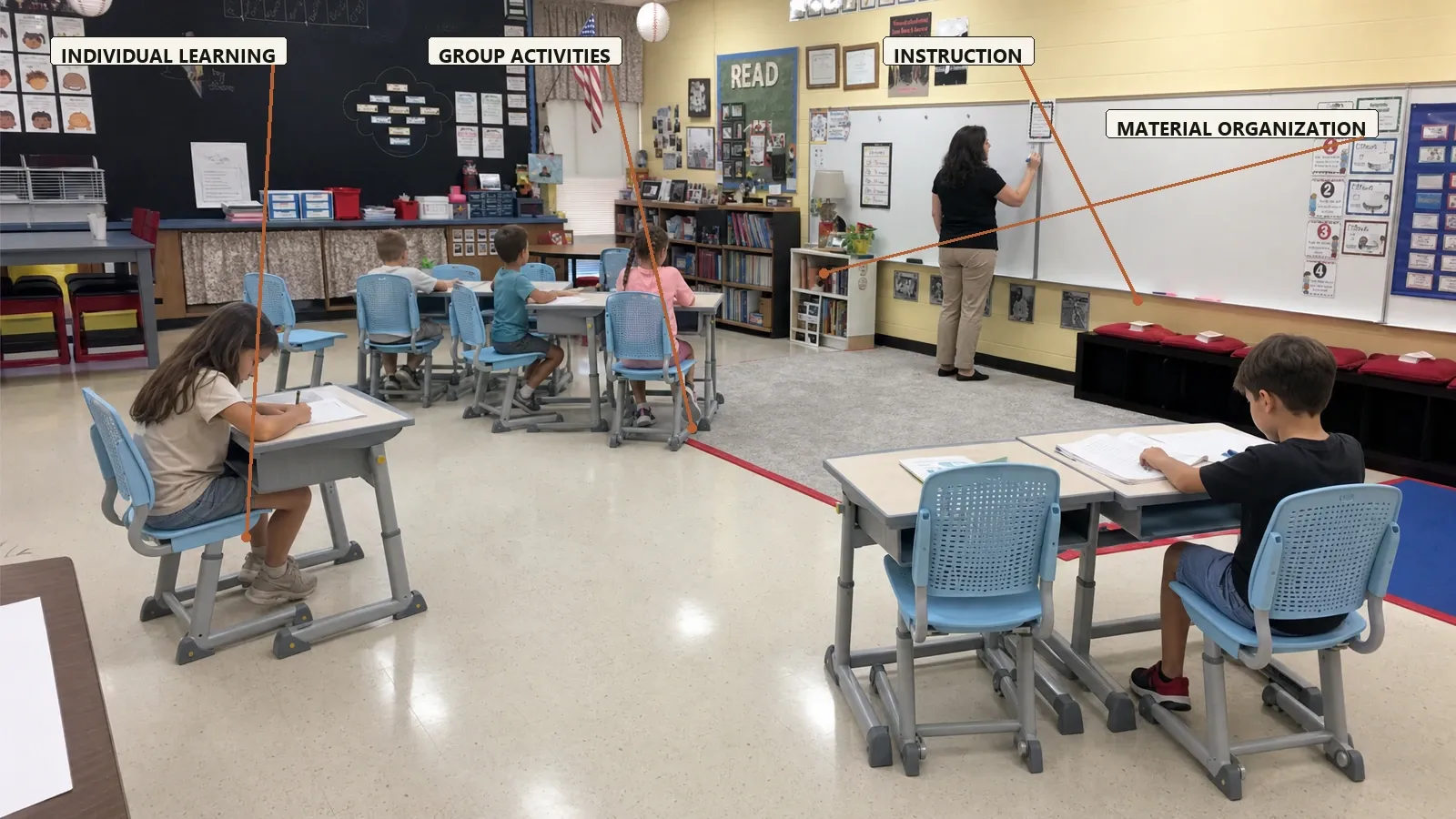
A typical classroom contains several basic types of furniture, including student desks and chairs, teacher furniture, shared tables, and storage units. Each category serves a different purpose, from providing individual learning spaces to supporting group activities, teaching, and material organization.
These categories provide a starting point for building a classroom furniture list. The exact selection reflects the age of the students, the activities taking place in the room, and whether the space serves general teaching or a more specialized purpose.
Student Desks and Chairs for Individual Learning
Student desks and chairs are the basic furniture in most classrooms. They provide individual places for students to sit, read, write, complete assignments, and use learning materials. Together, they form the main working area where much of the daily classroom activity takes place.
The choice of desks and chairs reflects how students use the room. Younger students may need furniture suited to their size and everyday classroom routines, while older students may require more work surface for books, devices, and written assignments. Student numbers, available floor space, and the activities planned for the room also influence the arrangement.
Some classrooms keep individual desks in fixed positions, while others use furniture that can be moved or rearranged. These differences affect the type of desk and chair selected and the number of sets a room can accommodate. Relevant school desk and chair categories can then be reviewed against the age group, room capacity, and expected pattern of use.
Shared Work Surfaces for Group Activities
Once individual learning places are covered, shared work surfaces add room for activities that involve several students or a common set of materials. Group projects, practical tasks, demonstrations, and discussions may need a larger continuous surface than separate desks provide.
Individual desks and shared tables can appear in the same classroom because they serve different parts of the school day. Personal desks remain available for independent work, while a shared table gives a group one place to arrange materials, compare work, or complete a joint task. Movable student desks can form temporary groups, while a dedicated shared table supports activities that occur frequently.
The frequency of group activities helps determine whether the room needs a separate table. Group size, the materials placed on the surface, and the space available around it then shape its location and size. In this role, shared tables extend the classroom furniture list without replacing the individual desk-and-chair positions students use for personal work.
Teacher Furniture and Presentation Support
Teacher furniture provides a dedicated area for lesson preparation, document handling, and the equipment teachers use throughout the school day. A teacher desk or workstation may hold a computer, teaching materials, records, and other frequently used items.
The size and arrangement of this area reflect how the teacher uses the classroom. In some rooms, a compact desk is sufficient because the teacher spends much of the lesson moving between student groups. Other classrooms may require a larger work surface for preparation, equipment, or document handling.
Teaching also requires shared presentation areas. Whiteboards, lecterns, and display units help teachers present information to the entire class. These elements can be considered alongside the main furniture list when planning the teaching area, sightlines, available wall space, and the position of classroom technology.
Classroom Storage and Material Organization
Classroom storage becomes easier to plan when the contents are divided into three practical groups: teaching resources, student belongings, and shared activity materials.
- Teaching resources include books, lesson materials, stationery, and supplies managed by the teacher. Bookcases and cabinets keep these items available at the point where they are prepared or used.
- Student belongings include school bags, outerwear, and personal materials. Cubbies, lockers, and hooks provide individual places that students can recognize and reach during the school day.
- Shared activity materials include project supplies, art materials, manipulatives, and equipment used by several groups. Open shelving or mobile carts can keep a set together and bring it closer to the activity area.
The amount of storage follows the volume of materials, how often they are used, and the wall and floor space available. Frequently used resources benefit from quick access, while occasional supplies can use enclosed or perimeter storage. After these needs are defined, relevant school storage and locker options can be reviewed by capacity, access, and position in the room.
How Classroom Activities and Layouts Change the Furniture Mix
The furniture categories become a working classroom when they are combined around a teaching activity. Three common scenarios show how the same categories can produce different arrangements.
| Teaching scenario | Typical furniture arrangement | What the arrangement supports |
|---|---|---|
| Direct instruction | Student desks and chairs facing a teaching point, with a teacher workstation and front presentation area | Shared attention toward instruction, presentations, or individual assessments |
| Group activities | Grouped student desks or shared work tables, with activity materials stored nearby | Several students working around one task or set of materials |
| Classroom discussion | Repositioned chairs or desks around an open discussion area | Clear sightlines between participants and space for the teacher to approach the group |
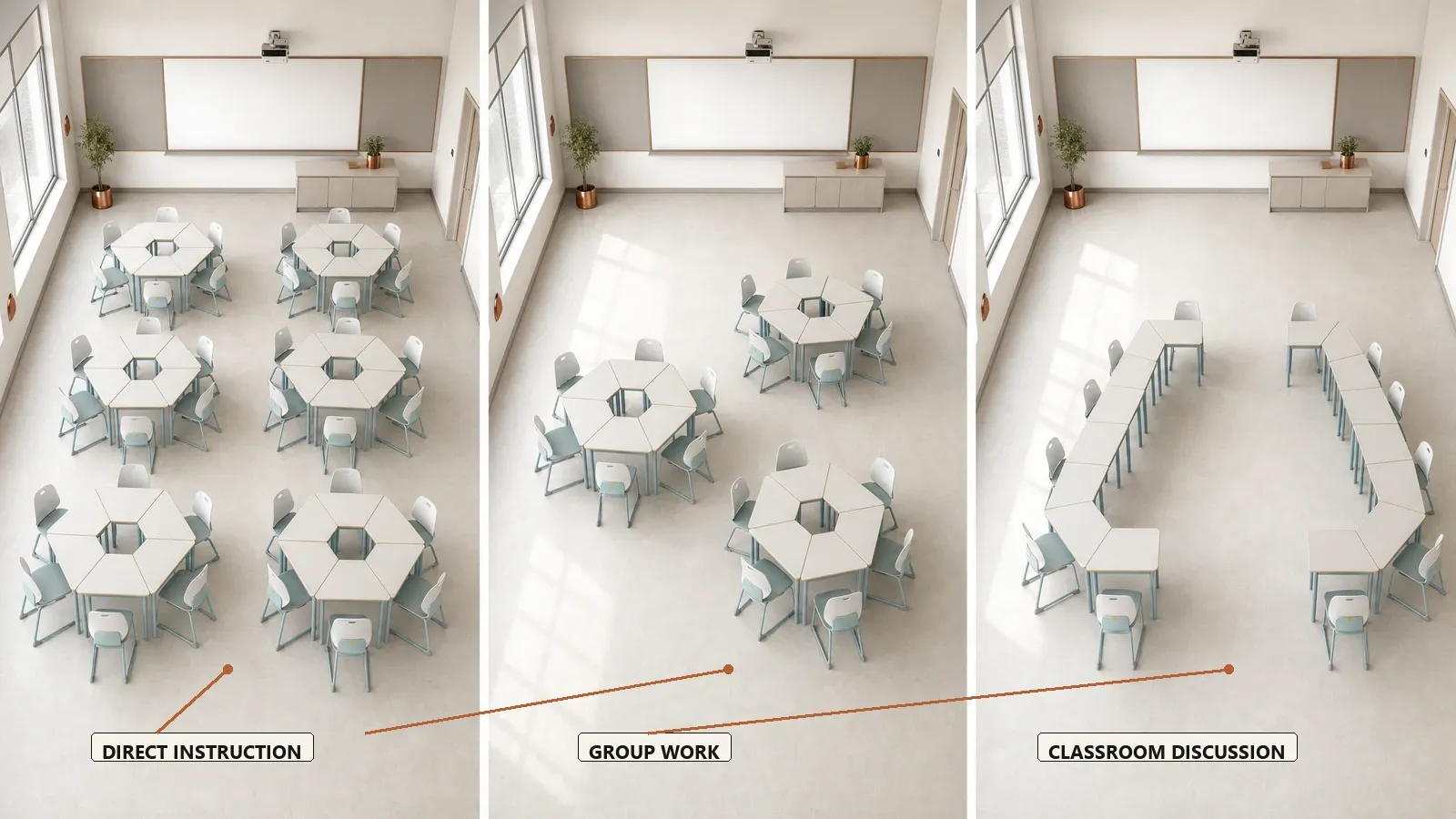
Room layout determines how comfortably these arrangements can be used. Furniture placement needs to preserve the routes students and teachers use, access to storage, and sightlines to presentation areas. Rooms that change frequently also need space to move furniture and a place for items that are temporarily set aside. Mapping the sequence of activities shows which arrangements the classroom needs to support during an ordinary day.
Additional Furniture for Specialized Learning Spaces
General classroom furniture provides a useful starting point, while specialized learning spaces often require additional furniture designed around their activities. Laboratories need work surfaces and storage suited to equipment and materials. Art rooms may require larger tables and accessible supply storage. Computer rooms need positions for devices and related equipment, while libraries and rest areas bring different seating, storage, and space requirements.
These rooms can be considered separately when preparing a school furniture list. Their furniture selection needs to account for the equipment used, the number of users, the available space, and the specific routines carried out in each area.
Turning the Furniture List into a Project Brief
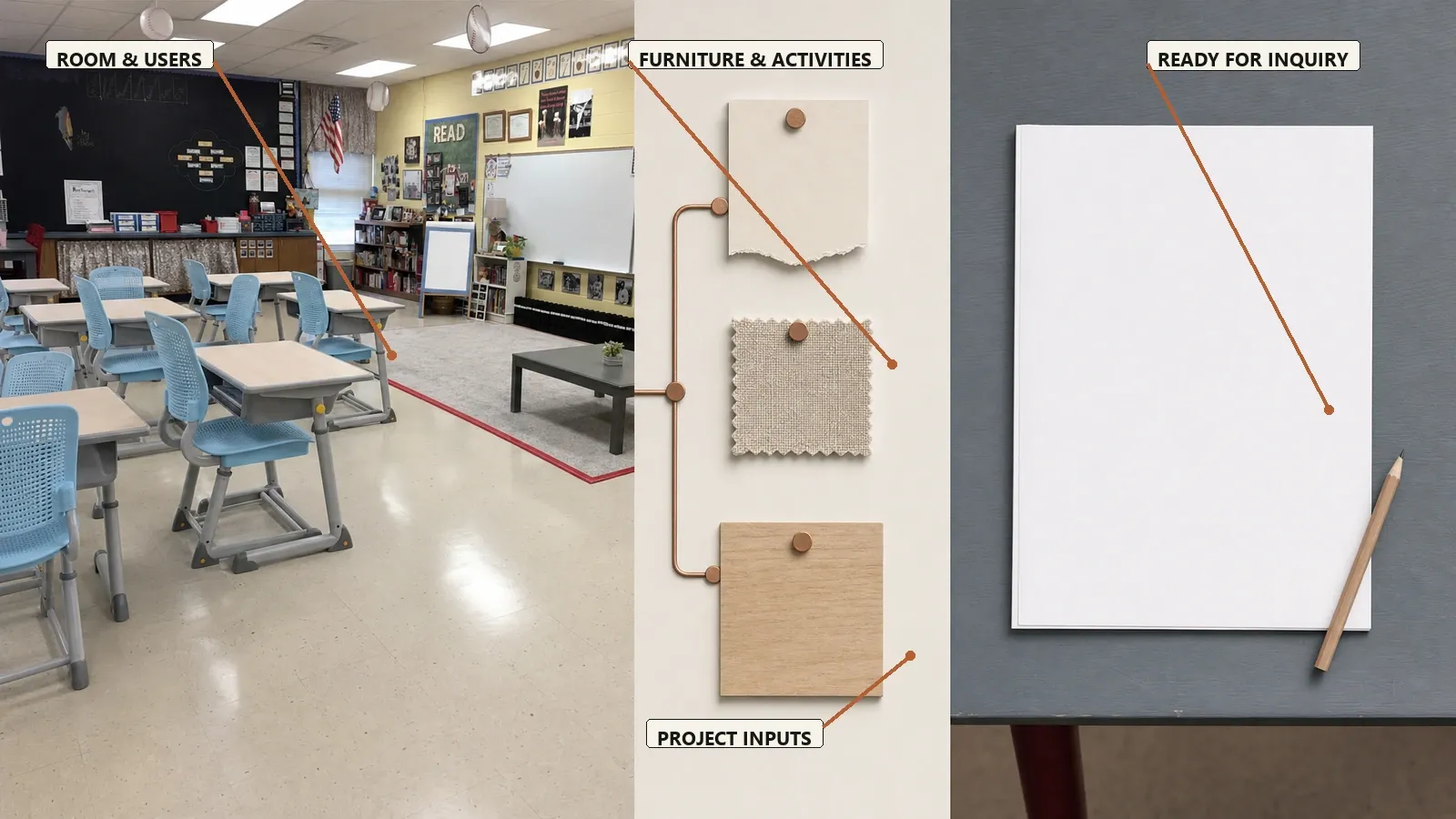
Once the room types and furniture categories are clear, the list can be turned into a project brief. Start with the information needed to describe the learning spaces:
- Classroom information: number of rooms, available area, age group, and number of users.
- Furniture requirements: furniture categories, estimated quantities, and any known configuration needs.
- Usage requirements: teaching activities, expected layout changes, storage needs, and special equipment.
Projects that are moving into procurement can add a second layer of information:
- Commercial conditions: budget range and current project or tender stage.
- Market requirements: destination market and any project-defined evidence or documentation needs.
- Delivery context: target schedule, site conditions, and logistics background.
This structure lets an early classroom plan remain simple while giving procurement teams the additional information needed for product and supplier discussions. The school furniture selection guide covers the next stage of comparing construction, classroom functions, layouts, samples, and product records.
When the brief is ready, Yuzhen Furniture can use the same information to identify relevant school furniture solutions across classroom, seating, storage, nap, dormitory, and modular classroom categories. The selected model, configuration, quantities, evidence, and project conditions can then be confirmed for the specific inquiry.
Classroom Furniture List: Frequently Asked Questions
What furniture does a classroom need?
A typical classroom needs student desks and chairs, a teacher workstation, shared tables or activity surfaces, and storage for teaching resources, student belongings, and shared materials. Presentation support can be added around the teaching method, while laboratories, art rooms, computer rooms, libraries, and other specialized spaces need their own activity-based lists.
What are the main types of school furniture used in classrooms?
The main classroom types are student desks and chairs, shared work surfaces, teacher furniture and presentation support, and classroom storage. Each group serves a different task such as individual study, group work, instruction, or material organization. Users, room conditions, and activities determine how these groups are combined.
What classroom furniture works best for group activities?
Group activities can use a dedicated shared table or movable student desks arranged into clusters. A dedicated table suits frequent group work and shared materials, while movable desks support occasional changes between individual and group tasks. Group size, materials, circulation, and storage access determine the practical arrangement.
How does classroom layout affect furniture selection?
Classroom layout determines whether furniture stays in rows for direct instruction, forms clusters for group work, or opens into a horseshoe or discussion area. Furniture selection should therefore account for movement, sightlines, routes, storage access, and how often the room changes between activities.
What information is needed to turn a classroom furniture list into a project brief?
Record the room types and sizes, user age groups and numbers, teaching activities, layout changes, storage and equipment needs, furniture categories, estimated quantities, and known configuration requirements. Procurement planning can then add destination requirements, evidence needs, schedule, site conditions, delivery, and maintenance context.