
Benefits of Ergonomic School Furniture: Why Fit Matters
An evidence-aware guide to how ergonomic school furniture can support seated posture, reduce discomfort associated with poor fit, improve classroom comfort, and serve students of different ages and body sizes.
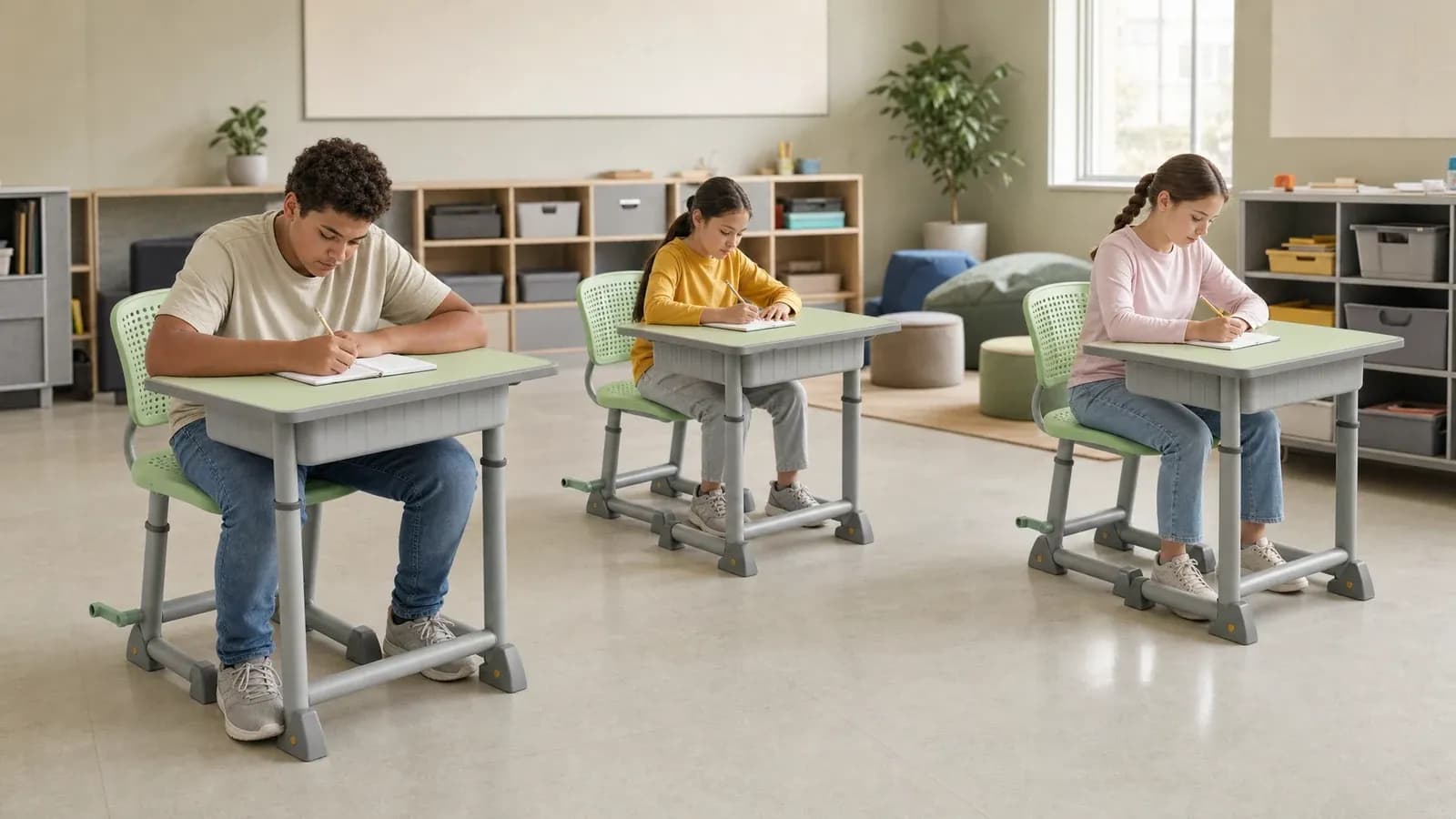
Table of Contents
The benefits of ergonomic school furniture begin with supporting students' bodies during everyday classroom activities. This is particularly important during primary and secondary school, when children and teenagers are still growing and their body dimensions change over time. Students may spend six to eight hours a day in classrooms, using desks and chairs for reading, writing, listening, and other learning activities. When furniture does not match their body dimensions, maintaining a comfortable seated position can become more difficult.
Ergonomic design coordinates desk and chair dimensions with students' physical needs, providing suitable support for the feet, legs, back, and arms. Through appropriate sizing, supportive seat and backrest designs, and adjustable features, ergonomic school furniture can create a more comfortable and adaptable learning environment.
What Are the Main Benefits of Ergonomic School Furniture?
The main benefit of ergonomic school furniture is better physical fit. A chair with a suitable seat height and depth can support the feet and thighs while allowing students to sit close to the backrest. A desk at an appropriate height helps students position their arms more naturally during writing and reading.
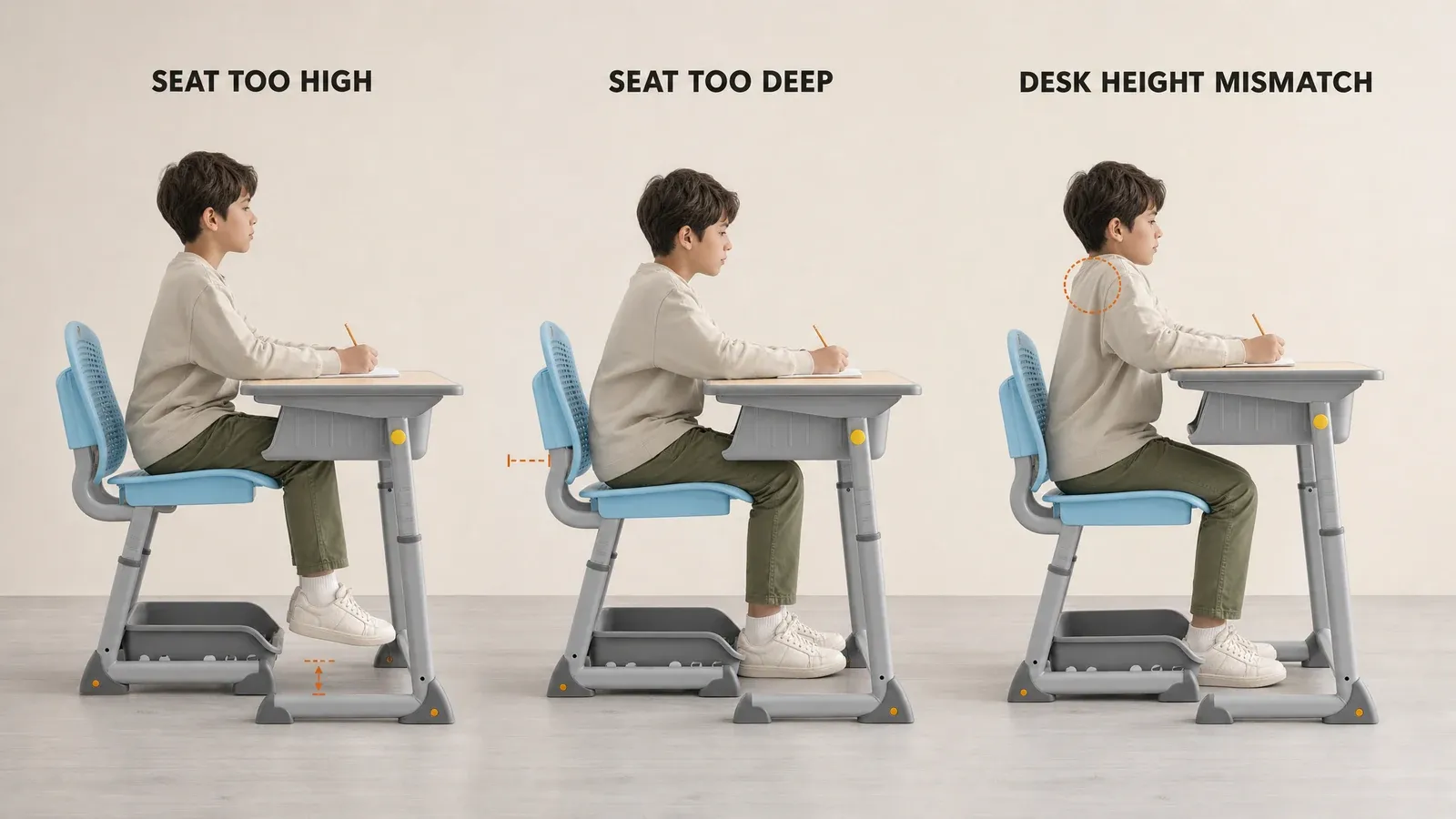
This relationship can reduce the adjustments students make when furniture is poorly matched to their bodies. For example, a seat that is too high may leave the feet unsupported, while a desk that is too high may cause students to raise their shoulders. A seat that is too deep can make it difficult to use the backrest comfortably. Better dimensional fit helps reduce these mismatches and supports a more natural seated position.
Ergonomic design also gives schools more flexibility when serving students of different ages and body sizes. Multi-size furniture provides different dimensions for different student groups, while adjustable desks and chairs can accommodate a range of users within their available adjustment limits.
Together, these features support three practical benefits: more suitable seated posture, improved comfort during classroom activities, and greater flexibility as students grow.
Why Is Ergonomic Classroom Furniture Important?
Students in the same class do not necessarily have the same body dimensions. Height, lower-leg length, thigh length, and upper-body proportions can vary even among students of the same age or grade. Research on school-furniture fit has documented these differences across primary, secondary, and university settings.
These differences affect how students use classroom furniture. A chair may be too high for one student but too low for another. A deep seat may prevent a smaller student from sitting comfortably against the backrest, while a desk that suits one student's height may require another to bend forward or raise their shoulders.
This is why age or grade alone may not provide enough information when selecting school furniture. Schools need to consider the actual body dimensions of the intended users and provide suitable furniture sizes or adjustment ranges.
The Slovenian school-furniture study and a Spanish secondary-school allocation study both reinforce the value of matching furniture to students' body dimensions, with age or grade used as an initial reference.
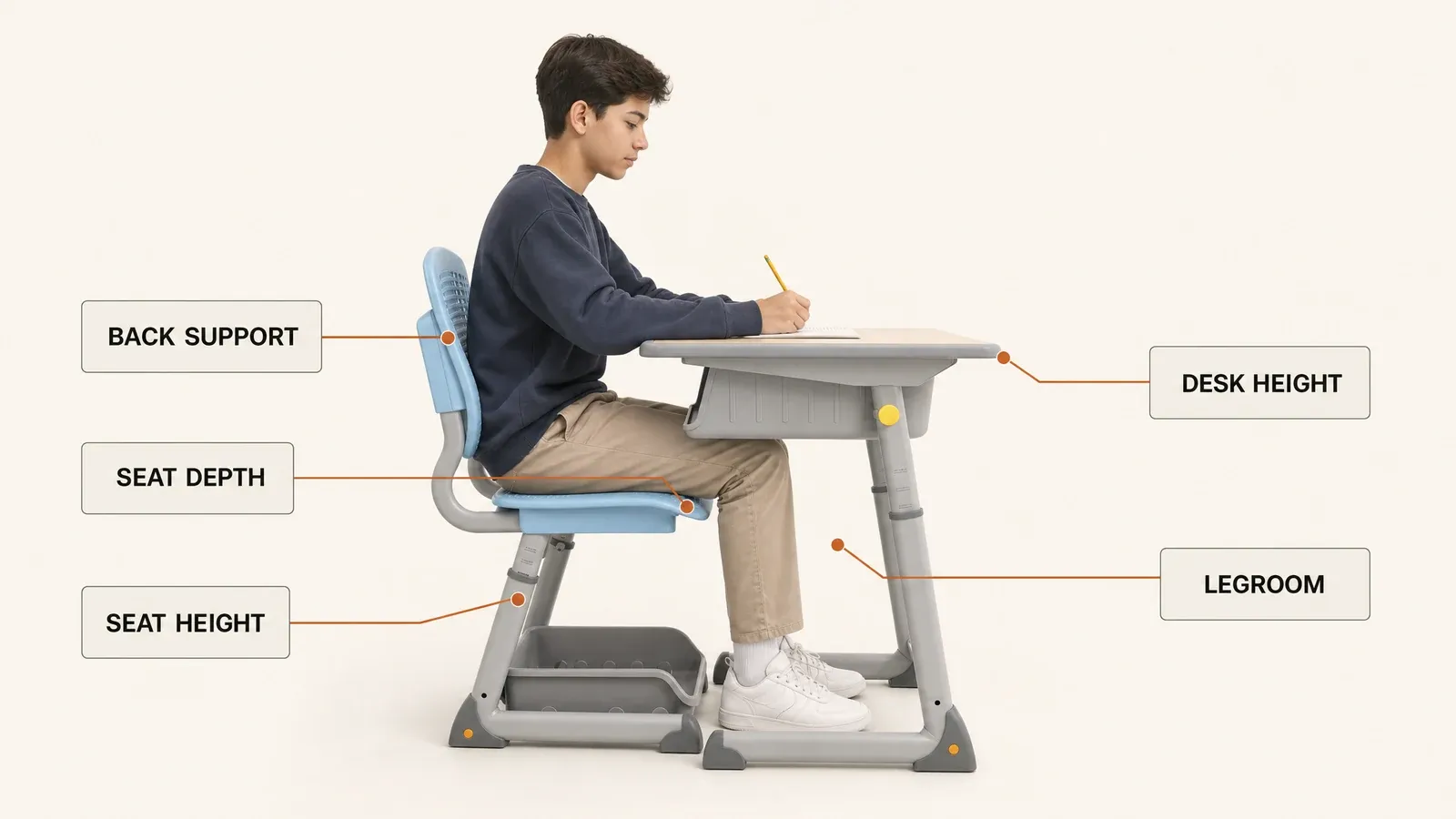
The desk and chair should also be considered together. Seat height, seat depth, back support, desk height, and under-desk clearance each influence a different part of the seated position. A suitable chair alone cannot compensate for a poorly matched desk, so the complete desk-chair combination matters.
How Better Desk-Chair Fit Supports Seated Posture
A suitable seated position begins with the relationship between the chair and the student's body. Seat height should allow the feet to rest on the floor or an appropriate foot support, with the knees comfortably bent. Seat depth should provide support for the thighs without pressing against the area behind the knees. This also allows the student to sit close enough to the backrest to receive support.
The seat surface and backrest contribute to this support in different ways. A contoured seat can follow the general shape of the hips and thighs, helping distribute body weight across the seating surface. A slightly lowered or shaped front edge can reduce pressure behind the thighs. The backrest should provide support around the back and lumbar area while allowing students to move naturally during classroom activities.
A well-designed lumbar support area can help fill the space between the lower back and the backrest. Some chair designs use a shaped or raised support area to follow the natural curve of the lower spine. Where the support position can be adjusted, it can be better aligned with users of different body sizes. The aim is to provide comfortable support while allowing each student to move naturally.
The desk completes the seating arrangement. When desk height is appropriately matched to seat height, students can place their forearms near the work surface without unnecessarily raising their shoulders or leaning forward. Adequate clearance below the desk also gives the thighs and knees room to move.
These features work together during normal classroom tasks. Students write, read, look up at the teacher, reach for materials, and change position throughout a lesson. A suitable desk-chair relationship provides a more comfortable starting point for these activities.
Schools that need detailed measurement fields can refer to the student desk dimensions guide alongside this overview.
How Dimensional Fit May Reduce Avoidable Discomfort
Furniture that does not match a student's body dimensions can create repeated physical adjustments. A seat that is too high may leave the feet without stable support. A seat that is too deep may encourage the student to move forward, reducing contact with the backrest. If the desk is too high, the shoulders may need to lift to reach the work surface; if it is too low, the student may bend forward more than necessary.
Limited space below the desk can create another problem. When the knees and legs do not have enough room, students may need to turn their bodies or change their sitting positions to find space. These small adjustments can occur repeatedly during reading, writing, and other seated activities.
Appropriate seat dimensions, shaped seating surfaces, supportive backrests, and sufficient legroom help address these issues. A contoured seat can provide more even contact with the hips and thighs, while a suitable front-edge design can reduce pressure behind the knees. A backrest with appropriate lumbar support can provide additional support during seated work.
Students naturally need to move, stretch, stand, and change posture. Ergonomic furniture helps reduce avoidable discomfort when they are seated and gives them a more suitable setup for classroom activities.
Can Ergonomic School Furniture Serve Different Ages and Body Sizes?
Yes, provided that the furniture's dimensions or adjustment range match the intended users. Schools can address differences in student body sizes through multi-size furniture, adjustable furniture, or a combination of both.
Multi-size furniture provides several defined desk and chair dimensions. Schools can assign different sizes according to the students who will use them. Adjustable furniture changes selected dimensions, such as seat height or desk height, within a specified range. This allows one product configuration to serve a wider range of users without assuming that a single fixed size will suit everyone.
For example, the current SY-302 hand-crank configuration offers 120 mm of vertical adjustment travel. This range can provide more flexibility when assigning furniture to students of different heights or accommodating changes as students grow. The adjustment range alone does not determine whether a product is suitable. Schools should also check the minimum and maximum heights, the available adjustment positions, and whether the desk and chair remain properly matched throughout the range.
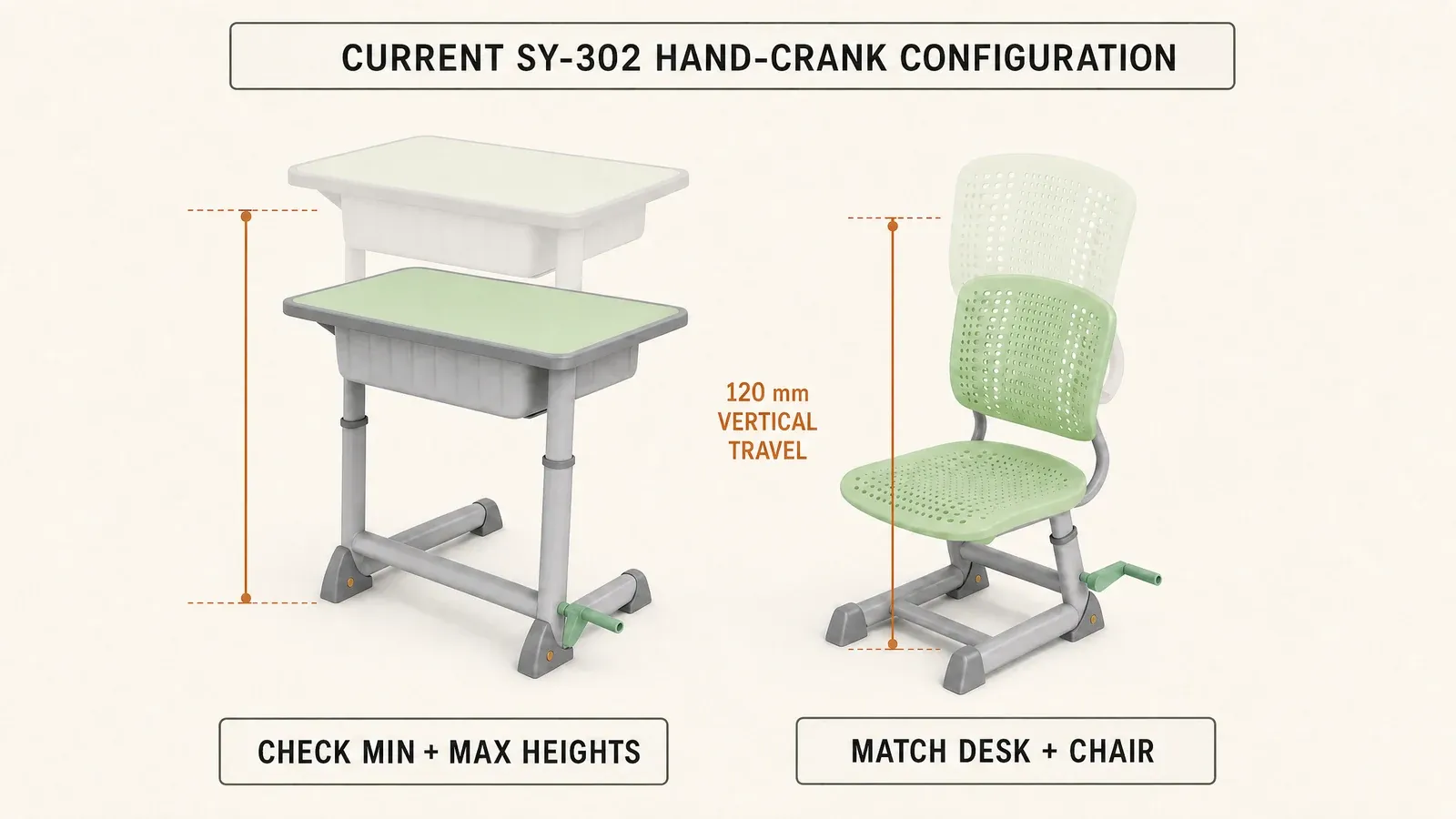
The structure supporting the adjustment mechanism is equally important. A telescoping adjustment sleeve uses nested sections that fit together to support the moving parts. When properly manufactured and fitted, the nested sections can provide a larger contact area and more stable support. This can help reduce unwanted movement during height adjustment and everyday use.
Material selection, manufacturing precision, component fit, and testing still shape the quality of the complete mechanism. Schools should therefore review both the adjustment range and the structural design when comparing adjustable furniture.
Age can provide a useful starting point for planning. Body dimensions offer a more specific basis for furniture selection. The systematic review of school-furniture fit also emphasizes the importance of anthropometric information for the intended population.
What Broader Outcomes Should Schools Treat with Caution?
Ergonomic school furniture is often discussed alongside concentration, collaboration, healthy habits, and long-term value. These outcomes are relevant to classroom planning and should be connected to the furniture's actual functions.
Concentration and learning
A comfortable desk and chair setup can remove one possible source of physical distraction during lessons. When students do not need to keep adjusting their positions to reach the floor, backrest, or work surface, they may find it easier to focus on reading, writing, and other classroom tasks.
Concentration and academic performance also depend on teaching quality, curriculum, motivation, lighting, acoustics, and many other factors. Ergonomic furniture supports the physical learning environment but cannot determine learning outcomes on its own.
Collaboration and participation
Classroom activities often shift between individual study, group discussion, and shared tasks. Furniture that is easy to move or adjust can help teachers reorganize seating arrangements for these activities.
For example, lightweight chairs and appropriately designed desks can make it easier to reposition furniture for group work. Ergonomic fit remains important during these changes, while mobility and classroom layout help determine how effectively students can participate in different activities.
Healthy habits and long-term well-being
Furniture that provides suitable support can help students become familiar with a comfortable desk-chair relationship. A well-positioned seat, appropriate desk height, and supportive backrest can encourage students to pay attention to how they sit and use their workspace.
Healthy classroom habits involve more than seated posture. Regular movement, varied positions, physical activity, and breaks from prolonged sitting remain important. Ergonomic furniture should support everyday use without encouraging students to remain seated in one position for too long.
Long-term value
Adjustable and multi-size furniture can give schools greater flexibility when assigning furniture to changing student groups. A suitable adjustment range may allow some products to remain useful across different stages of student growth.
Product durability, maintenance, spare-part availability, and replacement cycles also shape long-term value. For adjustable furniture in particular, the frame, adjustment mechanism, joints, and moving components should be considered together. These factors provide a more complete basis for evaluating service life and overall value.
Why Ergonomic Fit Is One Part of a Better Classroom Environment
Ergonomic fit gives students a more suitable foundation for seated learning. Appropriate desk and chair dimensions support posture, reduce avoidable mismatches, and help students of different body sizes use classroom furniture more comfortably.
The design of individual components contributes to this result. Seat height and depth affect lower-body support, the seat surface influences how the body contacts the chair, and the backrest provides support for the trunk. Desk height and under-desk clearance complete the relationship by supporting comfortable arm positioning and sufficient legroom.
A good classroom environment also needs to support movement and different learning activities. Students benefit from standing, walking, stretching, and changing positions during the day. Classroom layouts should also provide suitable space for individual study, group work, and transitions between activities.
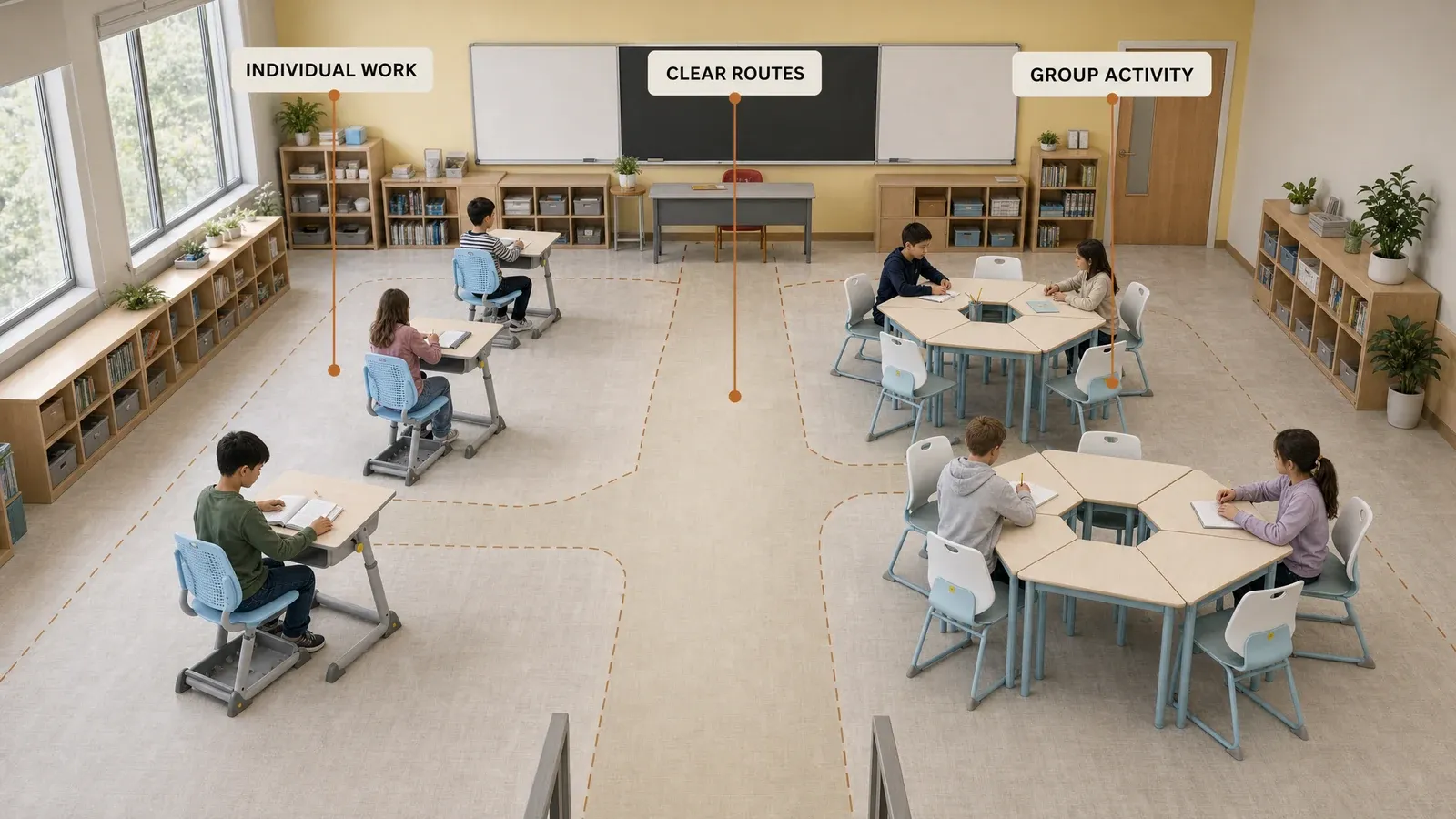
When furniture dimensions, product design, and classroom layout are considered together, schools can create learning spaces that better accommodate students' physical needs and everyday routines.
Ergonomic School Furniture: Frequently Asked Questions
What are the benefits of ergonomic school furniture?
Ergonomic school furniture can support a more suitable seated posture when desk and chair dimensions match the user's body. Appropriate seat dimensions, back support, desk height, and legroom can reduce avoidable discomfort and create a more comfortable setup for everyday classroom activities.
Why is ergonomic classroom furniture important?
Students of the same age or grade can have different body dimensions. Ergonomic classroom furniture helps schools provide suitable desk and chair sizes or adjustment ranges for these differences, instead of relying on one fixed size for every student.
Can ergonomic school furniture improve posture?
Properly matched desk and chair dimensions can support a more suitable seated position. Seat height, seat depth, backrest support, desk height, and legroom all contribute to this relationship. Furniture can support posture, while students should still be encouraged to move and change positions throughout the day.
Can one ergonomic desk-and-chair size fit students of all ages?
A single fixed size should not be assumed to fit every student. Multi-size furniture provides different dimensions for different user groups, while adjustable furniture can serve several groups within its documented range. Schools should check the minimum and maximum adjustment heights, adjustment method, mechanism stability, and whether the desk and chair remain appropriately matched at the selected settings.
Research references: Ergonomic evaluation of school furniture in Slovenia, Validation of two school-furniture allocation instruments, and Systematic review of anthropometric fit in school furniture.
---
Planning classroom furniture for a varied student population? Contact Yuzhen Furniture to discuss the intended users, room conditions, and furniture categories.