
2026–2034 School Furniture Market Size, Share, and Industry Analysis
A data-led review of the global school furniture market size, forecast, product and material shares, distribution channels, regional outlook, growth drivers, constraints, and market participants.
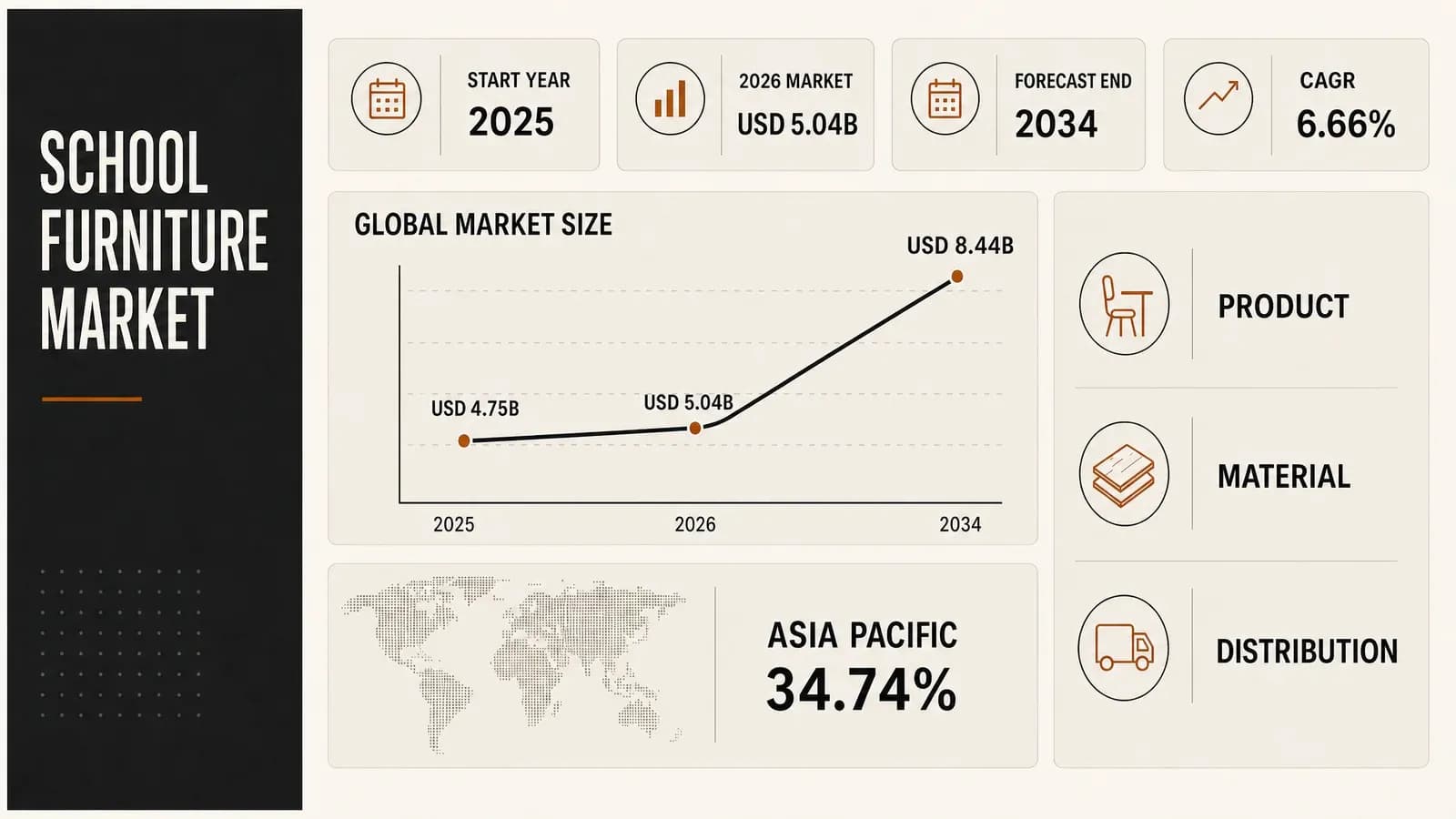
Table of Contents
The global school furniture market is evolving as education systems invest in new facilities, modernize existing classrooms, and adapt learning spaces to changing educational needs. Beyond the construction of new schools, demand is also influenced by classroom renovation, digital learning, student comfort, and the need to make better use of available space.
These developments are shaping what schools purchase, which materials they choose, and how they evaluate furniture suppliers. Seating, storage, and other school furniture products serve different functions, while material selection and distribution channels influence how institutions plan and complete their procurement projects.
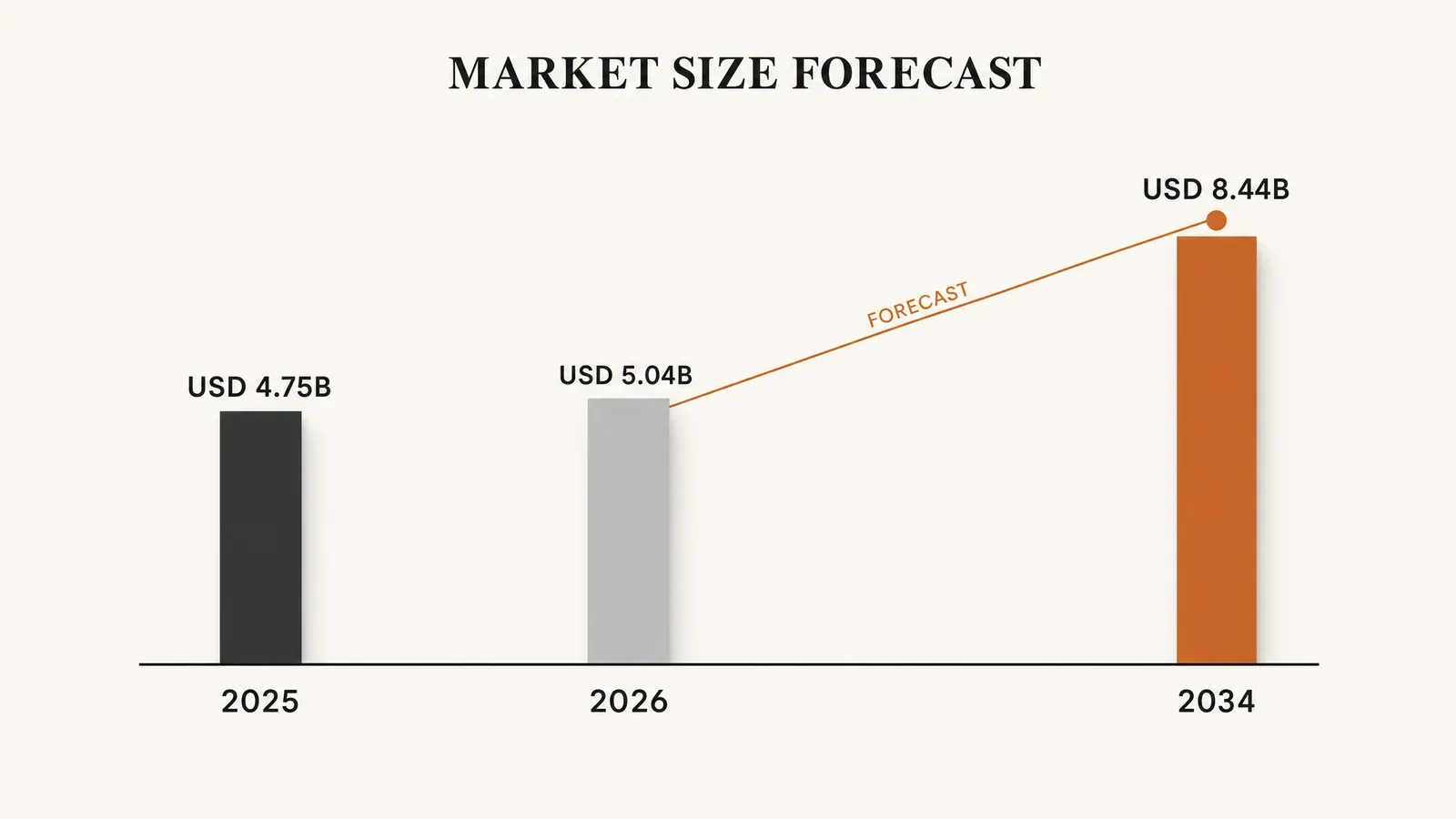
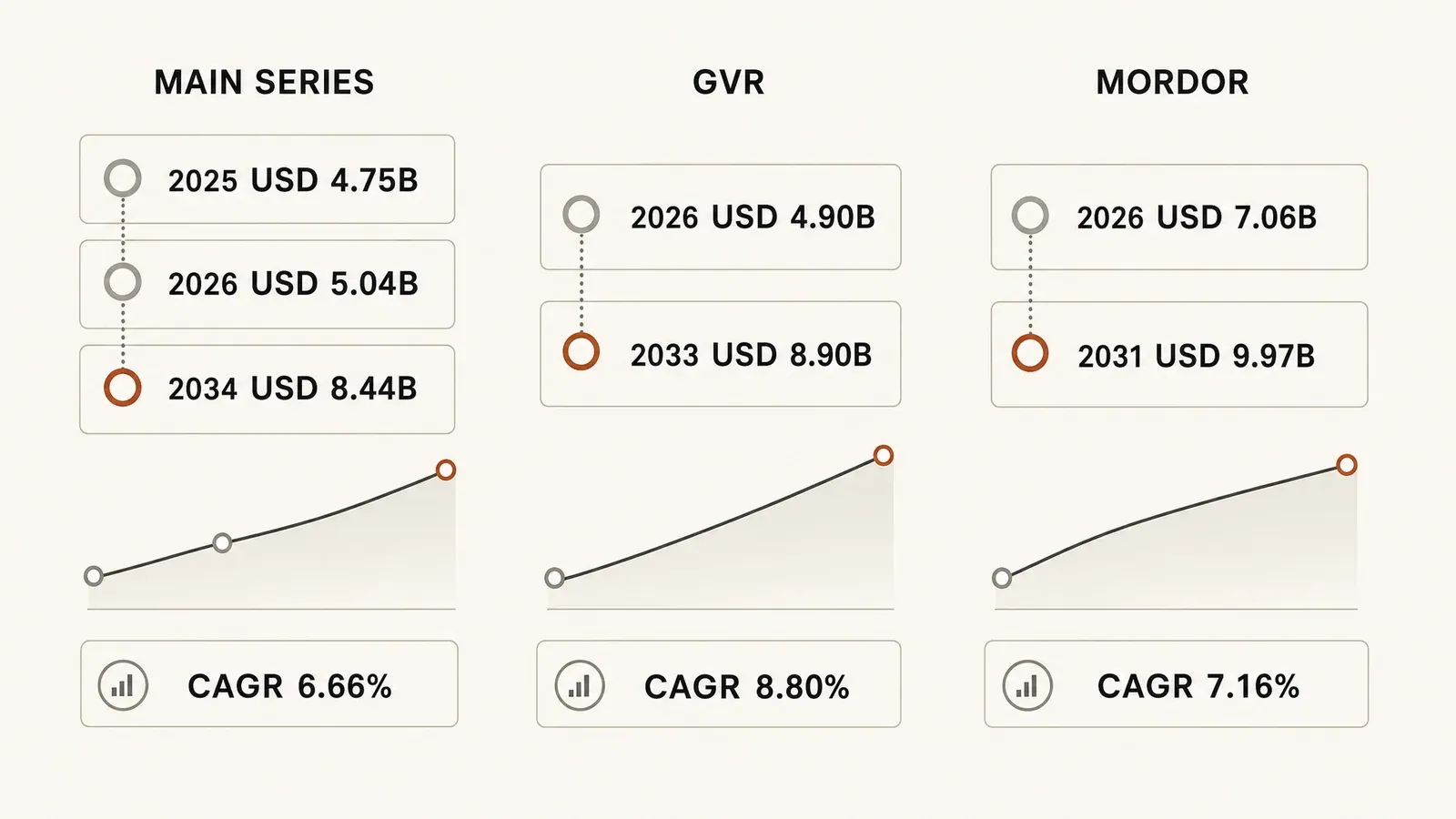
According to Fortune Business Insights, the global school furniture market was valued at USD 4.75 billion in 2025. The market is projected to reach USD 5.04 billion in 2026 and USD 8.44 billion by 2034, representing a compound annual growth rate (CAGR) of 6.66% from 2026 to 2034.
| Market measure | Reported value |
|---|---|
| 2025 market size | USD 4.75 billion |
| 2026 market size | USD 5.04 billion |
| 2034 forecast market size | USD 8.44 billion |
| CAGR, 2026–2034 | 6.66% |
This growth outlook reflects changes in educational infrastructure, classroom design, and furniture requirements. The following sections examine the market's main product and material categories, distribution channels, growth drivers, and regional characteristics.
How Is the School Furniture Market Segmented?
The school furniture market can be examined through three main dimensions: product type, material, and distribution channel. Each dimension explains a different part of the market structure. Market reports also use application as a supporting lens, separating classrooms, libraries, laboratories, and other educational spaces because the furniture requirements are not identical across them.
| Segmentation dimension | Main categories | What the dimension explains |
|---|---|---|
| Product | Seating furniture, storage furniture, other products | The furniture functions schools need |
| Material | Wood, metal, plastic, others | Material preferences and construction choices |
| Distribution channel | Offline, online | How schools compare, select, and purchase furniture |
Product segmentation identifies the types of furniture used across classrooms and other educational spaces. Seating furniture supports daily teaching and learning activities, while storage products help organize books, equipment, and personal belongings. Other products serve additional functions across school facilities.
Material segmentation describes the resources used to manufacture these products. Wood, metal, and plastic each have different characteristics and applications, and some furniture combines multiple materials to meet structural or functional requirements.
Distribution segmentation focuses on how products reach schools and educational institutions. Buyers may use online channels to research suppliers and compare product information, while offline channels can support physical inspection and project evaluation.
These dimensions are interconnected. A classroom desk, for example, belongs to a product category, may combine wood and metal components, and can be purchased through either online or offline channels. Understanding the three dimensions together provides a more complete view of the market.
Product Segmentation: Why Does Seating Furniture Lead the Market?
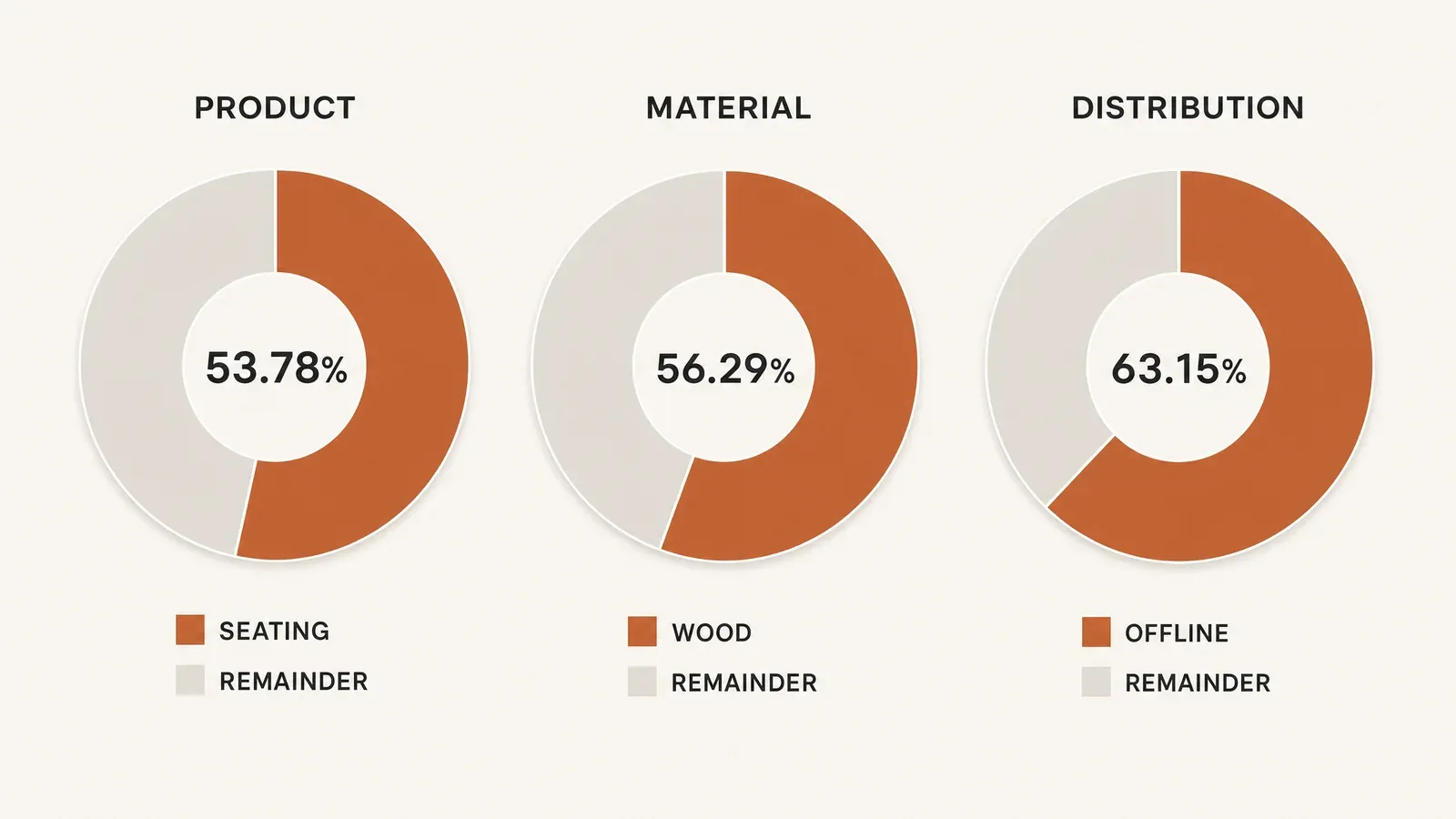
Seating furniture is expected to account for 53.78% of the global school furniture market in 2026. Its leading position reflects the essential role of desks and chairs in everyday educational activities.
Students use desks and chairs throughout the school day for listening, reading, writing, assessment, and group work. These products are required across different classrooms and educational levels, making them a fundamental part of school furniture procurement. Their condition, dimensions, and configuration also influence how effectively classrooms can accommodate different teaching activities.
The category covers more than conventional student desks and chairs. Schools may need individual desks, shared desks, adjustable chairs, and seating arrangements for collaborative learning. Other educational spaces may require library seating, staff-room furniture, or specialized seating for different activities.
Storage furniture represents another important part of the market. Cabinets, shelves, lockers, and other storage units provide designated spaces for books, teaching materials, devices, and personal belongings. As schools manage more learning materials and digital equipment, storage solutions are becoming an important part of classroom organization.
Different applications also create demand for more specialized furniture. Lockable cubbies, partial-height lockers, and mobile storage can help organize shared devices and classroom supplies. Laboratories and STEM learning spaces may require laboratory benches, durable work surfaces, and furniture that is easy to clean and maintain.
The demand for these products depends on the facilities included in a project. A standard classroom, for example, has different requirements from a science laboratory, library, or student dormitory. As schools develop and modernize more types of learning spaces, their furniture needs extend beyond conventional desks and chairs.
Material Segmentation: Why Does Wood Hold the Largest Share?
Wood is expected to represent 56.29% of the school furniture market in 2026. Its established use in desks, tables, shelves, cabinets, and other educational furniture contributes to its position in the market.
Wood is valued for its workability, familiar appearance, and suitability for a range of furniture designs. It can be used in work surfaces, storage structures, and other components that need to support regular classroom use. Different wood-based materials and finishes also allow manufacturers to develop products for different budgets and applications.
Metal is another important material, particularly in furniture components that require structural support. It is commonly used in desk and chair frames, legs, storage units, and adjustable structures. Its suitability depends on factors such as material thickness, connection design, surface treatment, and the intended conditions of use.
Plastic is used in selected applications where low weight and ease of handling are important. It can be incorporated into chair components, accessories, and other furniture parts. Its suitability depends on the product's design, material quality, and expected usage conditions.
Material selection is not simply a matter of choosing one material over another. Schools and project buyers need to consider the intended application, product construction, finish, maintenance requirements, and expected service life. A desk, for example, may combine a wood-based work surface with a metal frame, bringing together different materials to meet functional and structural requirements.
Environmental considerations are also influencing material choices. In sustainability-focused projects, buyers may ask whether panels, shells, frames, and finishes can be repaired, replaced, disassembled, or reused over the product life cycle. Recycled content, low-emission materials, and responsible sourcing may also form part of supplier evaluations.
The most suitable material therefore depends on the product structure, indoor environment, expected use, and requirements specified for the project. Durability and environmental performance should be assessed through the actual material specifications and supporting product information.
Distribution Channels: Why Do Offline Sales Remain Dominant?
Offline distribution is expected to account for 63.15% of the school furniture market in 2026. Physical inspection remains important because school furniture is often purchased for long-term institutional use and must meet specific requirements for dimensions, configuration, durability, and classroom suitability.
Through offline channels, procurement teams can examine product construction, inspect finishes, assess dimensions, and evaluate how furniture works in a particular space. Samples, showroom visits, supplier meetings, and project discussions also help buyers clarify specifications before placing larger orders.
Online channels play an increasingly useful role in product research and supplier comparison. Digital catalogues and supplier websites allow buyers to review different product types, materials, configurations, and supplier locations. They also make it easier to request quotations, compare preliminary specifications, and communicate with manufacturers in different markets.
In practice, online and offline channels often support different stages of the same procurement process. A school may begin by researching products online, shortlist potential suppliers, and then request drawings, samples, or physical inspections before confirming its requirements. Online tools can also be useful for repeat orders, accessories, and early quotation work.
Larger projects usually involve additional coordination. Multi-building school developments, for example, may require site assessments, tender reviews, customized specifications, shipping arrangements, installation planning, and after-sales support. These requirements help explain why physical inspection and direct supplier communication continue to play an important role in institutional furniture purchasing.
What Is Driving the Growth of the School Furniture Market?
The school furniture market is influenced by both investment in educational facilities and changes in the way schools use their learning spaces. New construction and renovation create demand for furniture, while evolving educational requirements influence the products and features that institutions consider.
Education Spending and Infrastructure Investment
Investment in education infrastructure is an important source of demand for school furniture. New school construction, classroom expansion, and facility renovation can create requirements for desks, chairs, storage units, and furniture for other educational spaces.
Government education programs and public infrastructure projects can support this demand by funding school development and modernization. In countries with expanding education systems, the need to provide functional learning environments can create opportunities for furniture suppliers.
However, education spending does not translate directly into a fixed amount of furniture revenue. The actual procurement opportunity depends on how funding is allocated, which facilities are included in a project, and whether furniture replacement or new purchases form part of the approved budget.
Project specifications, tender requirements, delivery conditions, and installation arrangements also influence whether a planned investment becomes an awarded furniture order.
Sustainable and Environmentally Focused Furniture
Environmental considerations are becoming more relevant to school furniture specifications. Schools and education authorities may consider renewable resources, responsibly sourced wood, recycled materials, and products designed for long-term use.
These considerations can influence both material selection and supplier evaluation. Buyers may request information about material composition, sourcing, emissions, product durability, or relevant environmental certifications, depending on the project's requirements.
Recycled-material work surfaces and furniture renovation projects illustrate how environmental considerations can influence school facility decisions. For example, some schools have explored recycled materials when updating existing learning spaces.
The growing interest in sustainable furniture also places greater attention on product life cycles. Furniture that can be maintained, repaired, or adapted may help schools extend its useful life and reduce the need for frequent replacement. Material selection, construction quality, and maintenance planning therefore all contribute to the overall environmental and economic value of a product.
Technology-Enhanced Furniture
The growing use of laptops, tablets, interactive displays, and other digital equipment is changing classroom requirements. Furniture may need to accommodate charging equipment, cable management, device storage, and work surfaces suitable for technology-supported activities.
These features can help schools organize equipment and manage the practical requirements of digital learning. In classrooms where students use personal or shared devices, furniture layout and access to power may also affect how teaching activities are arranged.
Technology-compatible furniture is not limited to built-in electronic components. It can also include desks with suitable cable-management provisions, storage designed for devices, and flexible configurations that support individual or group activities.
Any integrated electrical or charging features should be specified in coordination with the school's electrical plan, equipment requirements, safety standards, and maintenance responsibilities.
Ergonomic Fit and Flexible Learning Environments
Schools are paying greater attention to how furniture fits students and supports daily classroom activities. Differences in student body dimensions mean that a single desk and chair configuration may not be suitable for every age group or user.
Adjustable or multi-size desks and chairs can help schools accommodate different student dimensions when the available adjustment range matches the intended users. Appropriate seat height, desk height, seat depth, and backrest design are among the factors that influence furniture fit.
At the same time, flexible teaching models are changing how classrooms are arranged. A room may need to move between teacher-led instruction, individual work, small-group discussion, and project activities without replacing the entire furniture set. Movable desks, nesting tables, stackable seating, mobile whiteboards, and repositionable storage can make these transitions easier when the room layout allows it.
The value of modular furniture depends on more than its ability to move. Buyers should consider whether components can be reconfigured easily, whether storage remains accessible after a layout change, and whether frames, casters, and connections can withstand repeated movement.
These requirements influence how schools evaluate furniture beyond appearance and initial purchase price. Buyers increasingly need to consider product dimensions, adjustability, room layout, intended activities, and the practical needs of students and staff.
Regional Outlook: How Does the School Furniture Market Differ Across Regions?
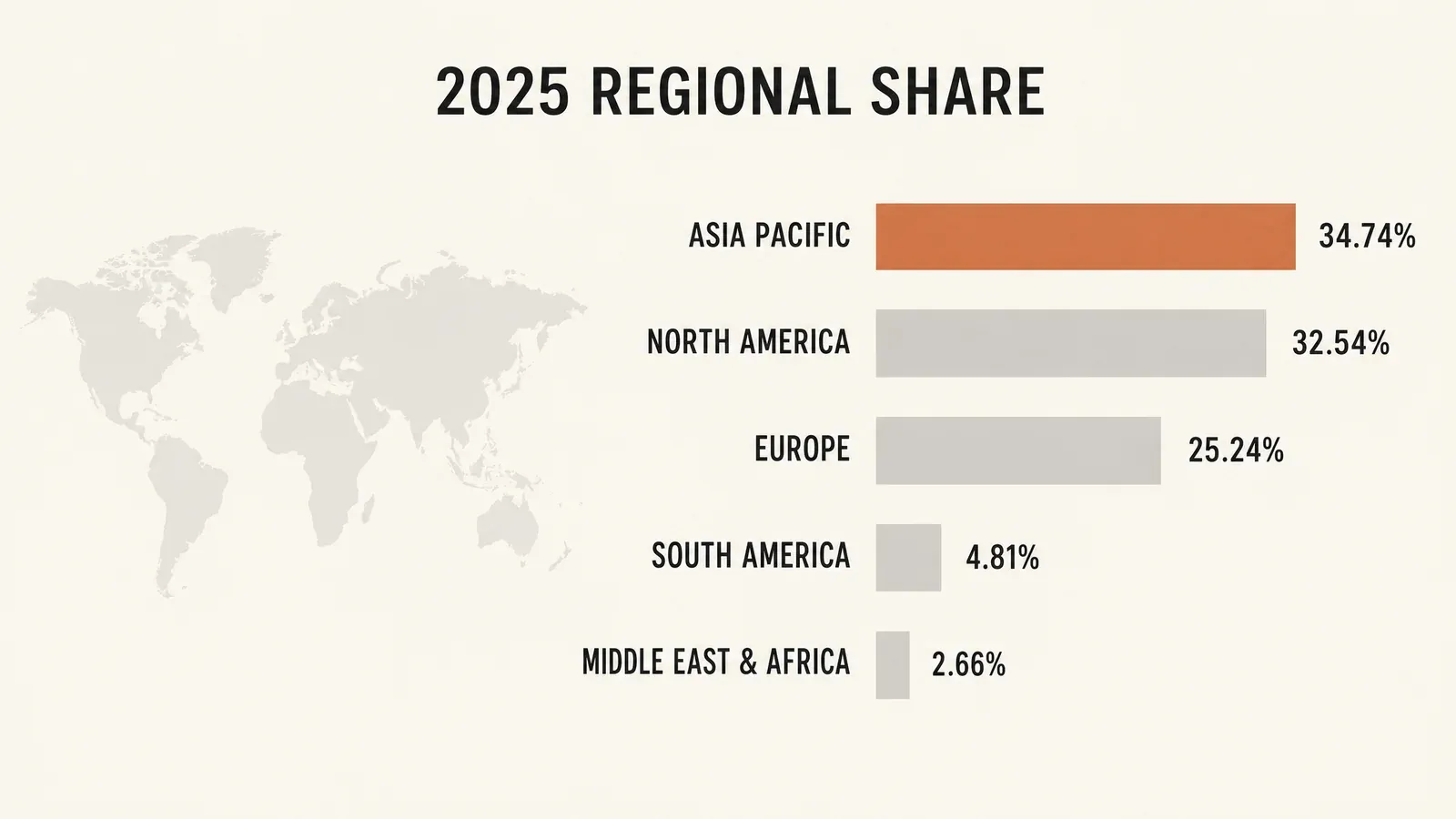
The school furniture market varies across regions according to education infrastructure, investment priorities, facility conditions, and procurement requirements. Asia Pacific holds the largest regional share in 2025, followed by North America and Europe.
The following table presents the regional market values and shares.
| Region | 2025 market size | 2025 share | 2026 market size |
|---|---|---|---|
| Asia Pacific | USD 1.65 billion | 34.74% | USD 1.74 billion |
| North America | USD 1.55 billion | 32.54% | USD 1.65 billion |
| Europe | USD 1.20 billion | 25.24% | USD 1.28 billion |
| South America | Approx. USD 0.23 billion | 4.81% | Approx. USD 0.23 billion |
| Middle East & Africa | USD 0.13 billion | 2.66% | USD 0.13 billion |
The regional figures are rounded, so their totals may differ slightly from the global market size. The 2025 regional shares and 2026 market values refer to different reporting years.
Asia Pacific
Asia Pacific is the largest regional market, with a reported value of USD 1.65 billion in 2025 and a 34.74% share. Its market is projected to reach USD 1.74 billion in 2026.
The region includes countries with different education systems, infrastructure conditions, and procurement environments. Large student populations and investment in educational facilities provide an important demand foundation, while school modernization creates additional requirements for classroom and institutional furniture.
At the country level, China is projected to reach USD 0.60 billion in 2026, followed by India at USD 0.55 billion and Japan at USD 0.14 billion. These figures illustrate the different market scales within the region and the importance of considering individual country conditions when evaluating opportunities.
North America
North America is reported at USD 1.55 billion in 2025, representing 32.54% of the global market, and is projected to reach USD 1.65 billion in 2026.
Demand in the region is associated with classroom modernization, flexible learning environments, and the integration of digital equipment into educational facilities. Schools may need furniture that supports different teaching arrangements, accommodates technology, and meets institutional requirements for long-term use.
The United States school furniture market is projected to reach USD 1.36 billion in 2026, making it a major part of the regional market.
Europe
Europe is reported at USD 1.20 billion in 2025 and is projected to reach USD 1.28 billion in 2026.
School facility modernization, education reforms, and attention to student comfort and ergonomic furniture are among the demand themes identified in the market analysis. These factors can influence the replacement of older furniture and the selection of products for updated learning environments.
At the country level, the United Kingdom market is projected to reach USD 0.21 billion in 2026, while Germany is projected to reach USD 0.24 billion.
Procurement requirements vary across European countries and institutions. Product specifications, environmental requirements, documentation, and project delivery conditions all play a role in furniture selection.
South America, Middle East & Africa
The South American school furniture market is estimated at approximately USD 0.23 billion in 2025, representing 4.81% of the global market, and approximately USD 0.23 billion in 2026.
The Middle East and Africa market is reported at USD 0.13 billion in 2025, with a 2.66% share, and USD 0.13 billion in 2026.
In these regions, school construction, facility renovation, and education infrastructure investment can support furniture demand. However, transport networks, distribution availability, project funding, and local procurement conditions may influence how quickly demand becomes an actual order.
For suppliers serving these markets, understanding destination requirements, shipping arrangements, delivery schedules, and installation conditions is an important part of project planning.
What Could Limit School Furniture Market Growth?
Although education investment and changing classroom requirements support market demand, several practical conditions can affect the pace of school furniture procurement.
Rural Infrastructure and Distribution Conditions
Limited transport infrastructure and fewer local distribution points can make furniture delivery more difficult in rural areas. Long transport routes, additional handling, and limited access to installation services may increase logistics costs and extend delivery times.
These challenges can affect both suppliers and schools. A project may have an identified furniture requirement, but its implementation can be delayed by transportation arrangements, delivery access, or the availability of local support.
For international suppliers, destination port selection, inland transportation, customs procedures, and final delivery arrangements also need to be considered when preparing a quotation.
Budget Competition and Procurement Priorities
Schools and education authorities often manage multiple competing budget priorities. Teaching resources, building maintenance, digital equipment, basic infrastructure, and other educational needs may receive funding before furniture replacement.
As a result, the need for new furniture does not always lead to immediate purchasing activity. Some institutions may replace products gradually, prioritize the most heavily used classrooms, or postpone upgrades until additional funding becomes available.
The effect varies by region and project. Procurement decisions depend on available budgets, funding schedules, tender requirements, product specifications, and the urgency of facility improvements.
Material Costs, Trade, and Delivery Risk
Raw material prices and shipping conditions can also affect the feasibility of a school furniture project. Changes in steel, wood, resin, or related input costs may affect production expenses and quotation validity. Trade measures, port congestion, and limited local installation support can add uncertainty to landed costs and delivery schedules.
These factors are particularly relevant to projects with fixed school-opening dates or large quantities of furniture that must be delivered and installed within a specific period.
For this reason, market opportunities depend not only on demand for a product category but also on practical project planning. Material documentation, quotation validity, shipping arrangements, site access, installation, replacement parts, and ongoing maintenance all contribute to successful delivery.
How Should Readers Compare Different School Furniture Market Forecasts?
Different research providers may publish different market sizes, growth rates, forecast periods, and regional rankings. These differences often reflect variations in market definitions, product coverage, geographic scope, and forecasting methods.
For example, Grand View Research and Mordor Intelligence publish separate estimates of the school furniture market. Their forecasts use different reporting periods and market structures, so their figures should be considered independently rather than combined into one market series.
The differences can be seen in their headline projections. Grand View Research estimates the market at USD 4.9 billion in 2026 and USD 8.9 billion by 2033, while Mordor Intelligence estimates USD 7.06 billion in 2026 and USD 9.97 billion by 2031. These figures illustrate how market estimates can vary depending on the scope and methodology used.
Before comparing two market reports, readers should check several points:
- Market definition: Which products, users, and educational settings are included in the market?
- Base year: Are the reported market values based on the same historical or current year?
- Forecast endpoint: Does the projection end in 2033, 2034, or another year?
- Geographic scope: Are regional shares calculated using the same global market denominator?
- Segmentation method: Are categories such as seating, storage, material, distribution channel, and application defined in the same way?
- Research methodology: Does the provider explain its data sources, research methods, modeling approach, and report update date?
These differences matter because two reports may use similar market names while measuring different product or application scopes. Comparing the market definition, reporting period, and segmentation method helps readers understand what each forecast represents and why the figures may differ.
Key Companies in the School Furniture Market
The school furniture market includes manufacturers and suppliers serving different educational spaces, product categories, and regional markets. Notable companies in the industry include Virco, VS America, KI, Global Furniture Group, Scholar Craft, Inspace School Furniture, Haskell Education, Bonton Technomake, and EDU Furniture.
These companies represent a range of participants in the school furniture industry, with products and solutions covering classroom furniture, seating, storage, and other educational applications. Their presence reflects the variety of manufacturers and suppliers serving institutional buyers across different markets.
School Furniture Solutions for Different Campus Spaces
Market-level data explains the overall direction of the industry, but individual school projects require decisions based on the actual spaces, users, and activities involved.
A classroom may need student desks and chairs that match the age group and teaching arrangement. A dormitory project may require bunk beds, integrated loft beds, storage, and practical access arrangements. Libraries, staff rooms, nap areas, and shared facilities may have different requirements for seating, storage, and space utilization.
This means that school furniture procurement is not simply a matter of selecting products from a catalogue. Buyers also need to consider dimensions, material specifications, room layouts, product combinations, documentation, delivery conditions, and long-term maintenance.
Yuzhen Furniture focuses on campus furniture solutions for classroom, dormitory, nap, storage, seating, and modular classroom applications. Its product range serves different educational spaces and project requirements.
For schools, distributors, and education project buyers, the appropriate solution depends on the intended users, room conditions, required quantities, product specifications, and destination requirements. Reviewing these details early can help make product selection and project planning more practical.
Frequently Asked Questions
How large is the global school furniture market?
The global school furniture market was valued at USD 4.75 billion in 2025. It is projected to reach USD 5.04 billion in 2026 and USD 8.44 billion by 2034.
What is the expected CAGR for the school furniture market from 2026 to 2034?
The market is projected to grow at a compound annual growth rate of 6.66% from 2026 to 2034.
Which region has the largest school furniture market share?
Asia Pacific is the largest regional market in 2025, with a 34.74% share. North America and Europe are also major regional markets.
Which type of school furniture is most popular?
Seating furniture is expected to account for 53.78% of the school furniture market in 2026. Desks and chairs are essential across daily classroom activities, while storage and other furniture products support additional educational functions.
What materials are commonly used in school furniture?
The main material categories include wood, metal, plastic, and others. Wood is expected to account for 56.29% of the market in 2026. The appropriate material for an individual product depends on its design, intended use, construction, and maintenance requirements.
What are the main trends influencing the school furniture market?
Important demand themes include sustainable and recycled materials, technology-compatible furniture, education infrastructure investment, ergonomic furniture, and flexible classroom layouts. These trends influence the products and specifications schools consider when developing or renovating educational spaces.
Conclusion
The global school furniture market is projected to grow from USD 4.75 billion in 2025 to USD 8.44 billion by 2034. This growth outlook reflects continued investment in education infrastructure, classroom modernization, and changing requirements for learning environments.
The market is shaped by its product, material, and distribution structures. Seating furniture represents the largest product category in the 2026 market data, while wood leads the material segmentation and offline channels remain the dominant distribution route.
At the regional level, Asia Pacific holds the largest reported market share in 2025, while North America and Europe also represent substantial markets. At the same time, infrastructure limitations, logistics costs, material prices, and competing budget priorities can influence how quickly demand turns into procurement.
For industry readers and school project buyers, understanding these market developments provides a useful starting point. Connecting market trends with product categories, regional conditions, classroom requirements, and practical procurement considerations offers a clearer picture of where the school furniture industry is heading.