
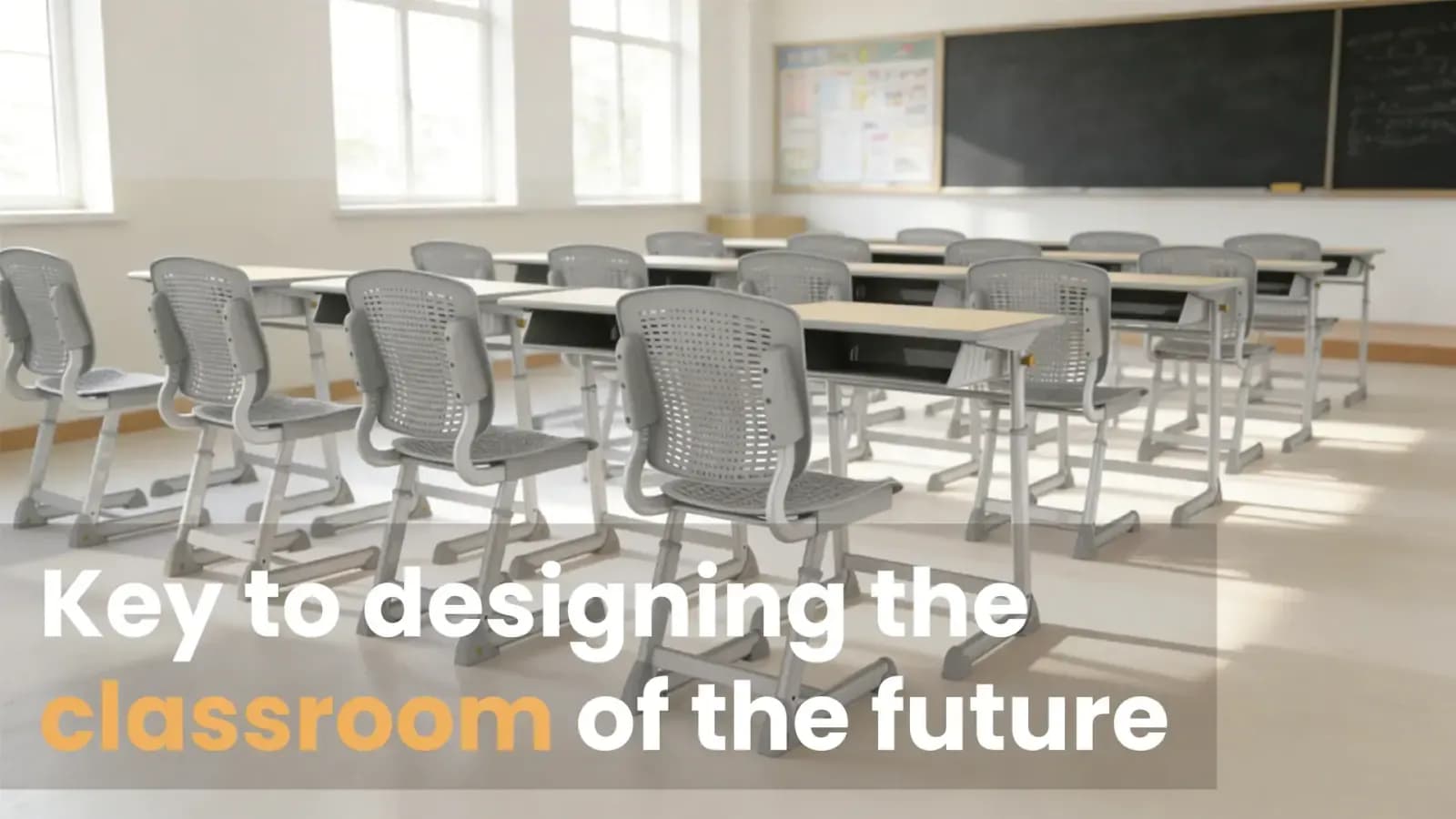
Educational spaces-Key to designing the classroom of the future
we now recognize that the classroom environment directly impacts how we learn, teach, and interact.
Overview
For many years, we have viewed the classroom as simply a place for students to learn. However, we now recognize that the classroom environment directly impacts how we learn, teach, and interact. Designing the classroom of the future is not just about incorporating technology, but about creating environments that support new methodologies, encourage student autonomy and promote the development of key skills. If the pedagogical model evolves, so must the space.
Table of Contents
Space as the third teacher
Contemporary educational architecture is based on a clear idea: the environment also educates. The layout of the furniture, lighting, acoustics and the possibility of movement influence students' motivation, concentration and participation. A rigid classroom, with desks lined up in rows, conveys an implicit message: listen and reproduce. A flexible, dynamic and reconfigurable classroom conveys a very different message: collaborate, experiment and create.
The classroom of the future must facilitate:
Cooperative and project-based work Research and experimentation Presentation and communication of results Spaces for individual reflection It is not a question of eliminating the traditional, but of expanding and adapting it.
Flexibility: the foundation of all innovative design
The key word in any classroom of the future is flexibility.
A single session may require:
If the space cannot be easily rearranged, the methodology is limited. This is where school furniture plays a strategic role. Modular tables, mobile chairs, lightweight and easily movable elements allow the classroom to be transformed in a matter of minutes. Furniture ceases to be a static element and becomes a pedagogical tool.
Areas that activate different ways of learning
Beyond dividing the classroom by subject, the current approach proposes organising the space according to types of activity.
We can think of classrooms that integrate:
Individual concentration area Each area responds to a different skill and a different moment in the learning process. This organisation helps students understand that learning involves exploring, building, sharing and reflecting. The space guides behaviour without imposing it.
School furniture as a driver of change
If anything demonstrates the evolution of educational spaces, it is that furniture is not a secondary element.
Choosing the right furniture means
Allowing for multiple configurations Promoting ergonomics and well-being Integrating technological solutions Ensuring durability and sustainability Facilitating order and organisation In short, school furniture is a strategic tool that turns pedagogical design into a tangible reality. Without furniture that is aligned with the methodology, educational change remains limited.
Designing spaces that transform
The classroom of the future is not a futuristic place filled with electronic devices. It is an environment designed to develop skills, foster creativity and place the student at the centre of learning. When the space is designed with pedagogical intent, it ceases to be a passive setting and becomes an active agent of educational change. Because, in education, how and where matter as much as what.