
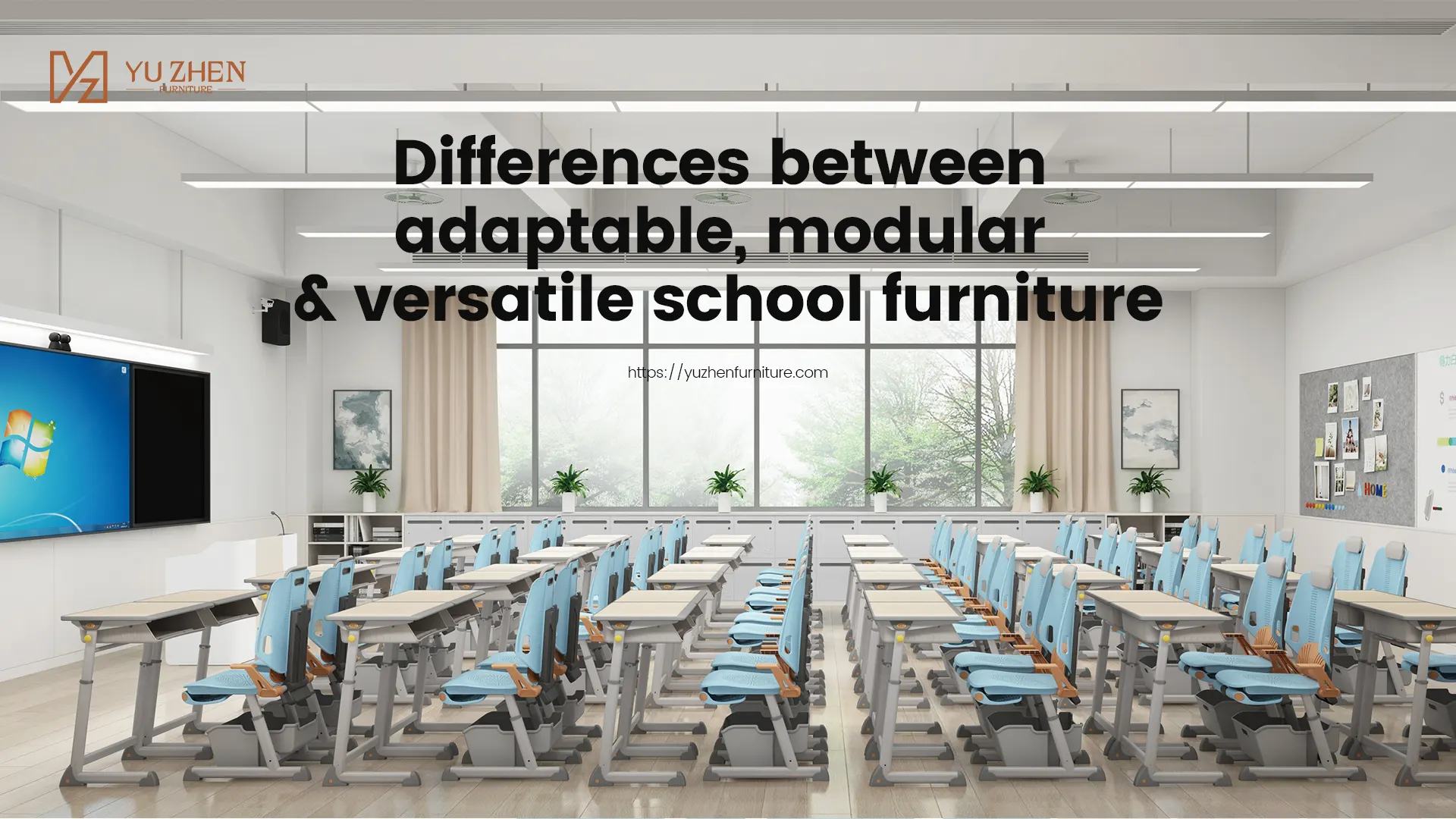
Differences between adaptable, modular and versatile school furniture
In the world of educational space design, terms such as adaptable, modular and versatile have become commonplace when discussing school furniture.
However, it is not always clear what each term means exactly and, above all, how they translate into real solutions within the classroom.
Understanding the differences between these characteristics is key to making the right decisions when equipping dynamic and functional learning environments.
Below, we will break down these concepts and show you concrete examples of how to apply them.
Adaptive furniture: When multifunctional furniture adapts to the user
We say that furniture is adaptable when it can be adjusted to suit the physical or postural needs of the student.
This is particularly relevant in educational environments where students, due to their age or build, require different configurations to maintain a healthy posture during the school day.

Key features
- Adjustable height (on tables and chairs)
- Adjustable tilt (on desks or backrests)
- Movable elements that allow you to change position
- Can change the shape of the desk
In what specific aspects does this manifest itself?
- Tables with telescopic legs that allow the height to be adjusted to suit different ages or ergonomic needs.
- Ergonomic chairs with flexible, height-adjustable backrests, designed to accompany the student’s growth and promote active posture.
- Desks with adjustable tops, ideal for reading or writing depending on the activity.
- The shape of the desks and chairs can be changed to achieve multi-functionality.
Modular school furniture: furniture that adapts to different spaces or activities.
Modular furniture is designed to adapt to the physical space or dynamics of each activity.
It consists of elements that can be combined, grouped or rearranged according to the needs of the moment.
Key features
- Elements that are easily assembled or separated
- Allows for multiple classroom configurations
- Optimises the use of available space
In what specific aspects does this manifest itself?
The multi-modal desks can be arranged in a flexible manner to suit the needs of classrooms, meetings, etc., creating different areas within the classroom.
Trapezoidal tables can be connected together to form a working group, or they can be separated to perform individual tasks.
This approach promotes active, collaborative and constantly changing learning environments.
Why is it important to distinguish between them?
Although these three concepts may overlap in certain designs, understanding their differences allows you to choose more accurately which type of furniture best suits each space or teaching situation.
A classroom that combines adaptable, modular and versatile elements is richer, more inclusive and better prepared for the challenges of today’s learning environment.